When you see a ranking drop in Risify's keyword tracking dashboard, the instinct is to fix something immediately. But ranking changes have different causes - temporary fluctuations, competitor improvements, algorithm updates, or actual site issues. The right response depends on what caused the change.
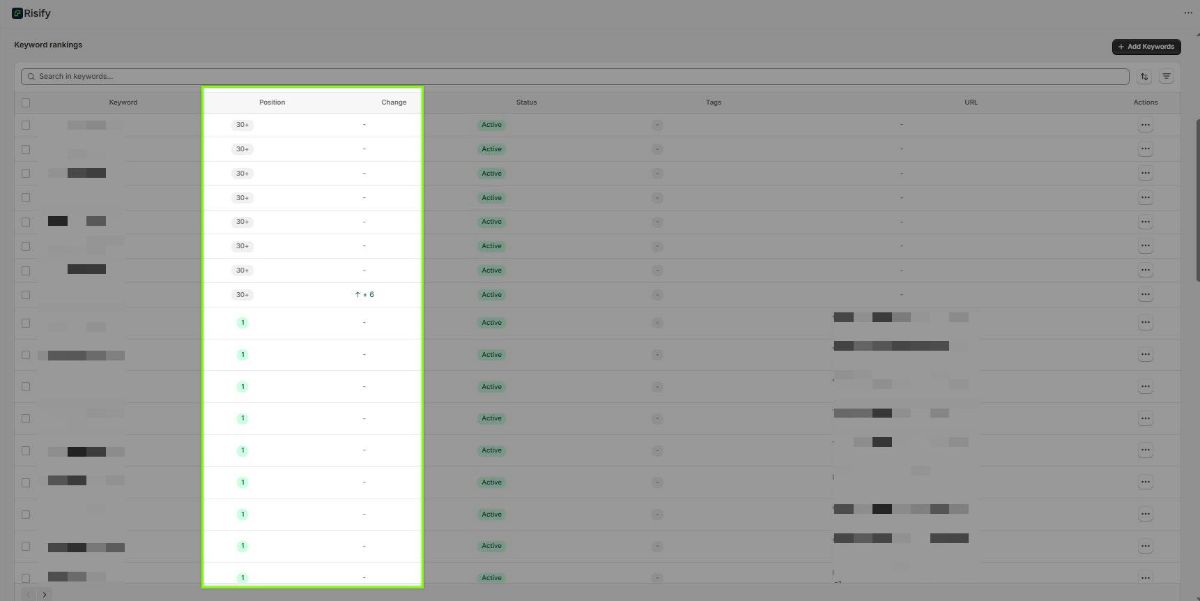
- Risify shows position changes over time so you can distinguish patterns from noise.
- Competitor movements and Google updates affect rankings without anything changing on your site.
- Small drops often resolve on their own within days.
- Large or sustained drops across multiple keywords signal something worth investigating.
- Reacting to every fluctuation wastes effort and can make things worse.
Why Rankings Fluctuate Normally
Google re-evaluates pages constantly. Rankings are not static numbers - they shift as Google recrawls your site, recrawls competitor sites, and adjusts how it weighs different signals.
Expected Movement
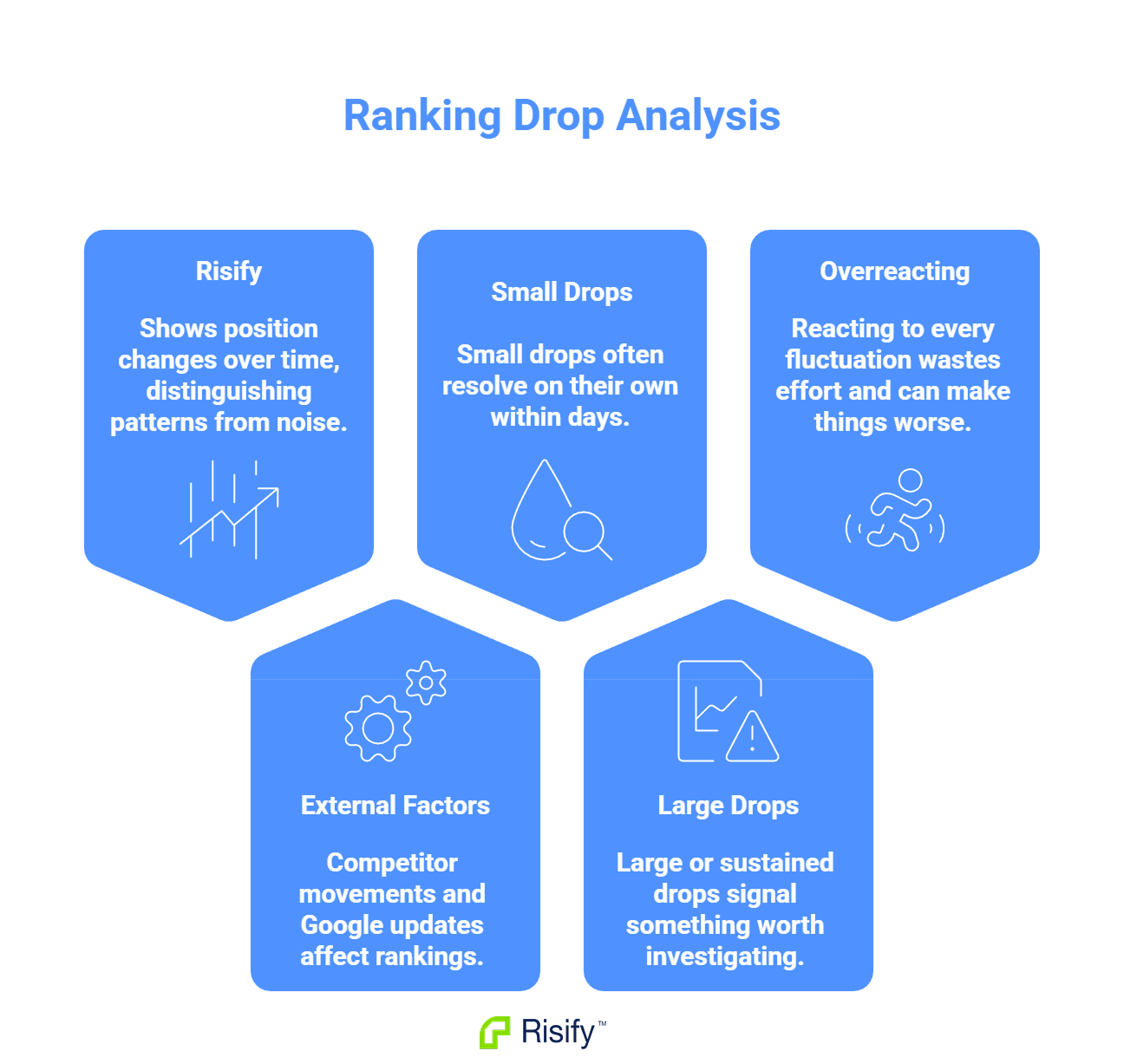
Small movements happen daily and mean little on their own. A keyword at position 8 today and position 10 tomorrow is not a crisis. It is normal variation.
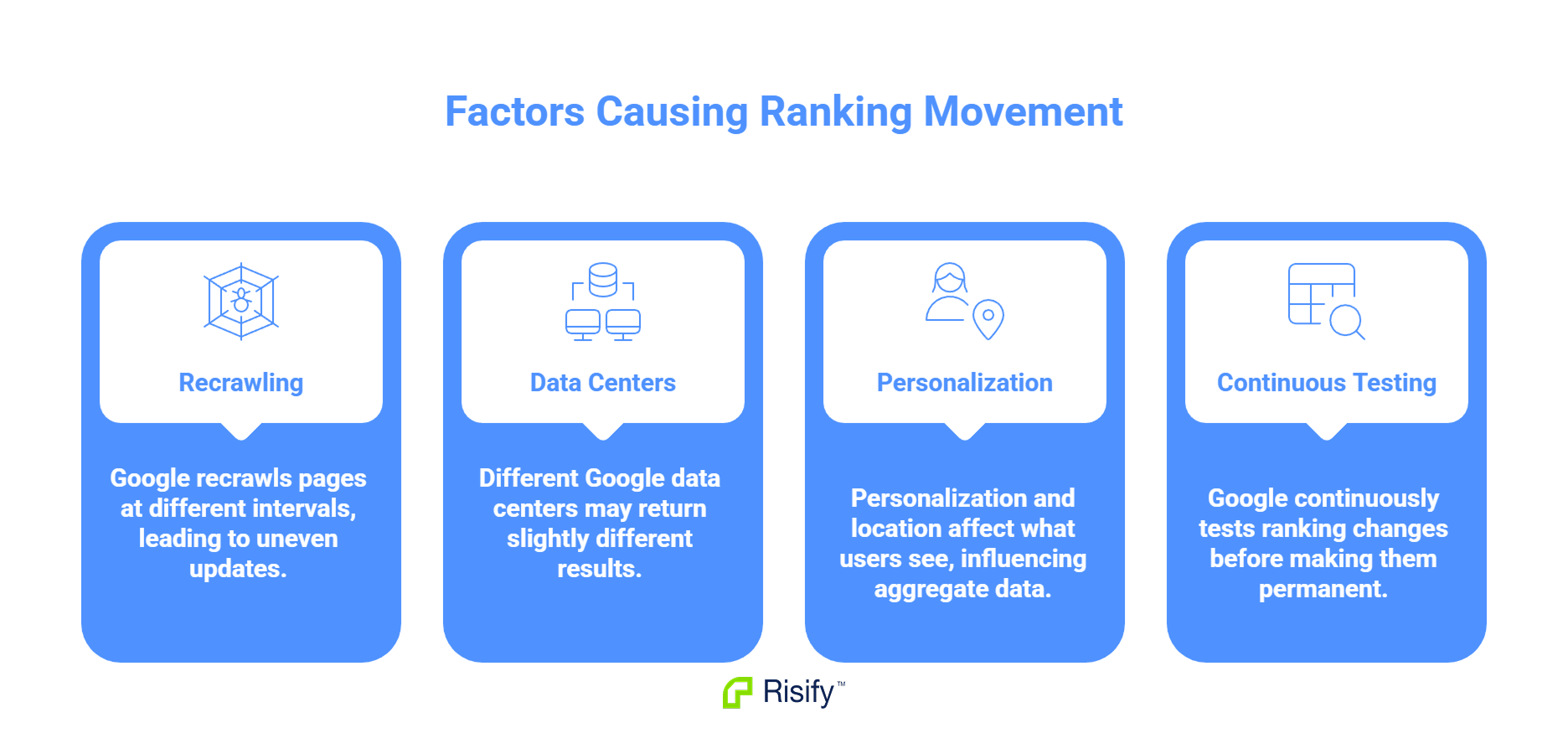
Several factors cause this:
- Google recrawls pages at different intervals, so its view of your site and competitors updates unevenly.
- Different Google data centers may return slightly different results.
- Personalization and location affect what individual users see, which can influence aggregate position data.
- Google continuously tests ranking changes before making them permanent.
What This Means for Monitoring
The dashboard will always show some movement. If you check daily, you will see numbers going up and down. This is expected behavior, not a series of problems to solve.
The question is not whether rankings moved. The question is whether the movement indicates something real that requires attention.
Identifying What Caused the Change
Ranking changes have different causes. The appropriate response depends on which one applies.
Temporary Fluctuation
Google tests changes constantly. A keyword might drop a few positions while Google evaluates something, then return to its previous position within days. This is especially common after you make changes to a page - rankings may dip briefly while Google reassesses, then stabilize or improve.
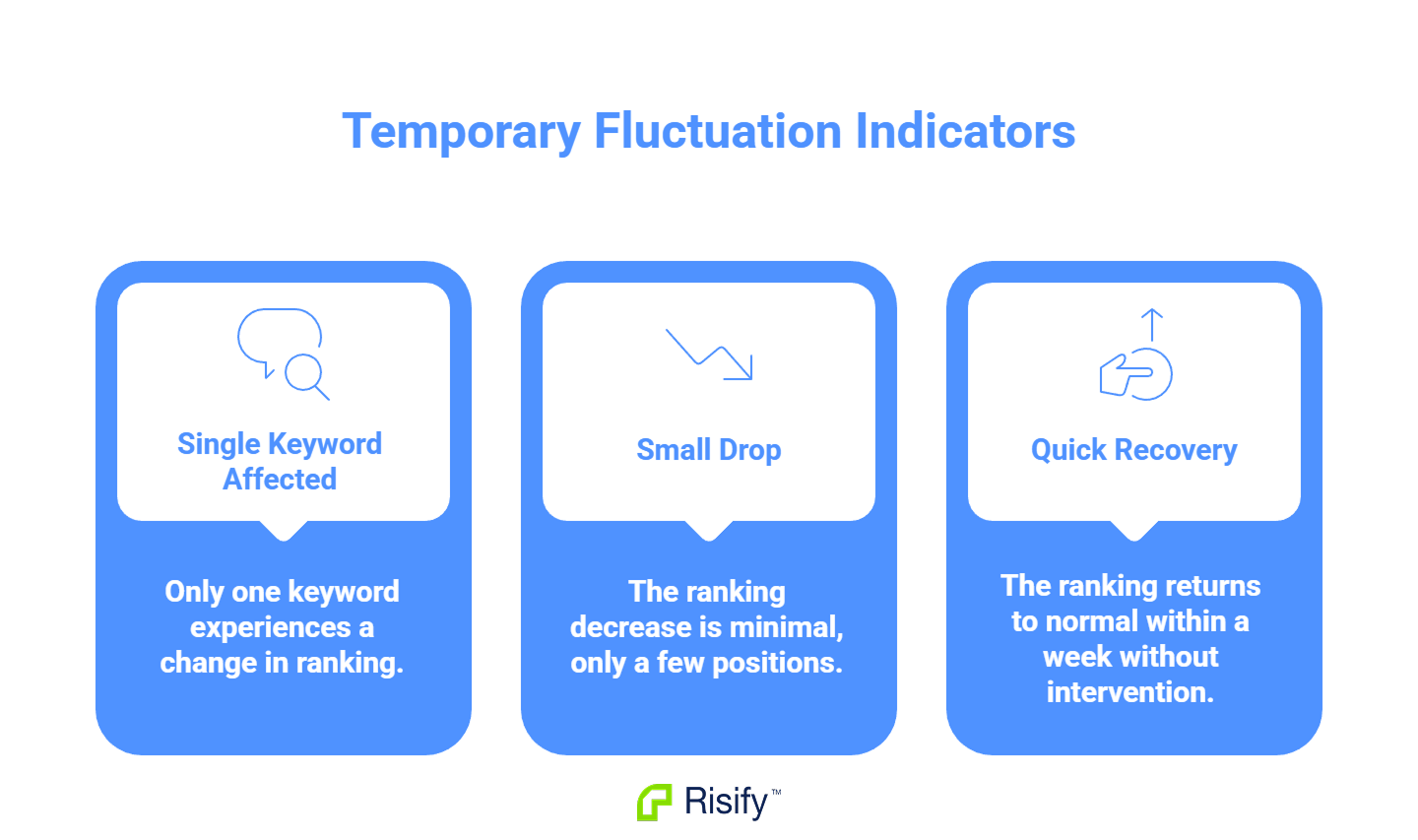
How to recognize it:
- A single keyword is affected
- The drop is small (a few positions)
- It recovers within a week without any action on your part
Response: None. Wait and observe.
Competitor Improvement
Your page did not get worse - a competitor's page got better. They may have improved their content, earned new backlinks, or made technical improvements. You dropped because someone else moved up.
How to recognize it:
- Your page content has not changed
- A specific competitor now appears above you
- Checking their page shows recent updates or improvements
Response: Evaluate whether your page needs improvement to compete, or whether the keyword is no longer worth prioritizing.
Algorithm Update
Google rolls out updates that change how rankings are calculated. These can affect many sites and keywords at once. Your site did not change, but Google's evaluation of it did.
How to recognize it:
- Multiple keywords drop simultaneously
- The timing aligns with known Google updates
- Industry forums and SEO news report similar patterns across sites
Response: Understand what the update targeted. If it penalized thin content and your content is thin, improve it. If the update does not apply to your situation, wait - rankings often adjust in the weeks following major updates.
Site Issue
Something on your site changed or broke. This could be technical (slow page speed, server errors, broken internal links), content-related (accidentally removed text, changed URLs without redirects), or structural (navigation changes that affected internal linking).
How to recognize it:
- Sudden large drop affecting many keywords
- Often traceable to a recent change you made
- Technical audits reveal errors or problems
Response: Use Risify's Store Audit feature to identify and fix the issue. Check recent changes, run a technical audit, and verify that pages load correctly and links work.
When to Wait and When to Act
Not every ranking change requires action. Responding to every fluctuation wastes effort and can introduce new problems if you make unnecessary changes.
Wait If
The situation suggests normal fluctuation or a change that may resolve on its own:
- The drop is small - a few positions, still on page one
- Only one or two keywords are affected
- The change happened within the last few days
- You recently made site changes and rankings are settling
Give it one to two weeks. Monitor whether the drop persists or reverses. Do not make changes to "fix" something that is not broken.
Investigate If
The situation suggests something more significant:
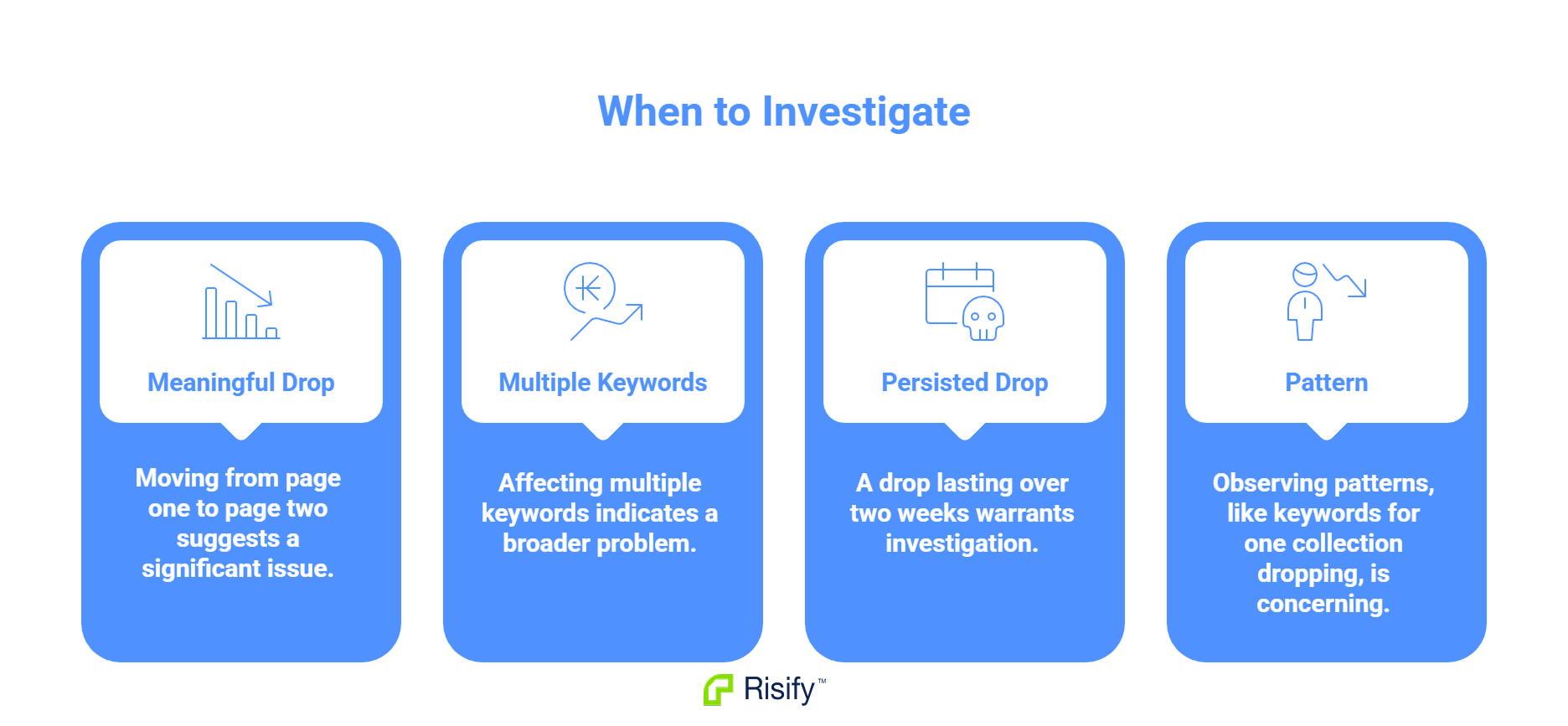
- The drop is meaningful - moving from page one to page two
- Multiple keywords are affected
- The drop has persisted for more than two weeks
- You see a pattern, such as all keywords for one collection dropping together
Start by checking what changed. Review your own site for recent updates, technical issues, or content changes. Check competitor pages to see if they improved. Look for news about Google algorithm updates around the time the drop occurred.
Act If
You have identified a clear cause that requires a response:
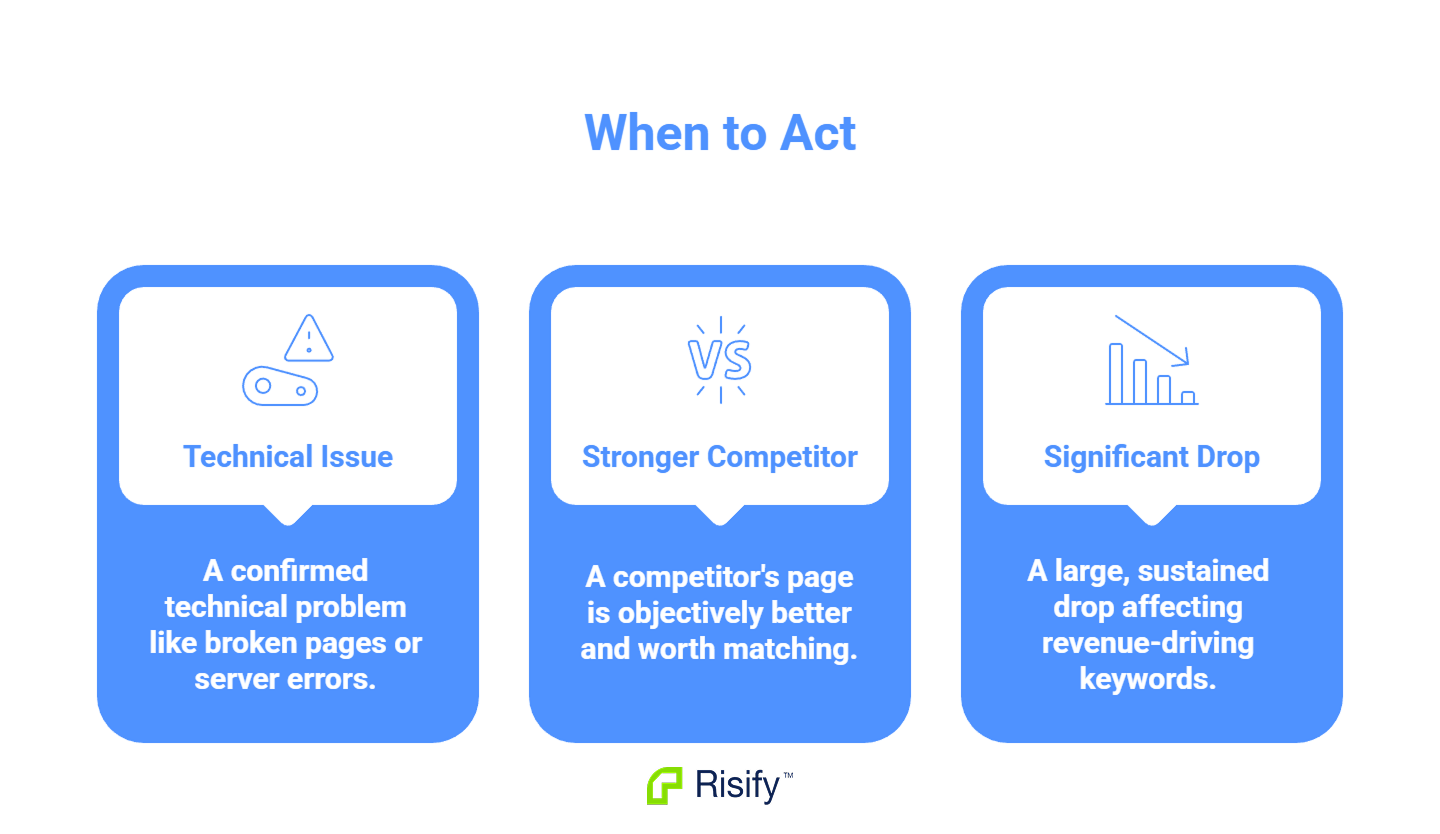
- A technical issue is confirmed (broken pages, server errors, missing content)
- A competitor's page is now objectively stronger and worth matching
- The drop is large, sustained, and affecting keywords that drive revenue
Action means fixing the identified problem. It does not mean making random changes hoping something helps. Unfocused changes can cause new issues and make it harder to understand what affects your rankings.
Track Ranking Trends with Risify
Ranking changes are constant. The dashboard will always show movement. Your job is to distinguish signal from noise - identifying which changes require action and which will resolve on their own.
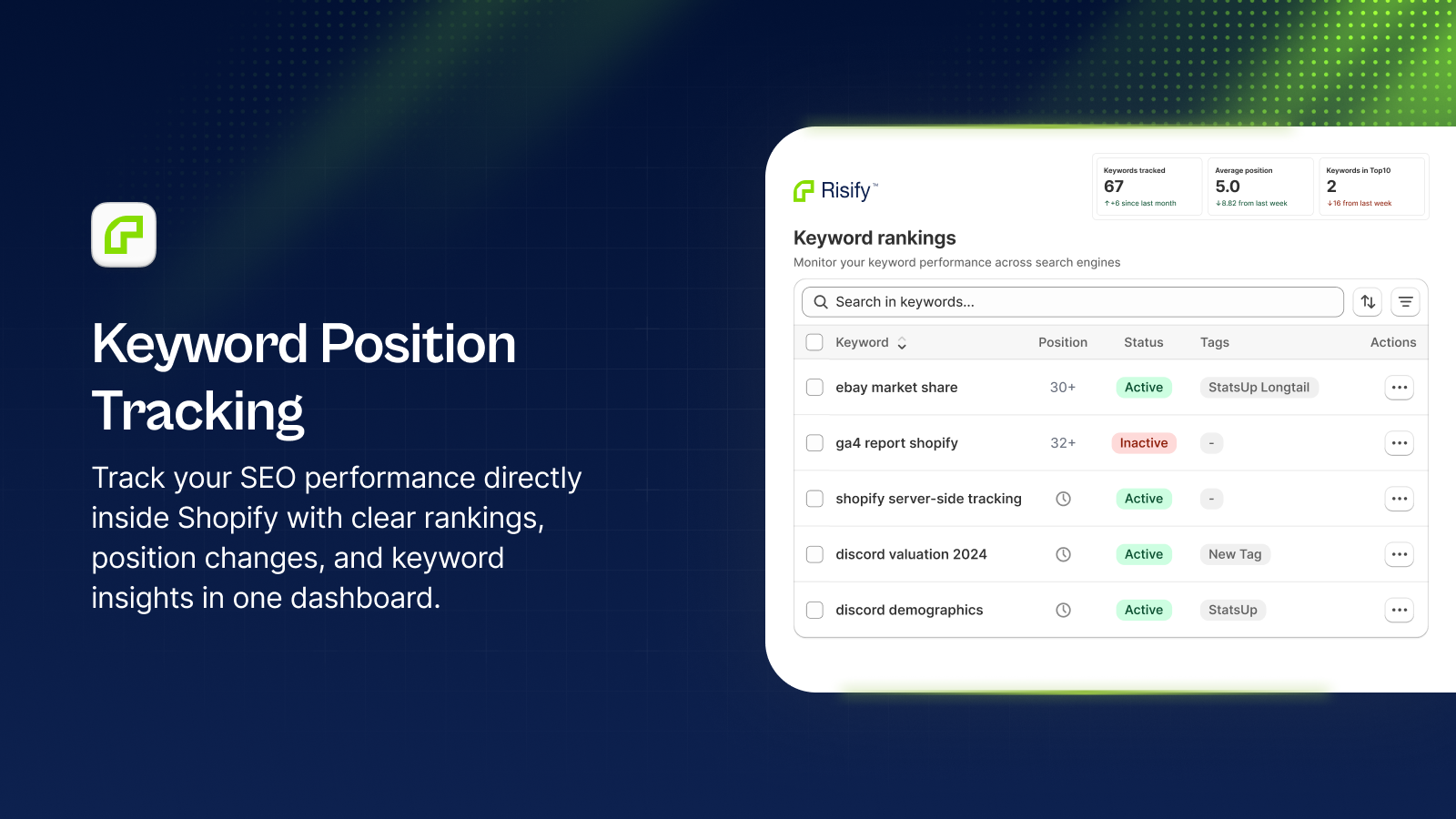
Use Risify's tracking data to monitor patterns over time. Look at trends across weeks, not daily shifts. When you do act, act on evidence - a confirmed issue, a clear competitor improvement, or a sustained drop that affects business results.