When users ask ChatGPT, Perplexity, or Gemini for product recommendations, these tools pull from sources they can parse and trust. Stores with structured data, clear catalog relationships, and machine-readable content are easier for AI systems to understand and reference. AI visibility is becoming a separate consideration from traditional search engine rankings.
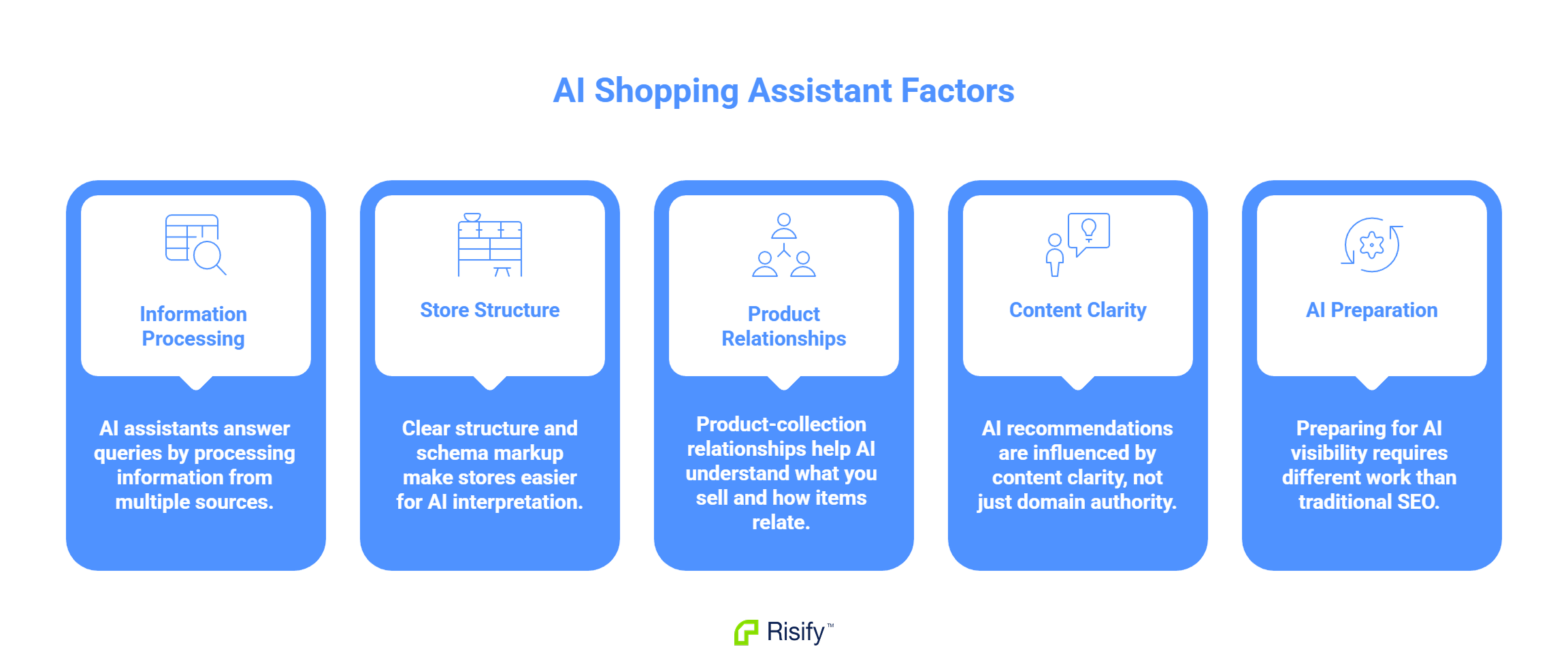
- AI shopping assistants answer product queries by processing information from multiple sources.
- Stores with clear structure and schema markup are easier for AI systems to interpret.
- Product-collection relationships help AI tools understand what you sell and how items relate.
- AI recommendations are influenced by content clarity, not just domain authority or backlinks.
- Preparing for AI visibility requires different work than traditional SEO.
How AI Shopping Assistants Answer Product Queries
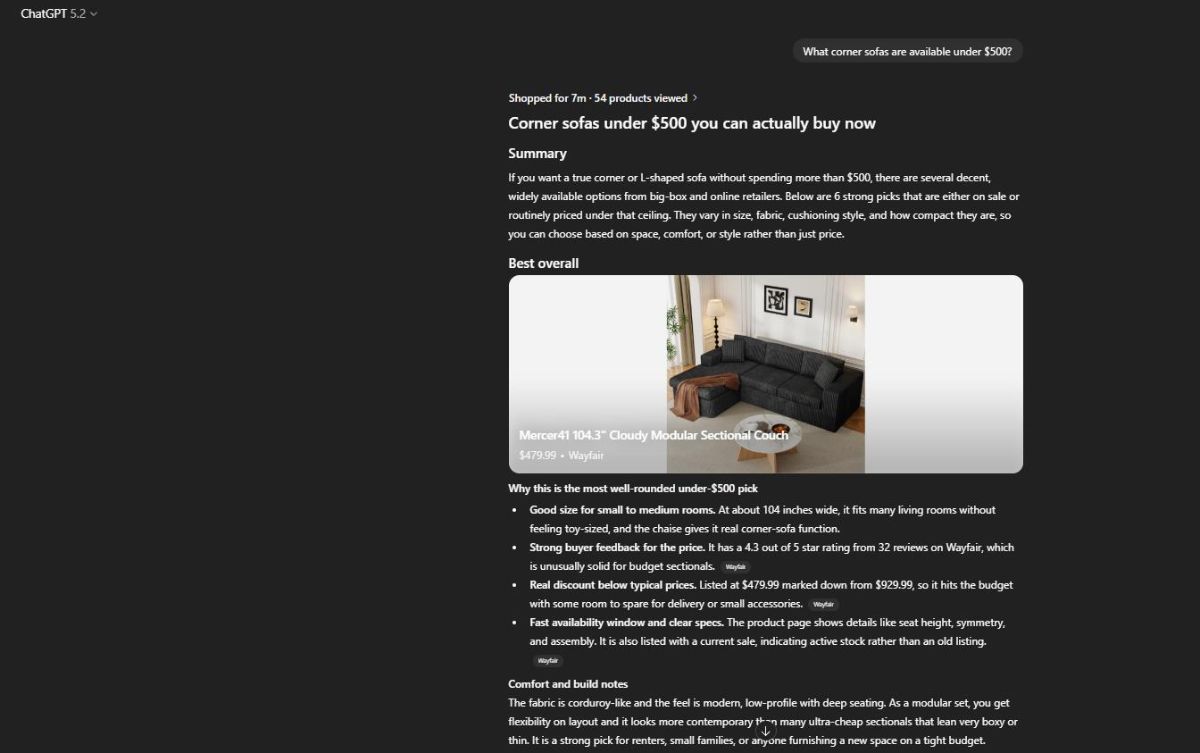
When someone asks an AI assistant "What corner sofas are available under $500?" the tool needs to find relevant products, evaluate them, and present recommendations. This process differs from how search engines return results.
What Happens Behind the Query
The AI tool does not simply return a list of pages that match keywords. It gathers information from sources it can access, extracts relevant details, and synthesizes an answer.
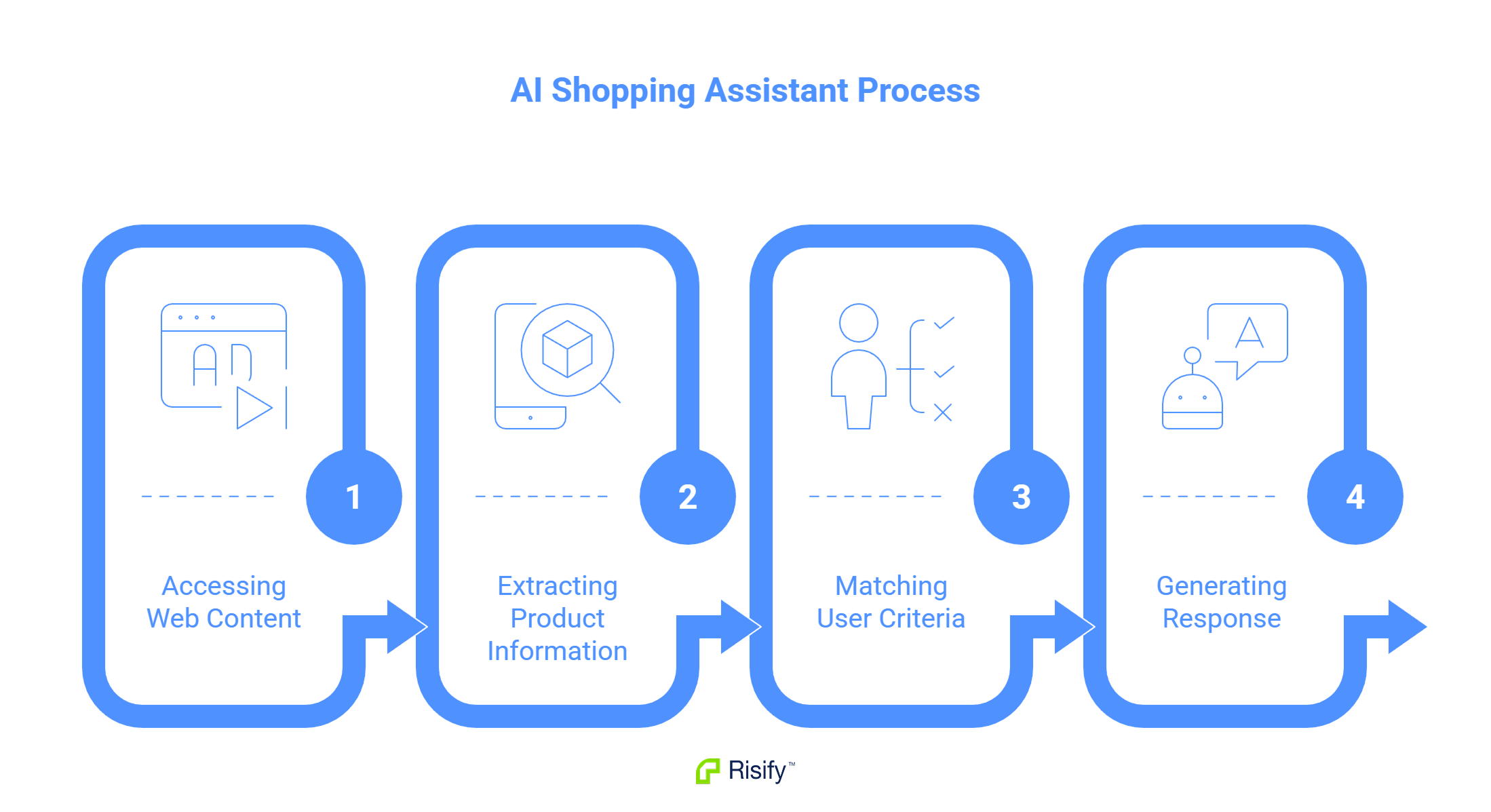
The process involves:
- Accessing web content and data sources
- Extracting product information - names, prices, features, availability
- Matching extracted information against the user's criteria
- Generating a response that answers the question directly
The output is not a ranked list of links. It is a recommendation that references specific products or tells the user where to find what they need.
The Source Selection Problem
AI tools cannot reference information they cannot parse. A product page with unclear pricing, vague descriptions, or unstructured content is harder to extract information from. The AI may skip it in favor of sources that provide clearer data.
This means visibility in AI recommendations depends partly on how accessible your product information is to machine processing.
What Makes a Store Easy for AI to Recommend
Several factors influence whether AI tools can find, understand, and recommend your products.
Structured Data
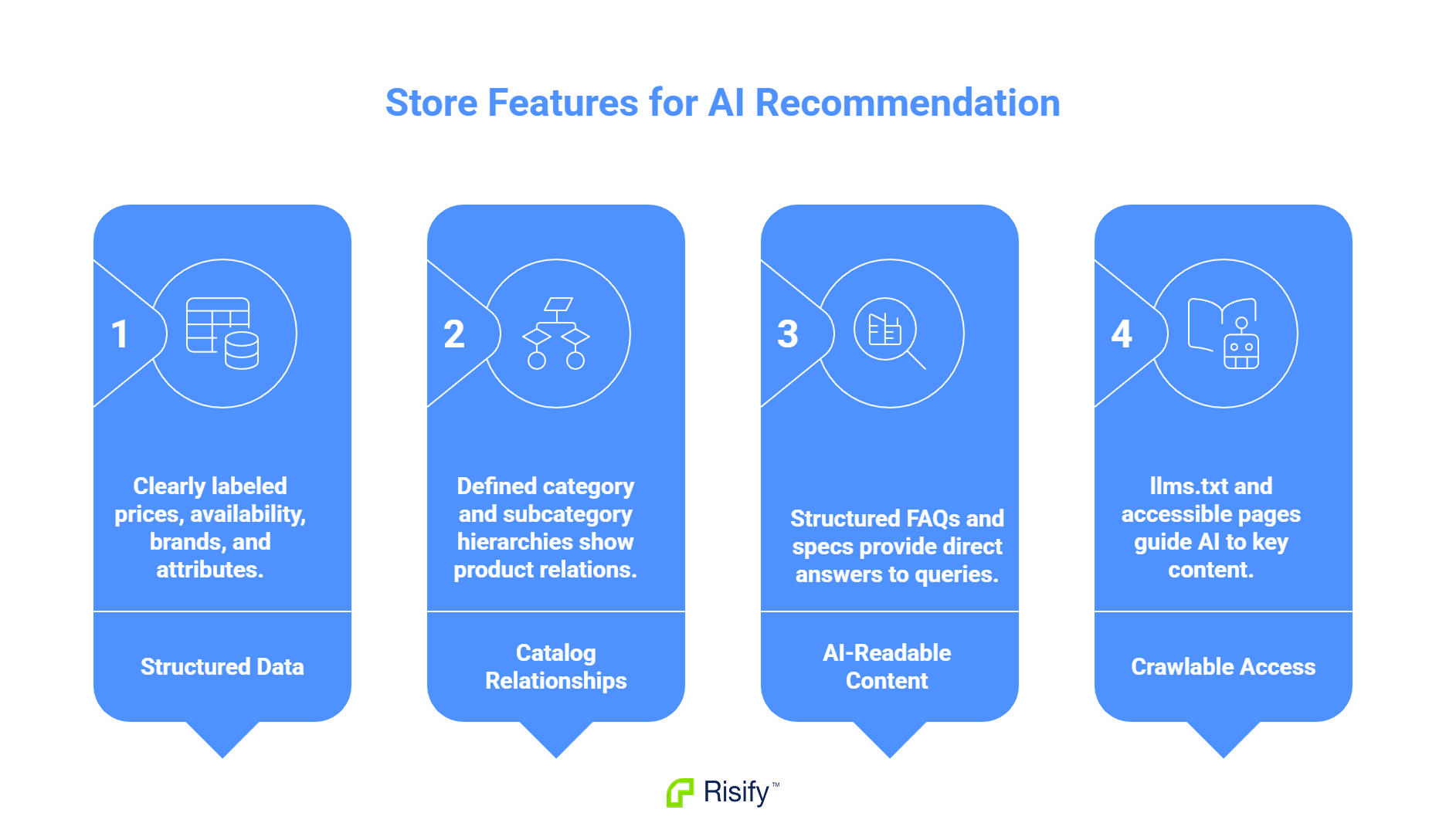
Schema markup labels your content explicitly. Instead of inferring that "$299" is a price, AI tools read a price field that declares the value. Product names, availability status, brands, and attributes are all labeled clearly.
Research suggests that large language models extract more accurate information from pages with proper schema markup - with some studies showing a 30% improvement in extraction quality compared to unstructured pages.
Catalog Relationships
Clear connections between collections and products help AI tools understand your catalog. When your store has defined hierarchy - categories, subcategories, and products organized within them - AI tools can grasp what you sell and how items relate.
A store where "Corner Sofas" is explicitly connected to "Sofas" which connects to "Living Room Furniture" is easier to parse than a flat list of products with no defined relationships.
AI-Readable Content
FAQs, product specifications, and descriptions in structured formats give AI tools content they can reference directly. A question-answer pair marked up with FAQ schema is easier to match against a user query than the same information buried in a paragraph.
When a user asks "What's the return policy for this store?" an AI tool can pull directly from a structured FAQ rather than scanning pages for relevant sentences.
Crawlable Access
AI tools need to reach your content. Beyond having public pages, files like llms.txt provide explicit guidance on your catalog structure and where to find key information. This helps AI systems understand your store without piecing together information from scattered pages.
How This Differs from Traditional SEO
Traditional SEO and AI visibility overlap in some areas but differ in important ways.
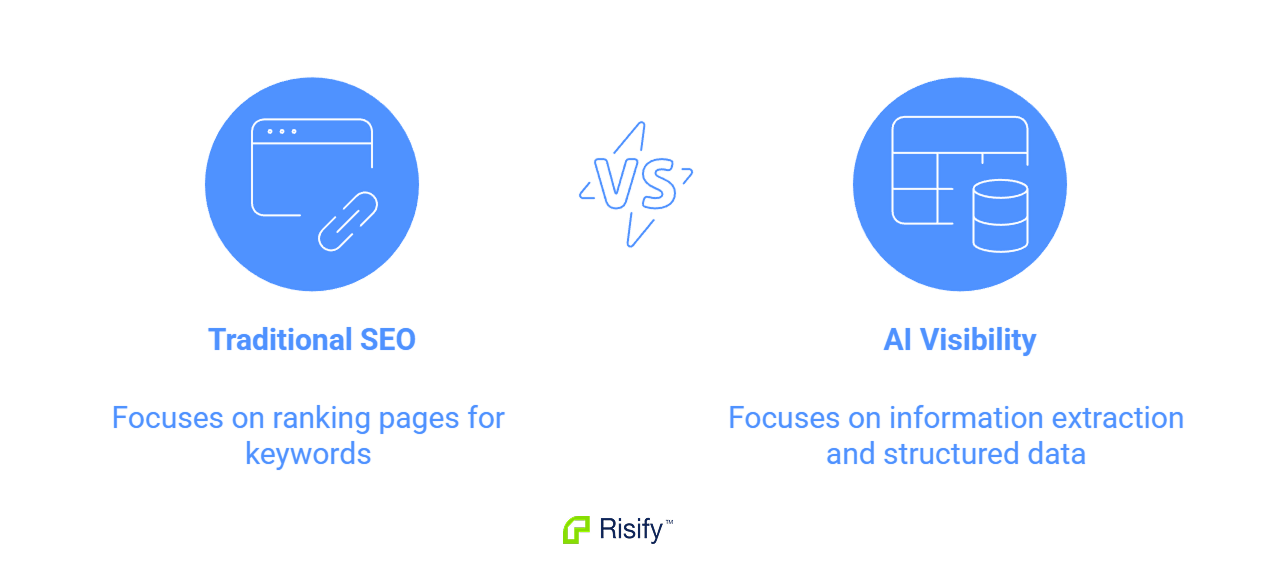
Traditional SEO Focus
Search engine optimization focuses on ranking pages in search results. Success is measured by position for target keywords. Key factors include:
- Backlinks from other sites
- Domain authority built over time
- Page optimization for specific keywords
- Technical factors like page speed and mobile compatibility
The goal is appearing high in a list of search results when users search relevant terms.
AI Visibility Focus
AI tools do not rank pages in a list. They extract information and synthesize answers. The factors that matter shift accordingly:
- A page with few backlinks but clear structured data may be referenced in AI responses
- Content clarity matters more than domain authority for information extraction
- The structure of your data affects whether AI tools can use it accurately
- Being included in an AI response is different from ranking for a keyword
Practical Implications
A store that ranks poorly in Google might still appear in AI recommendations if its product information is well-structured and easy to extract.
Conversely, a store that ranks well for traditional search might be overlooked by AI tools if its content is difficult to parse - prices buried in paragraphs, product attributes scattered across the page, no schema markup to label information clearly.
The two channels reward different things. Optimizing for one does not automatically optimize for the other.
Make Your Store Visible to AI Shopping Assistants
AI shopping assistants are becoming a channel for product discovery alongside traditional search. Stores that are easy for AI tools to understand and reference have an advantage when users ask for recommendations.
When you define breadcrumb paths, assign FAQs to products and collections, and organize your catalog in Risify, the app generates the corresponding schema markup and llms.txt files from the structures you create.