AI shopping assistants and search tools like ChatGPT, Perplexity, and Google's AI features process web content to answer user questions. When these tools encounter structured data, they receive explicit signals about what your content means - product names, prices, availability, and relationships between pages.
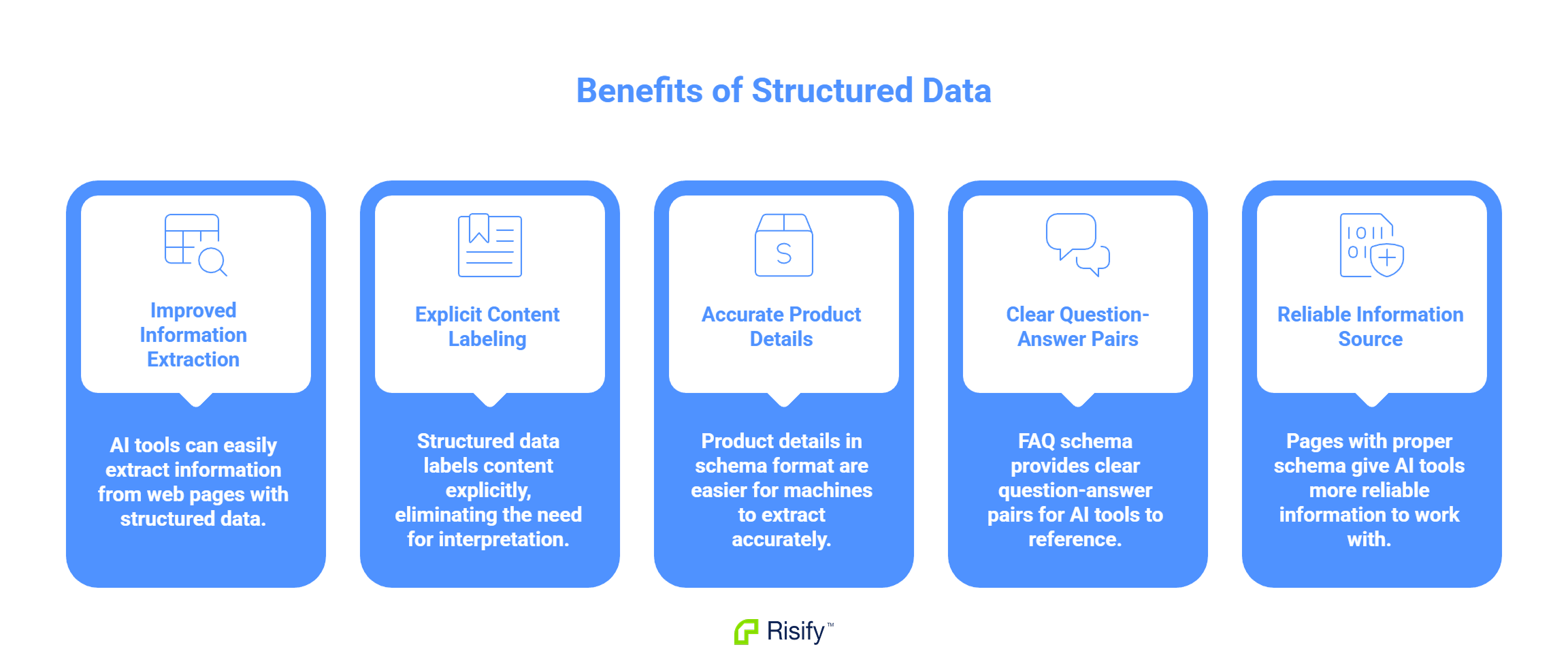
- AI tools parse web pages to extract information for user queries.
- Structured data labels content explicitly rather than requiring interpretation.
- Product details in schema format are easier for machines to extract accurately.
- FAQ schema provides clear question-answer pairs AI tools can reference.
- Pages with proper schema give AI tools more reliable information to work with.
How AI Tools Process Web Content
AI tools access web pages to gather information that helps them answer user questions. They process the text, images, and code on each page to understand what it contains and whether it is relevant to a query.
The Interpretation Challenge
When an AI tool reads unstructured text, it must interpret what the content means. A product page might contain a paragraph like:
"Our corner sofa is available in grey and blue. Originally $599, now $299. Ships within 3-5 business days."
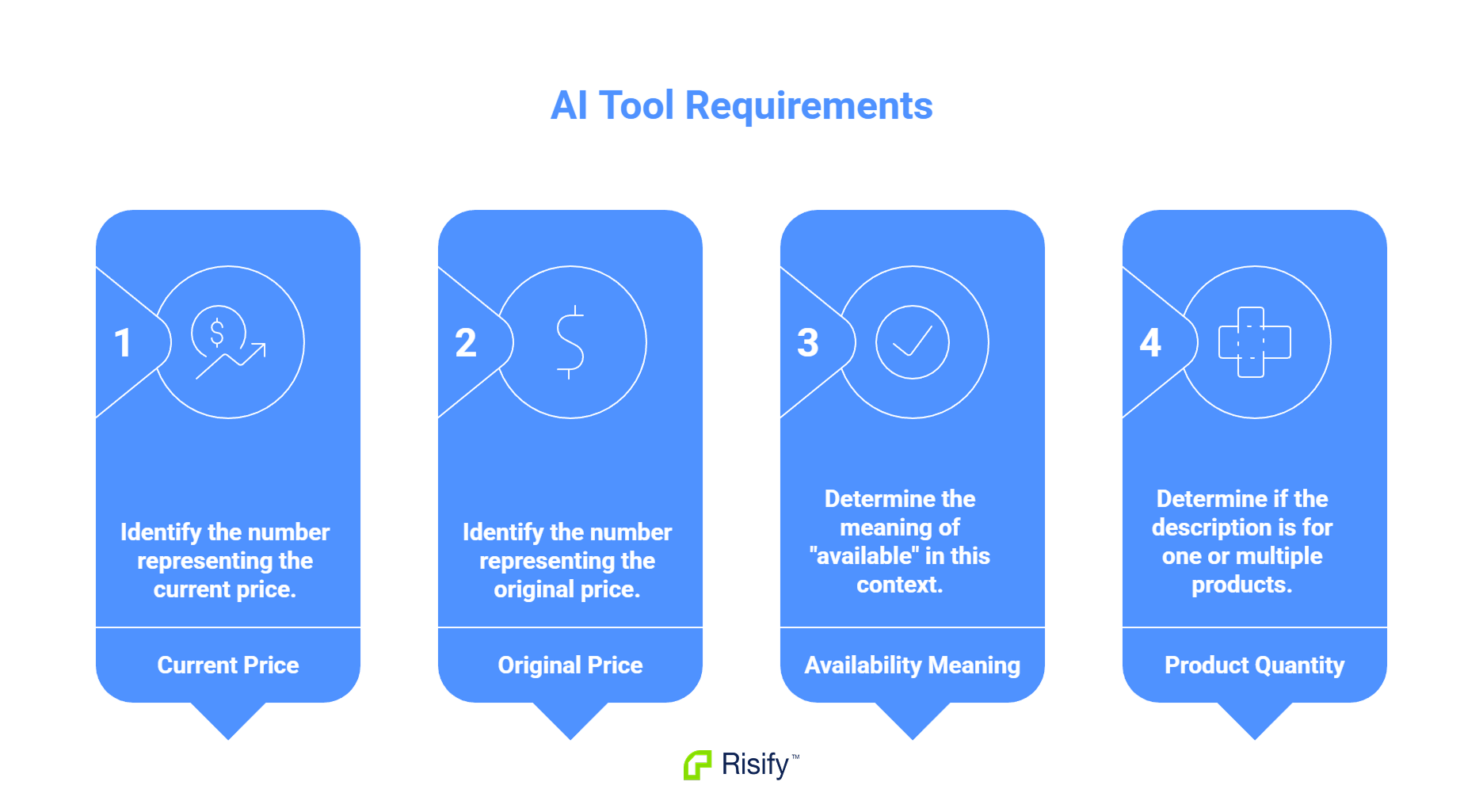
The AI tool needs to figure out:
- Which number is the current price
- Which number is the original price
- What "available" means in this context
- Whether this describes one product or multiple
This interpretation usually works, but it requires the AI to infer meaning from context. Different page formats, writing styles, and layouts make this harder.
What Structured Data Provides
Structured data removes the interpretation step. Instead of parsing paragraphs, the AI tool reads explicit declarations:
- "price": "$299"
- "availability": "InStock"
- "name": "Corner Sofa - Grey"
The meaning is stated directly. The AI tool does not need to figure out which number is the price or whether "available" means in stock or available for preorder. The schema tells it exactly what each piece of information represents.
What Structured Data Makes Explicit
Schema markup declares specific information in a format designed for machine reading. For AI tools processing your pages, this provides clear signals about your content.
Product Information
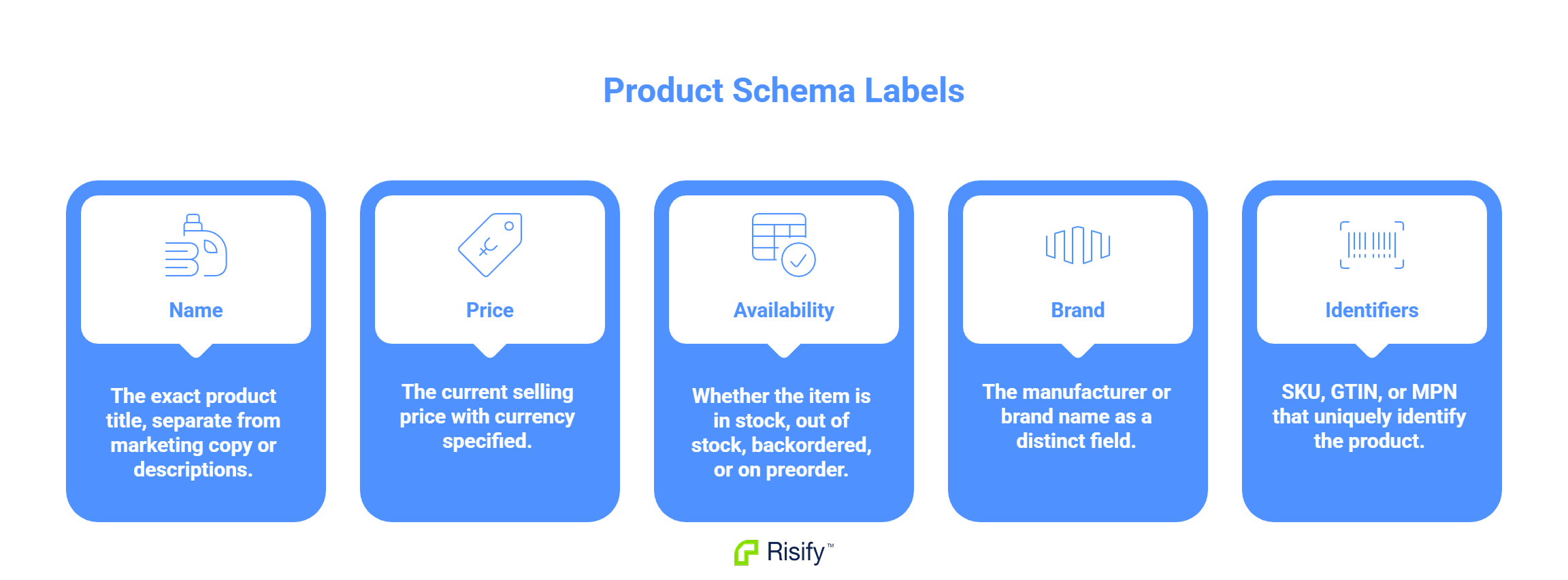
Product schema explicitly labels:
- Name: The exact product title, separate from marketing copy or descriptions
- Price: The current selling price with currency specified
- Availability: Whether the item is in stock, out of stock, backordered, or on preorder
- Brand: The manufacturer or brand name as a distinct field
- Identifiers: SKU, GTIN, or MPN that uniquely identify the product
An AI tool answering "How much does this product cost?" can pull the price field directly rather than scanning the page for numbers.
Content Relationships
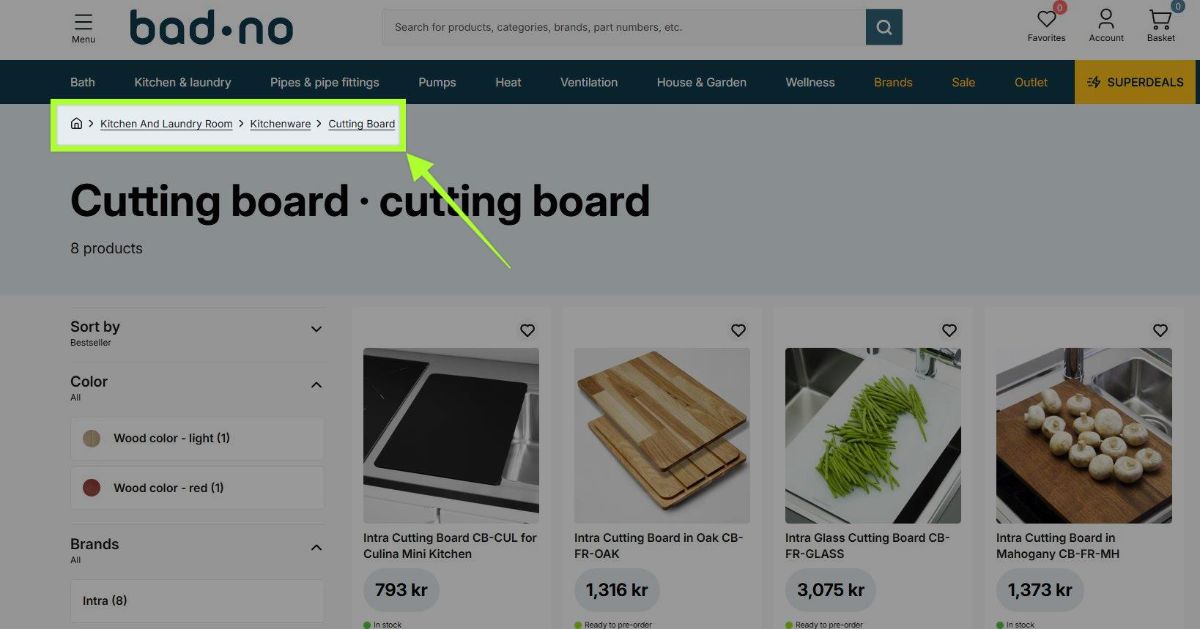
Breadcrumb schema declares how pages relate to each other:
- The parent category of a product page
- The hierarchy from homepage to current page
- How collections nest within broader categories
This helps AI tools understand that your "Corner Sofas" page is a subset of "Sofas" which is part of "Living Room Furniture." The relationship is explicit, not inferred from URL structure or navigation menus.
Question and Answer Pairs
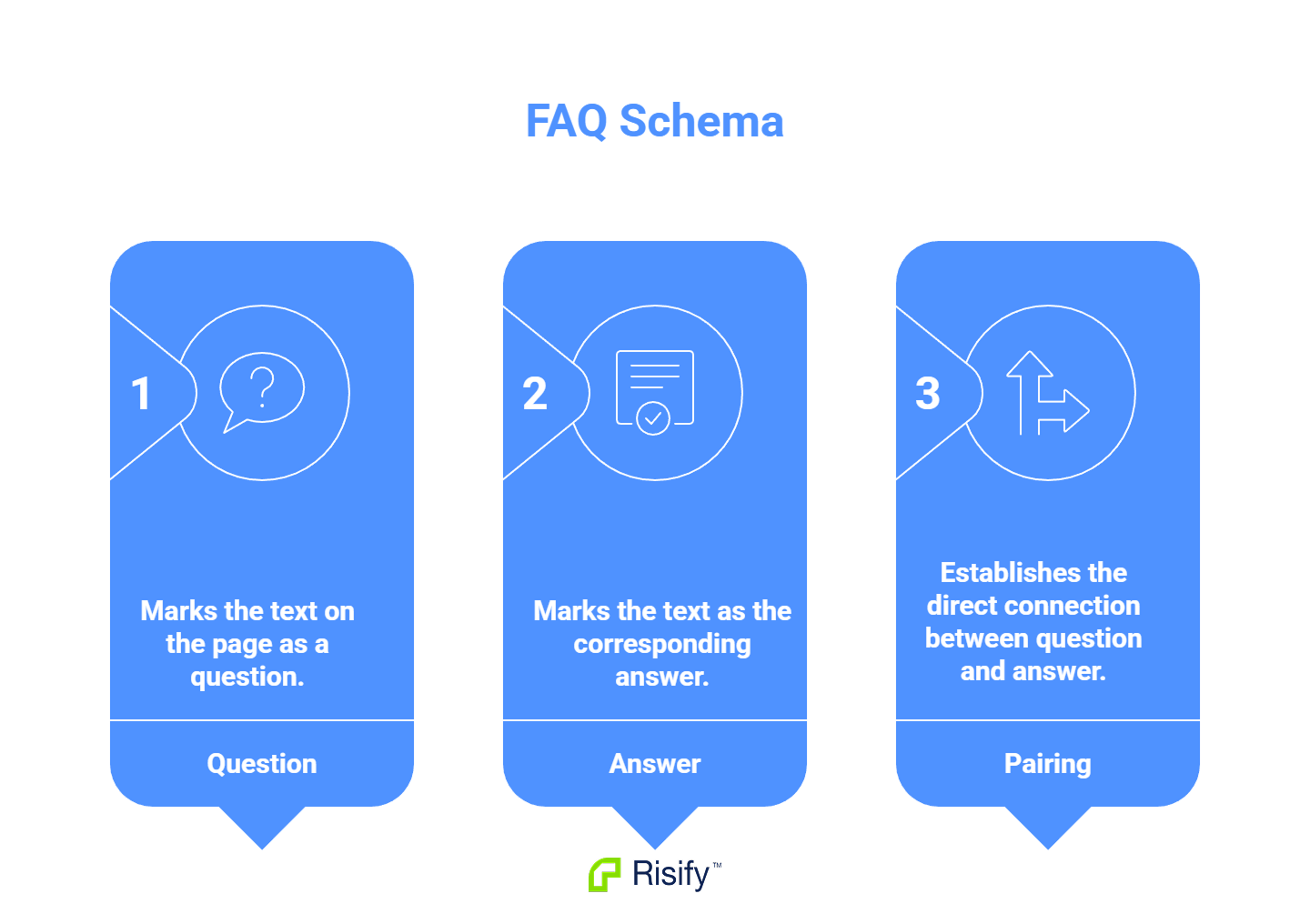
FAQ schema explicitly marks:
- Which text on the page is a question
- Which text is the corresponding answer
- The direct pairing between each question and its answer
Without schema, an AI tool scanning an FAQ section sees a block of text. With schema, it sees structured pairs it can match to user queries.
Why This Matters for AI Shopping Queries
Users increasingly ask AI assistants to help with shopping research. These queries range from broad questions ("What should I look for in a standing desk?") to specific product questions ("Is this item in stock?").
How AI Tools Answer Product Questions
When a user asks a product-related question, the AI tool gathers information from available sources. Pages with structured data provide cleaner inputs because the relevant information is already labeled.
Consider a user asking: "What corner sofas are available under $500?"
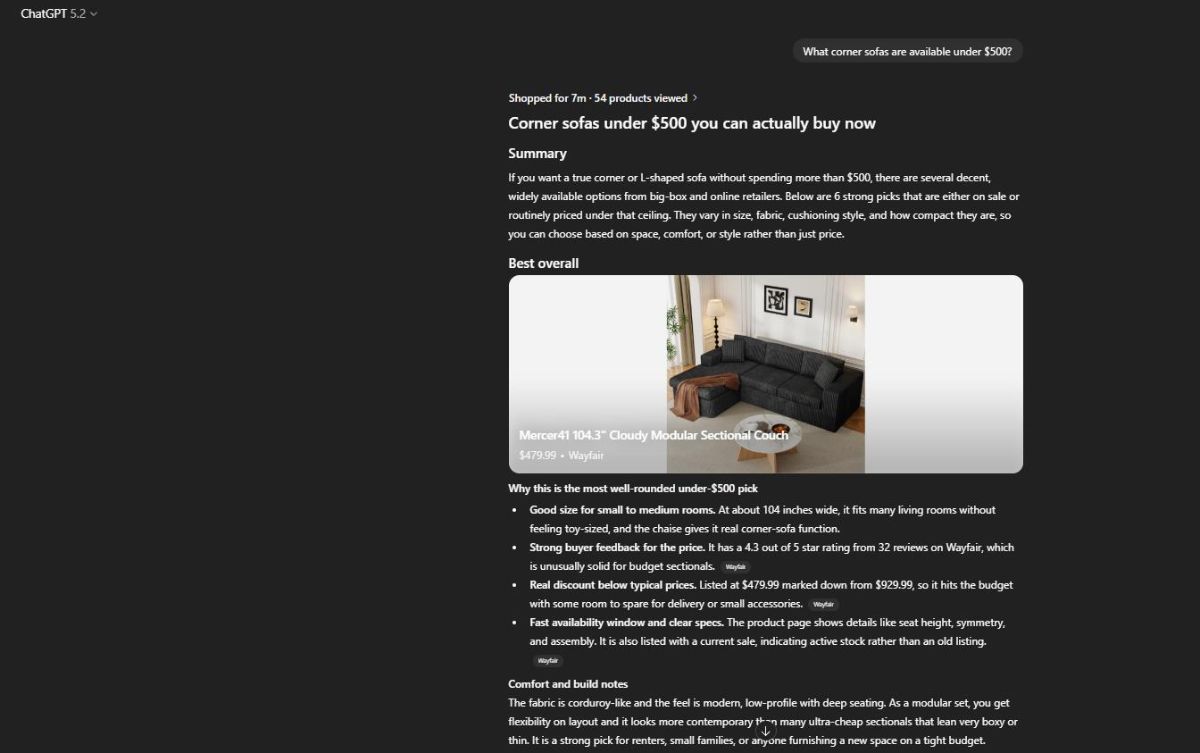
An AI tool processing your product pages can:
- Read the product name from the schema
- Check the price field against the $500 threshold
- Verify availability status
- Return accurate results
Without schema, the AI tool must scan page content, identify which numbers represent prices, and determine availability from context. This works less reliably across different page formats.
FAQ Matching
When users ask questions that match FAQs on your site, structured FAQ data makes the match clearer.
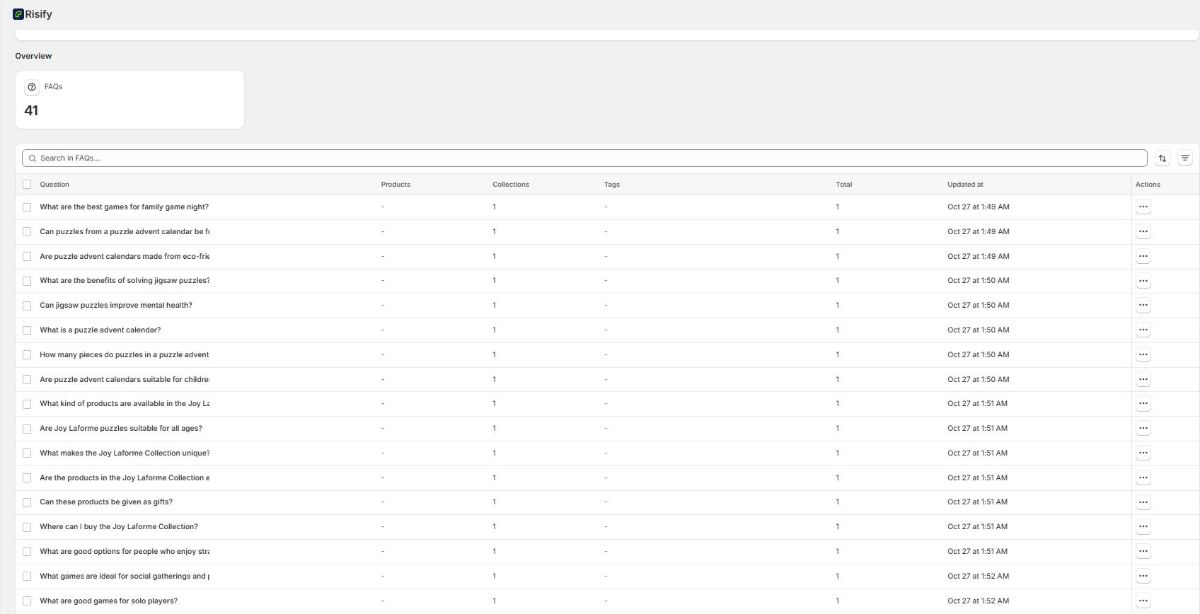
A user asking "How do I clean a leather sofa?" can receive an answer directly sourced from your FAQ schema if you have that question marked up. The AI tool recognizes the question-answer pair rather than extracting relevant sentences from a longer page.
Prepare Your Store for AI Visibility
AI tools increasingly influence how people discover and research products. Structured data gives these tools explicit information about your products, content, and site structure rather than requiring them to interpret page text.
Risify generates structured data automatically as you use its features. Your product information, breadcrumb paths, and FAQ content become machine-readable for both search engines and AI tools.