AI-powered search tools like ChatGPT, Gemini, Copilot, and Perplexity generate answers and product suggestions based on search engine indexes and structured data.
If your store sends clear signals to Google, AI tools can interpret and surface your products more accurately.
This guide explains what AI readiness means for your Shopify store and how Risify helps you build a foundation that both traditional search engines and AI systems can understand.
👉 Curious how Risify can help your store get AI-ready? Browse our AI Readiness resource library to learn best practices and get the most value from it.
How Do AI Search Tools Find Product Information?
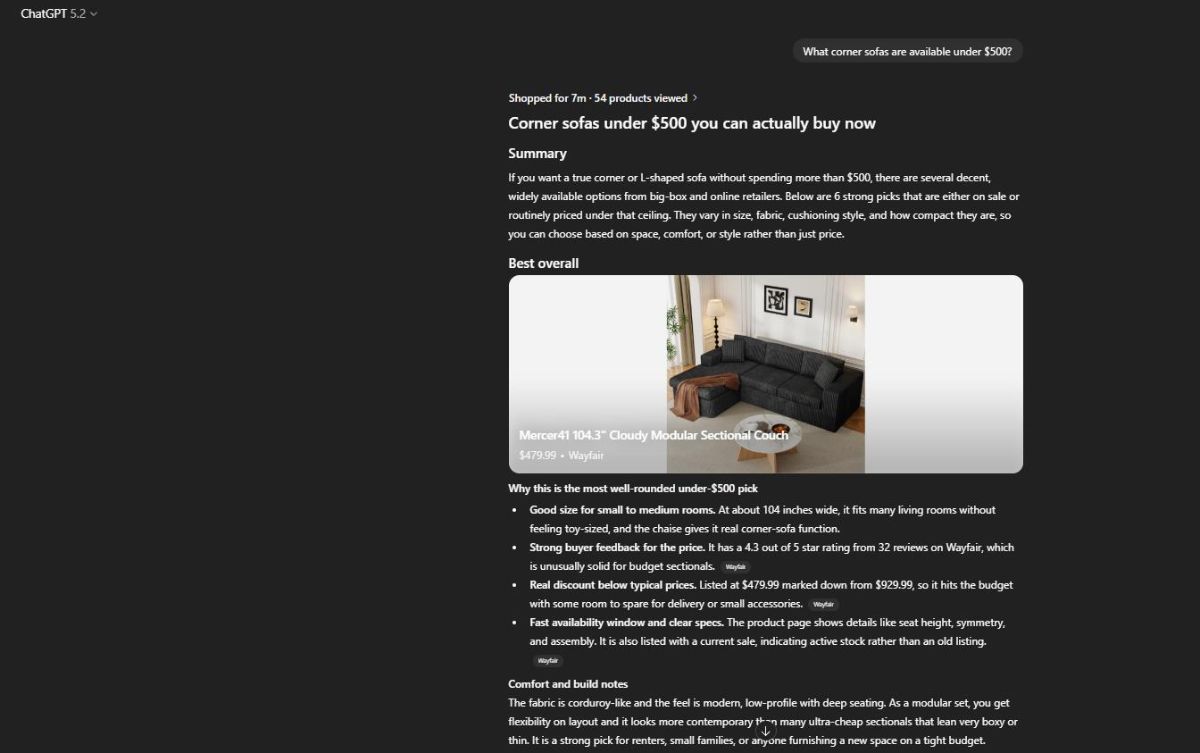
LLMs do not crawl websites the same way Google does. Instead, they rely on existing search engine data, structured markup, and publicly available content to form their responses. When someone asks an AI tool for a product recommendation, the system references what it already knows from indexed pages and organized content structures.
Stores with unclear hierarchies, missing metadata, or unstructured content often get overlooked because AI systems cannot confidently interpret what they sell. The clearer your store's structure, the more likely AI tools will include your products in relevant responses.
Why Does Schema Markup Matter for AI Search?
Schema markup (structured data) is the most direct way to communicate with search engines in a format they can parse without ambiguity. When you add valid JSON-LD schema to your pages, you define exactly what type of content exists: product details, organization information, FAQs, reviews, breadcrumb paths, and more.
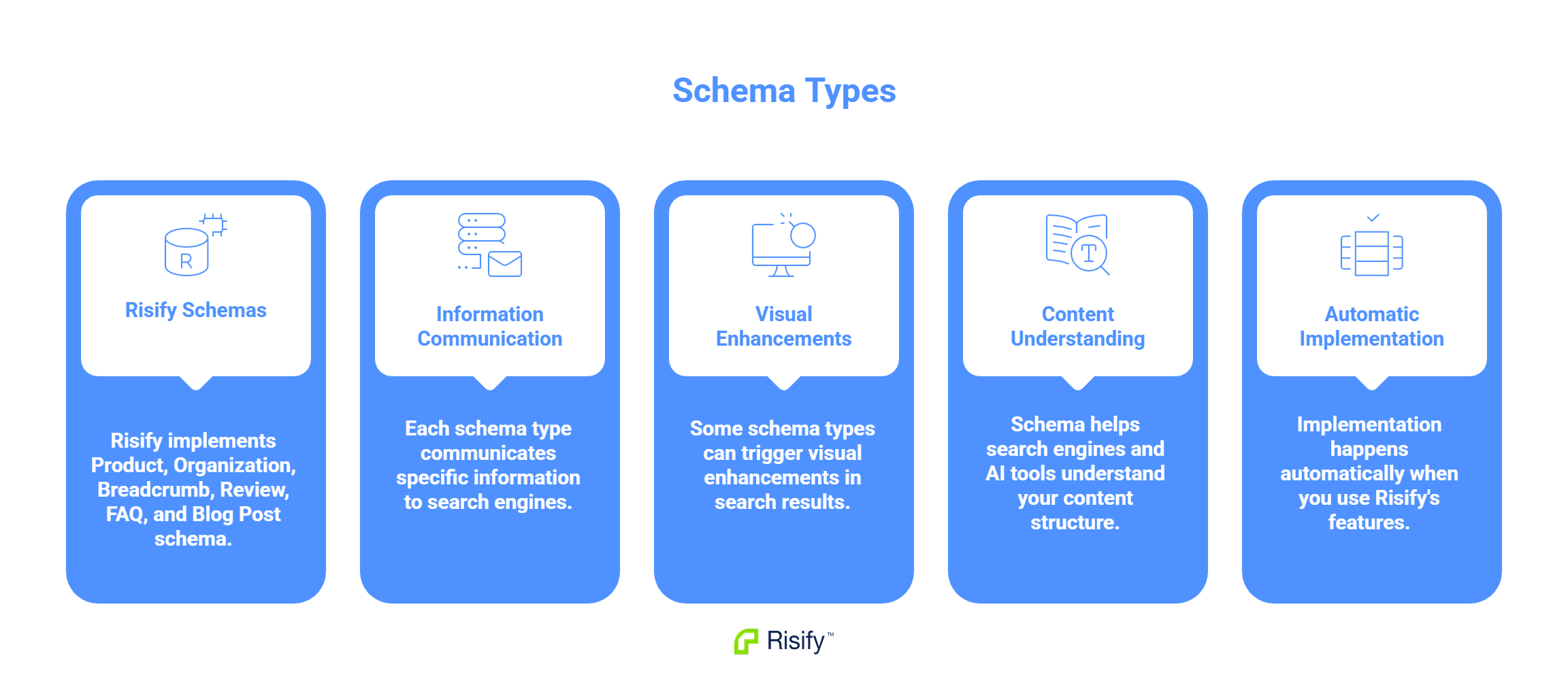
Risify supports schema implementation across multiple types:
- Organization: Business identity and contact details
- Local Business: Physical store information
- Product: Pricing, availability, and product attributes
- Reviews: Customer ratings and feedback
- FAQ: Question and answer pairs
- Video: Embedded video content
- Blog Posts: Article metadata
- Breadcrumbs: Navigation hierarchy
With the Standard plan, you receive hands-on guided setup. With the Plus plan, the Risify team handles implementation directly.
How to Verify Your Schema Markup
After implementing schema, you can check whether Google reads it correctly:
- Google Rich Results Test: Paste any URL to see which rich result types are detected and whether any errors exist.
- Google Search Console: The Enhancements section shows schema validation status across your entire site and flags pages with issues.
How Do Structured FAQs Help AI Tools?
FAQs give AI systems direct question-and-answer pairs to reference. When a shopper asks an AI assistant something like "What materials are used in handmade ceramic mugs?" the AI can pull from FAQ content that matches the query.
For this to work, FAQs need proper FAQ schema markup so AI tools recognize them as structured Q&A content rather than plain text. With Risify's centralized FAQ system, each FAQ carries the correct schema automatically.
How Do Product-Collection Relationships Affect AI Visibility?
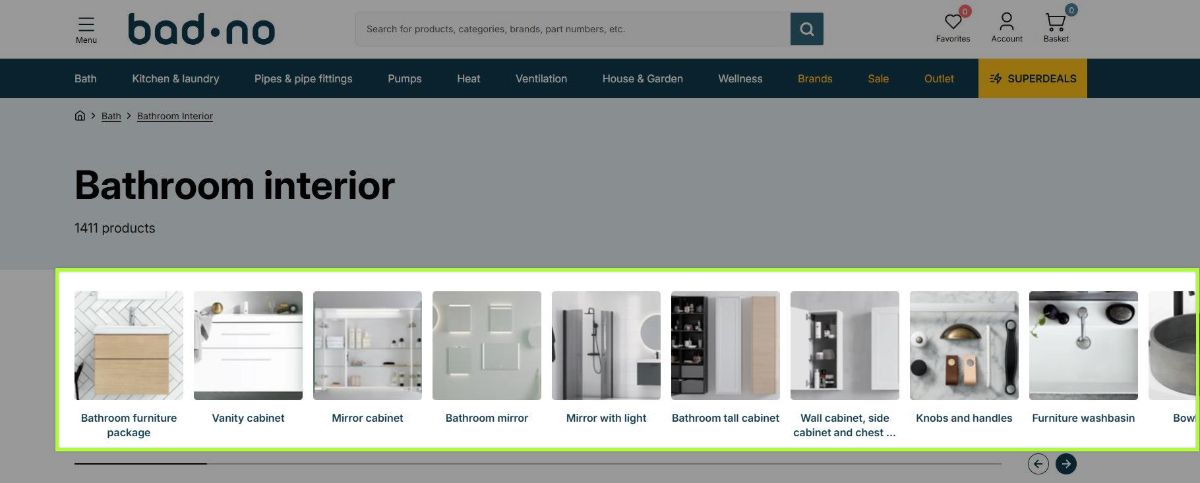
AI systems perform better when they understand how your products relate to each other and to your collections. A store with clear category hierarchies, defined breadcrumb paths, and logical navigation gives AI tools context about what you sell and how your catalog is organized.
Without this structure, confusion follows. If a product appears in multiple collections with no clear primary category, or if navigation dead-ends without showing related items, AI tools struggle to form accurate recommendations.
Which Risify Features Contribute to AI Readiness?
AI readiness is not a single setting inside Risify. It is the result of using multiple features together:
- Schema Implementation: Adds JSON-LD structured data for products, FAQs, breadcrumbs, reviews, organization info, and more.
- Centralized FAQs: Structured Q&A content with proper schema that AI tools can extract and reference.
- Breadcrumbs: Defines clear product-collection hierarchies with Breadcrumb schema, helping AI systems understand catalog organization.
- Collection Menu: Strengthens internal linking and shows relationships between categories.
- Related Search: Displays related products and collections, reinforcing content relationships.
- Meta Tags Management: Ensures titles and descriptions are complete and accurate for AI systems to reference when summarizing pages.
- Store Audit: Identifies technical issues that could block search engines from indexing your content properly.
How Long Does It Take for AI Tools to Reflect These Changes?
AI systems do not update in real time. They depend on search engine indexes, which means changes to your store's schema and structure need to be crawled and indexed by Google first. After that, AI tools gradually incorporate the updated information.
Expect a delay of several weeks to a few months before improvements appear in AI-generated responses. Consistent structure and ongoing schema maintenance help ensure your store remains accurately represented over time.
Visit risify.app to explore features, view pricing, or book a demo with the team .