




Both Microsoft and Google pointed to the same factor behind AI visibility: structured data.
At SMX Munich in March 2025, Microsoft’s Principal Product Manager Fabrice Canel confirmed that schema markup plays a direct role in helping Microsoft’s LLMs, including Copilot, interpret web content.
Around the same time, at Search Central Live NYC, Google’s Ryan Levering noted that structured data makes their systems more efficient, reducing the need to infer meaning from unstructured pages.
Let’s examine what that actually means for your Shopify store through a real example and explore how to have structured data for your store easily.

Why Structured Data Matters in AI Searches (Real Example)
As it’s already clear that structured data plays a massive role in AI visibility, we are going to perform an AI search query and examine the results to better understand the situation.
The following example includes a search query on ChatGPT. We are going to take a look at the products recommended and the stores that provide them.
First, we are going to use Google Rich Results Test to see if the product page has structured data and if that is formatted well.
Then, we are going to use Risify’s free Schema Checker to better understand what structured data the specific store needs.
AI Query and Results
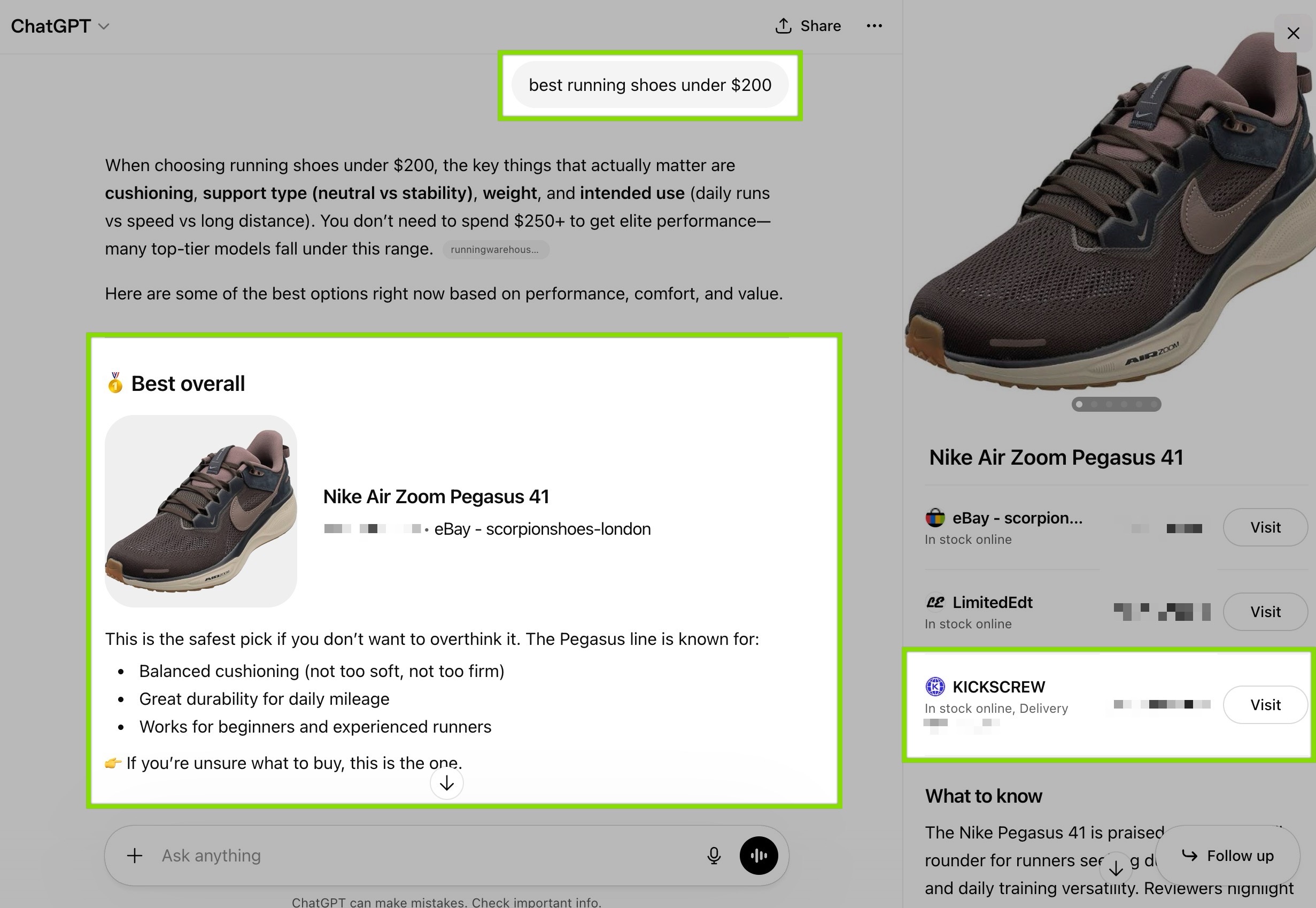
When ChatGPT was asked to recommend the best running shoes for some specific price, it displayed some certain products under different categories like “Best for support”, “Best for maximum cushioning” and etc.
At the top, it presented the “Best overall” product. Once the product image was clicked, we can see that this product was offered by three different stores.
Let’s pick a Shopify store called Kicks Crew here to analyze. It currently sits at the third place in the AI recommendations.
Structure Analysis
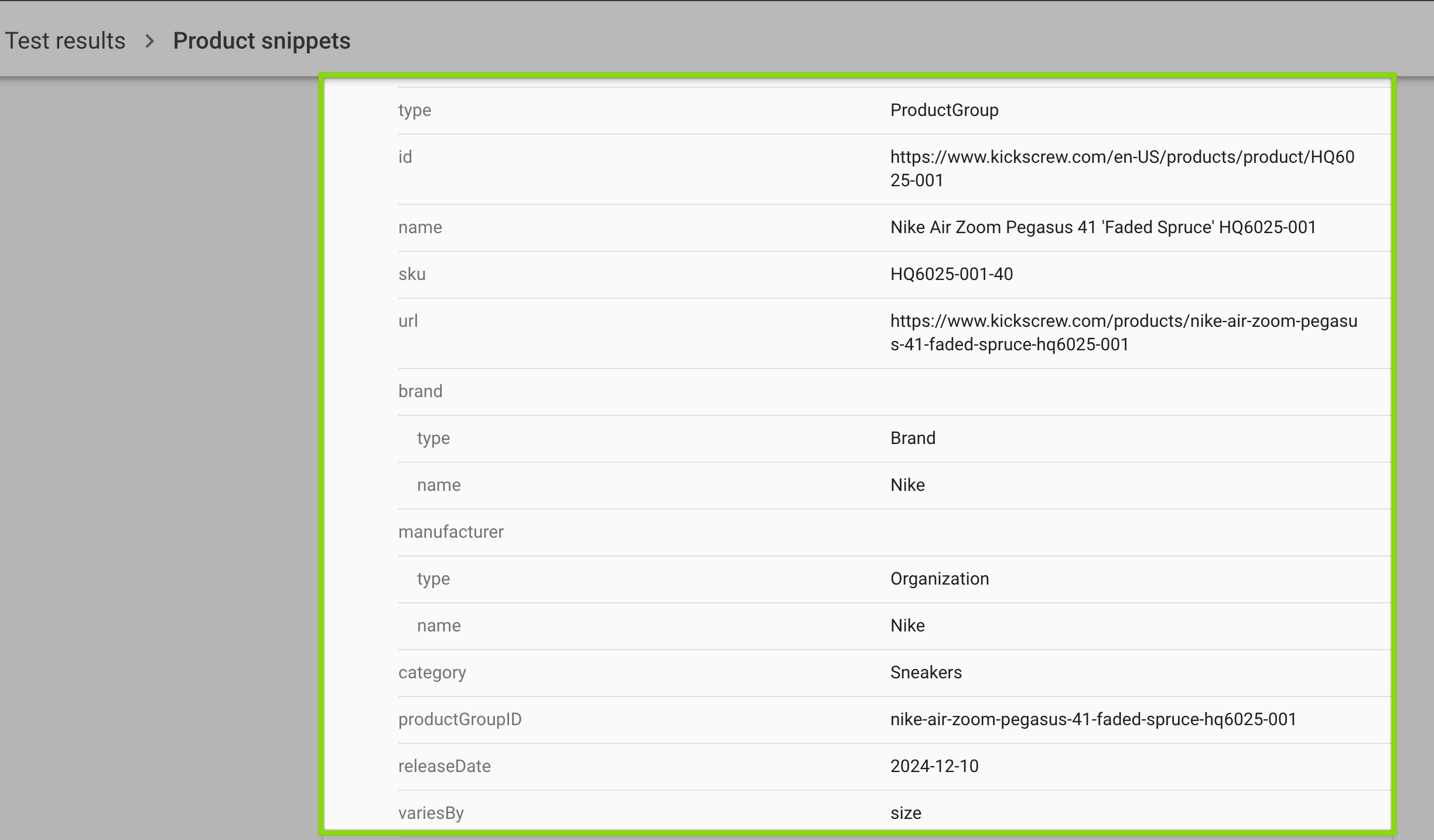
It’s clearly seen on Google Rich Results that this product page has structured data in product snippets, breadcrumbs, and organization.
Let’s have a thorough analysis of the store schema using the Risify schema checker.
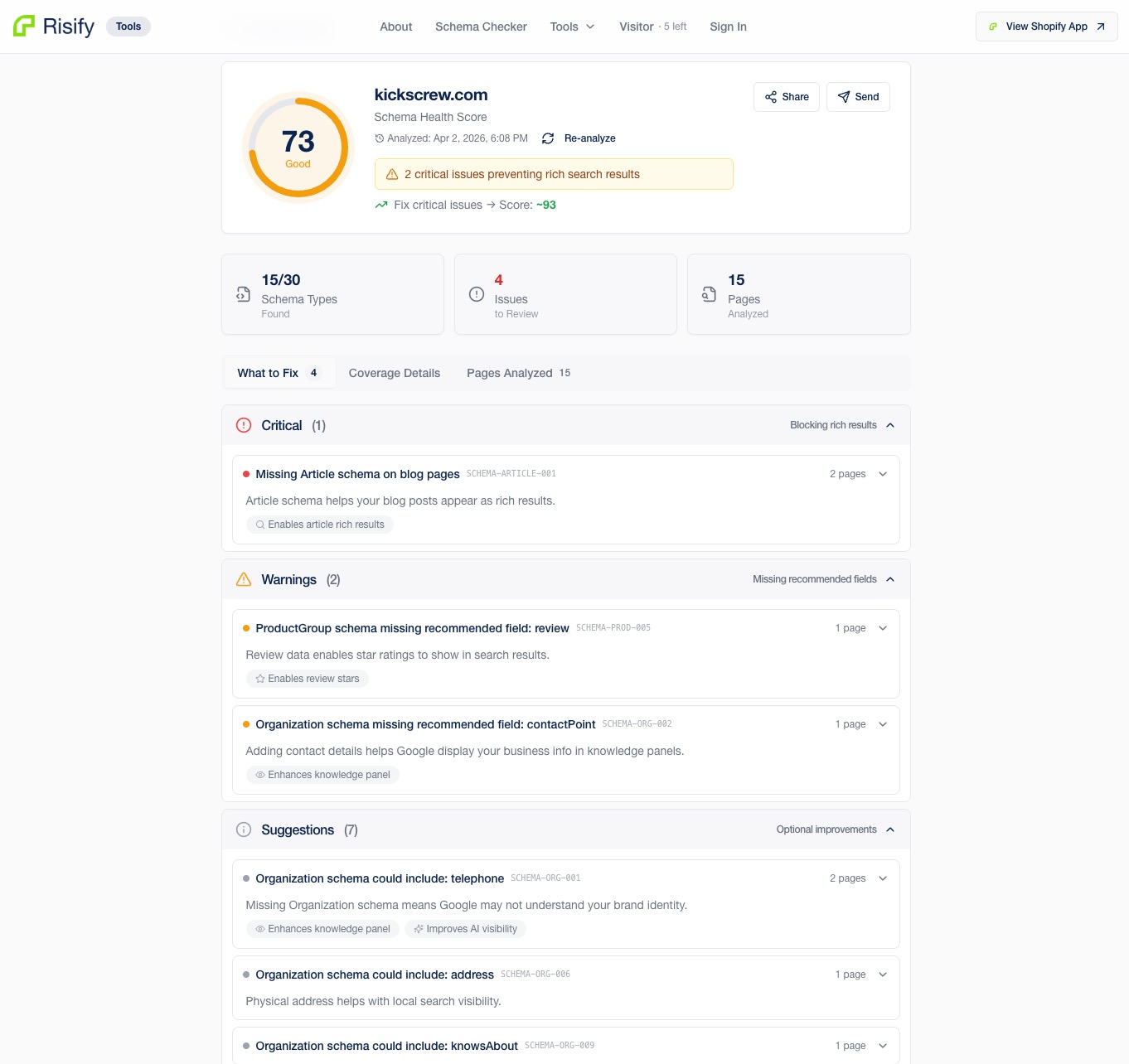
What’s Working
As you can see, the Risify schema checker (free) gave much more detailed analysis of the store’s schema by analyzing 15 pages in total.
First of all, it’s important to note that the store has 15 schema types set up - which helps its AI visibility to a great degree.
These schema types available include:
- Product
- BreadcrumbList
- Organization
However, there are also important warnings and suggestions to take into consideration in order to keep being recommended by AI and also move up the recommendation list.
What’s Missing
As a critical warning, there’s no Article schema found. In addition, some schema types have missing recommended fields.
Other than that, we can see 7 other suggestions about schema. Once these warnings are fixed, the store will be better optimized for AI search visibility.
Important Factors
Unstructured pages create interpretation problems.
A sentence like “Now just $249, limited stock remaining” requires the AI tool to infer which number is the price, what “limited stock” means in terms of availability, and whether this refers to one variant or several.
That inference usually works but it’s less reliable across different page formats, writing styles, and layouts.
Structured data removes that ambiguity. When a product page declares “price”: “$249” and “availability”: “InStock” explicitly in its schema, the AI reads a direct statement rather than parsing a sentence. The meaning doesn’t need to be inferred as it’s already labeled.
While structured data plays a critical role in how AI systems interpret content, it’s not a guarantee of visibility on its own.
It provides clarity and context, making it easier for AI tools to understand your pages. However, other factors (such as content quality, consistency, and overall site structure) also influence whether your content is selected or cited.
Think of structured data as a foundation: without it, understanding is harder; with it, you’re simply making it possible.
Understanding Foundations of Structured Data
Schema markup is code added to a page that tells search engines and AI tools what the content means, not just what it says.
Let’s have a look at the most important parts of structured data for Shopify stores:
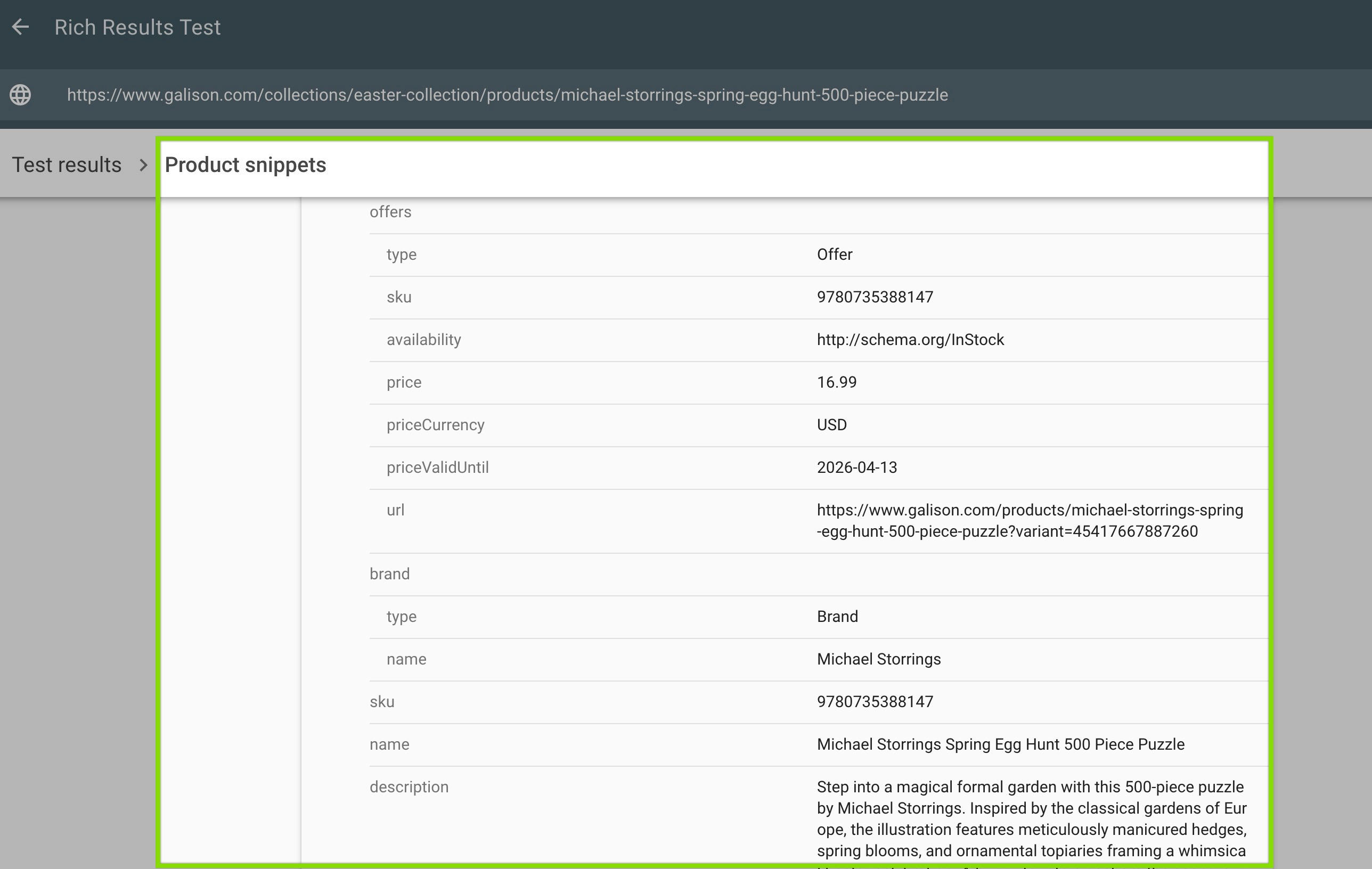
Product schema labels the core details of each item: name, price, currency, availability, brand, SKU, and images. Without it, AI tools are working from interpretation rather than declaration.
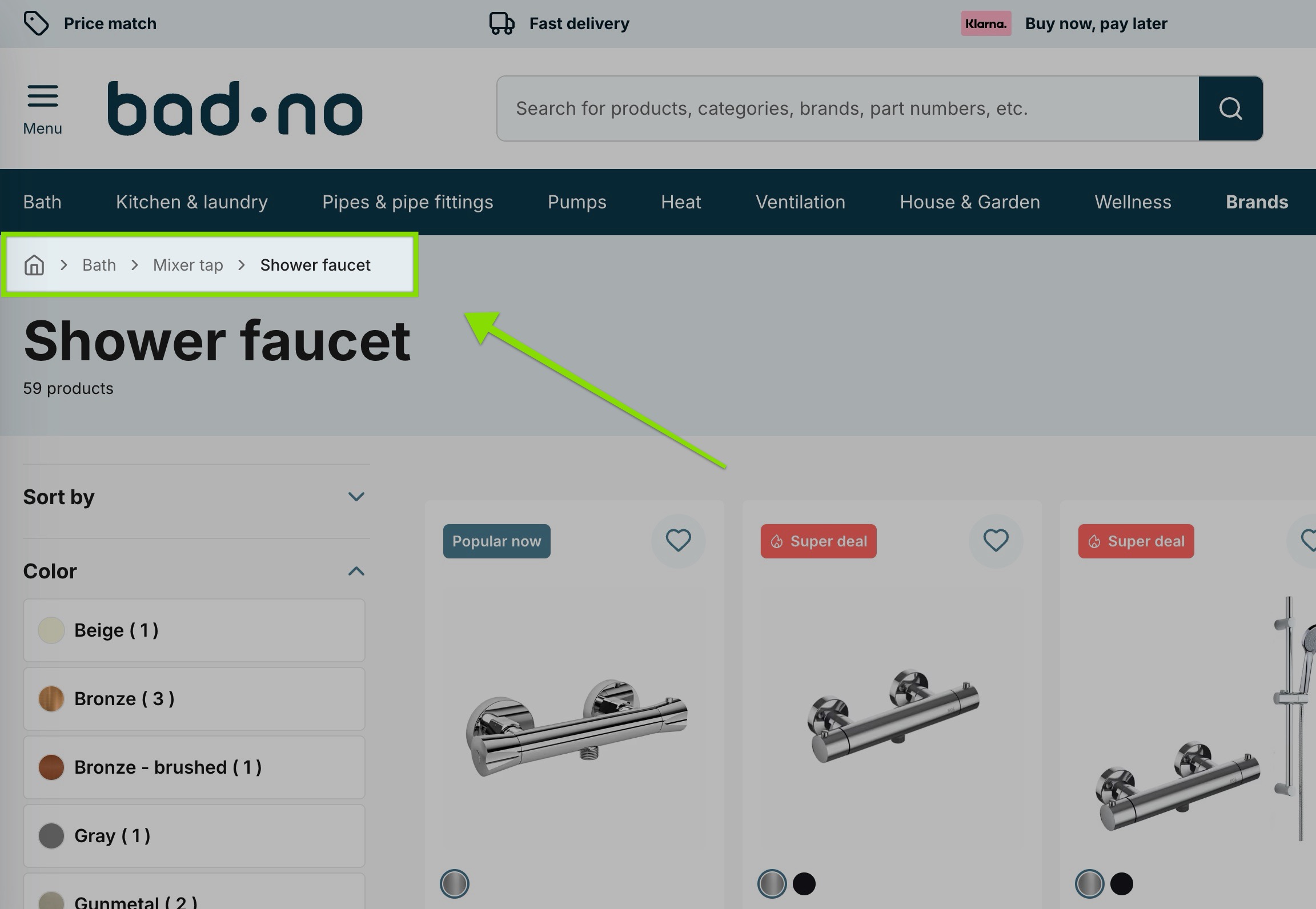
BreadcrumbList schema encodes your site’s navigation hierarchy. This tells AI tools how your catalog is organized, which helps them understand category relationships and surface the right pages for category-level queries.
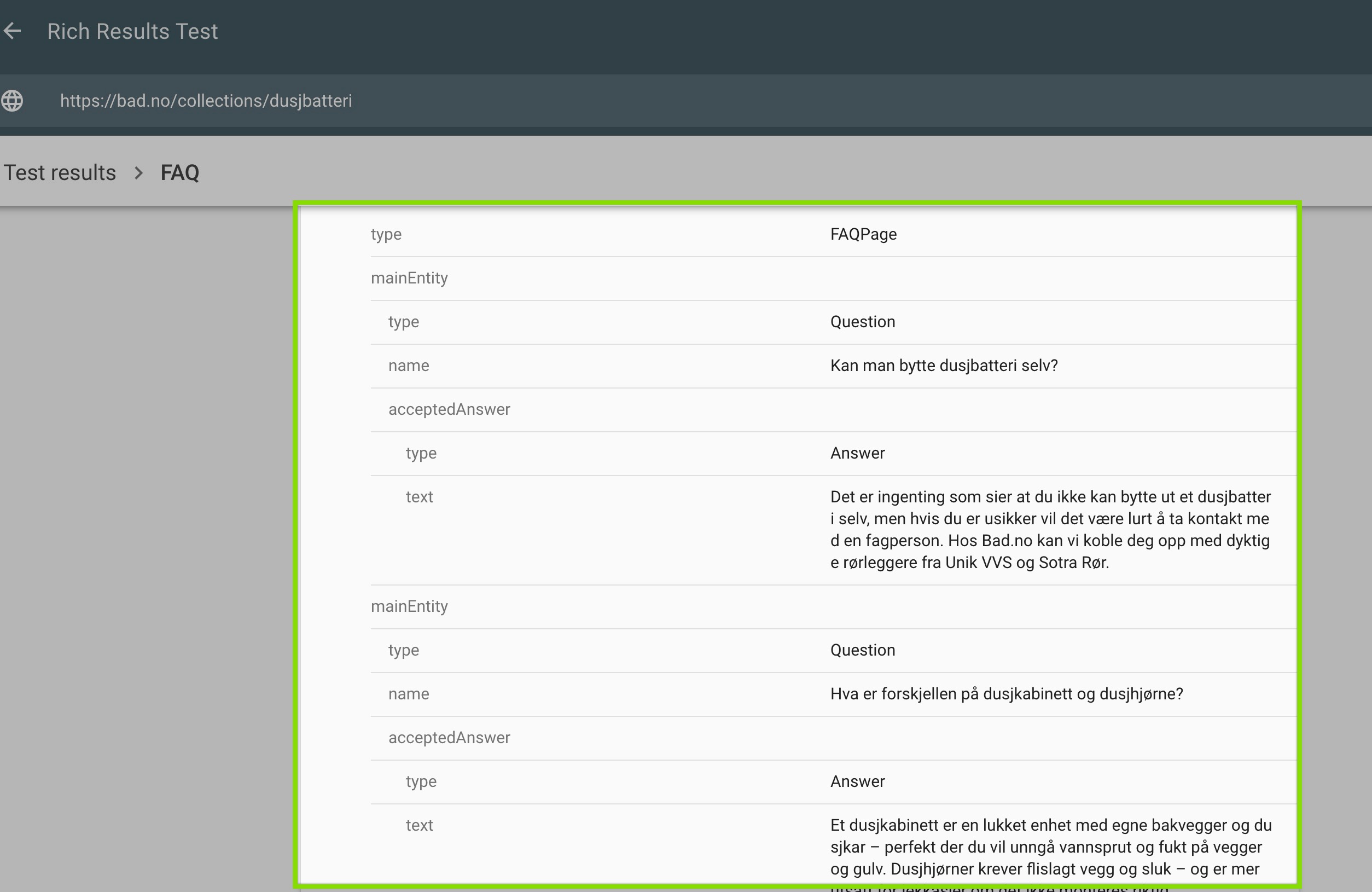
FAQPage schema marks up question-and-answer pairs. When a user’s query matches a question you’ve structured on a product or collection page, the AI can surface your answer directly rather than extracting sentences from a block of text.
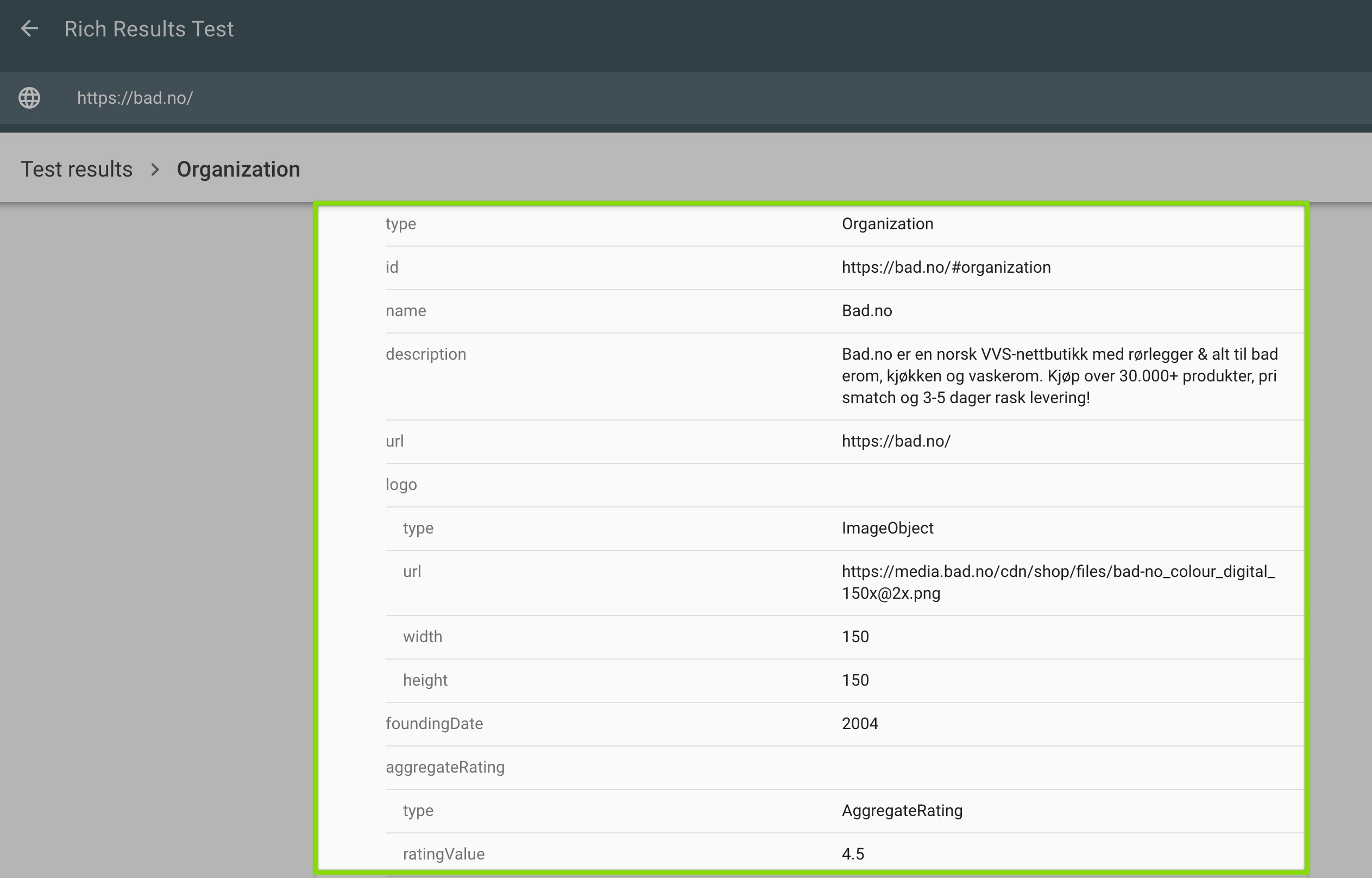
Organization Schema establishes your brand’s identity as a distinct entity. It helps AI systems reduce ambiguity by clarifying who you are, what you do, and how your brand connects to other entities online. This becomes especially important for stores that sell products from multiple brands.
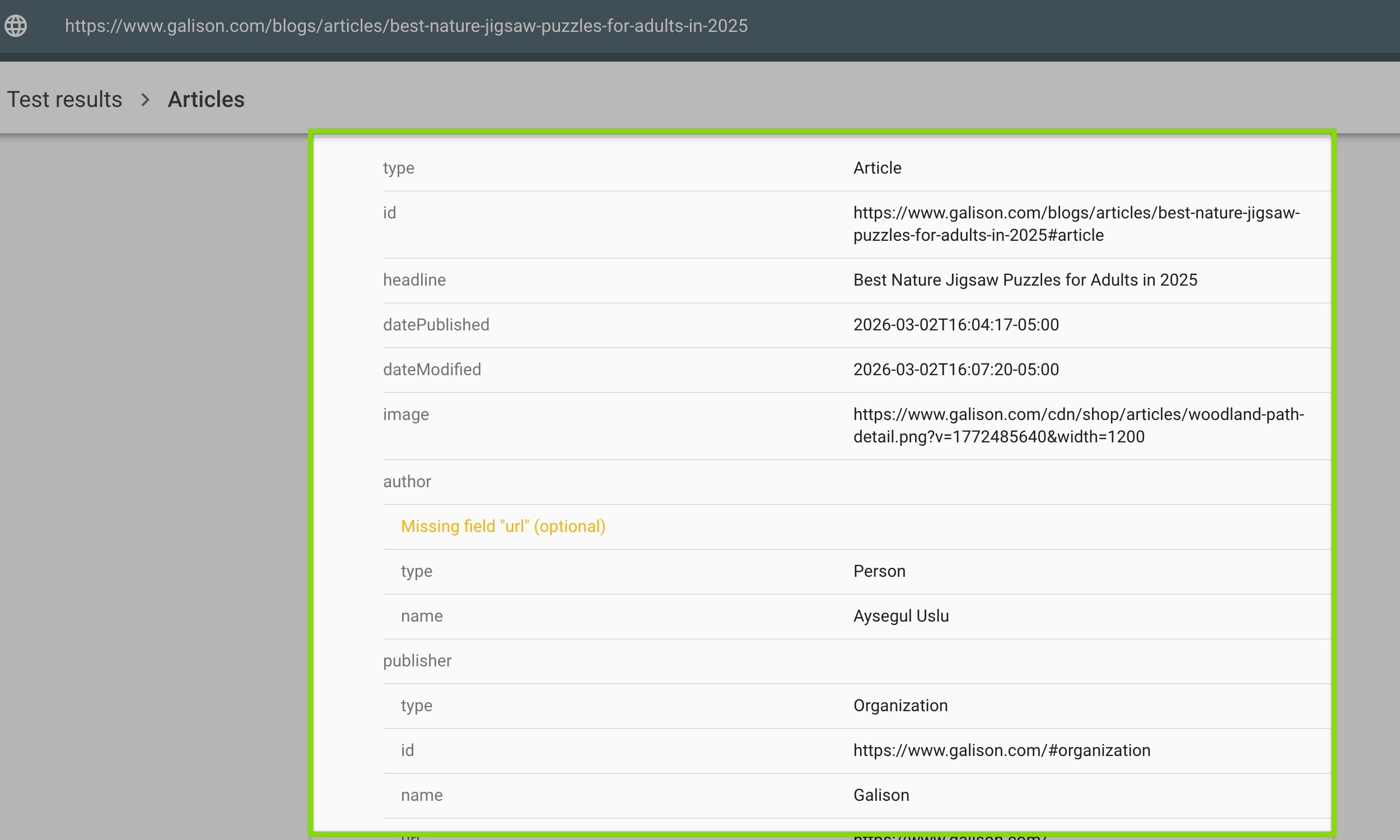
Article schema includes key details such as publication date, author, and publisher. These act as credibility signals that AI systems use when deciding whether to reference a source.
Together, these schema types create a structured layer that makes your store more discoverable by AI tools, not just crawlable.
How to Fix Structured Data Issues in Shopify
If you want to fix structured data issues for your Shopify store, you should first audit your store’s structure.
To manually audit your store’s structured data for AI visibility, start here:
Check Current Schema
Use Google’s Rich Results Test on a product page. Confirm that price, availability, brand, and at least one identifier (GTIN, MPN, or SKU) are present and accurate.
Go to Risify’s free schema checker and paste your store URL to get a detailed view of your store’s schema setup.
Configure Missing Parts
Prioritize Product, FAQPage, Organization, BreadcrumbList, and Article schema. You can get started with your highest-traffic pages.
Verify your breadcrumbs are marked up, not just visible. A breadcrumb trail in your navigation doesn’t mean BreadcrumbList schema exists. Validate it separately.
If you have question-and-answer sections on product or collection pages, check whether they’re marked up with FAQPage schema. If not, that content is invisible to AI tools as structured data.
Monitor and Update Regularly
Firstly, schema that contradicts on-page content (let’s say a price in the markup that doesn’t match the displayed price) causes platforms to discard the markup entirely. Accuracy matters as much as presence.
Also, keep your schema updated. If any catalog or business information changes, you should audit & update your structured data accordingly.
Set Up Structured Data Automatically
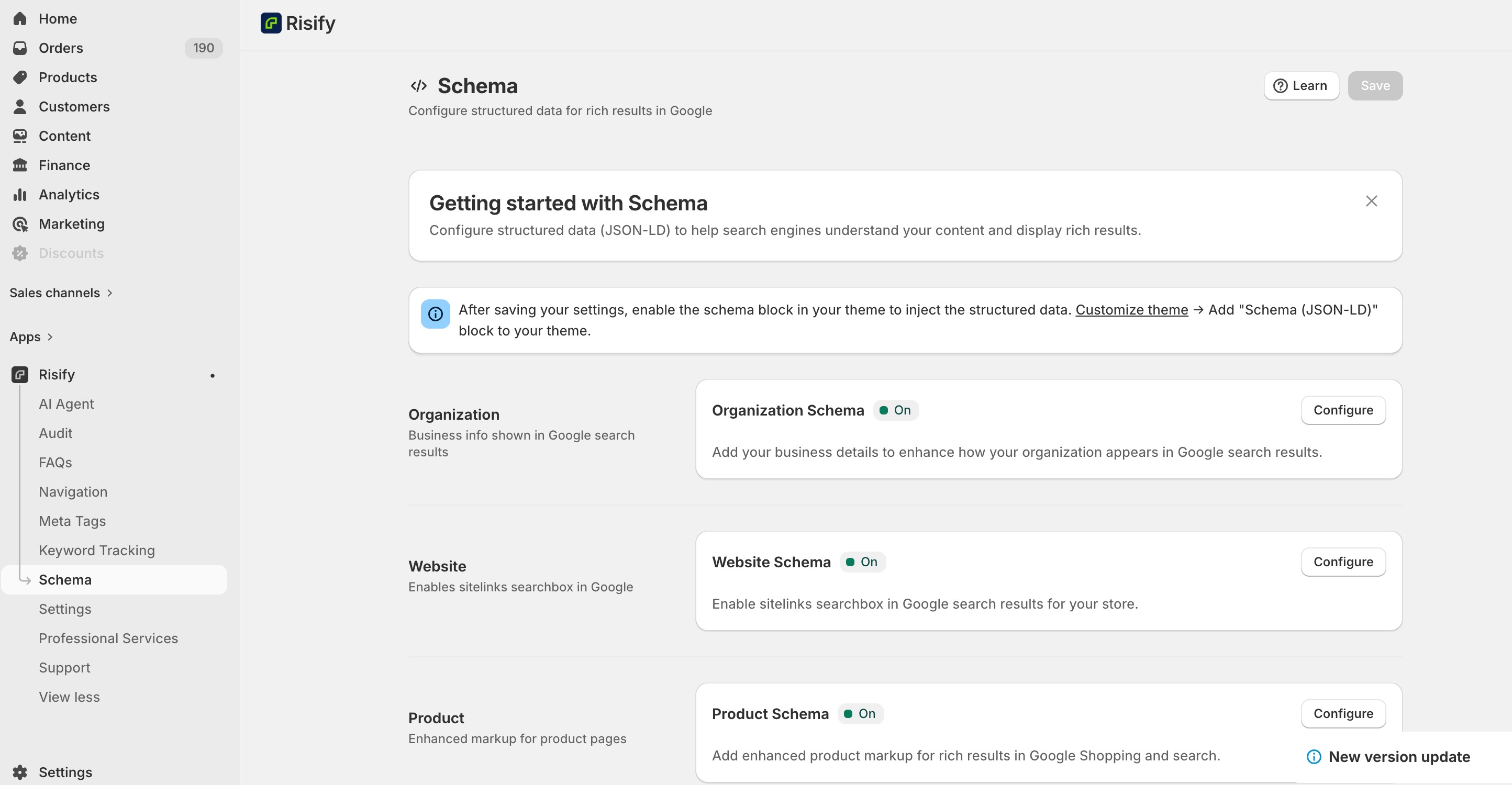
If you want to skip the manual implementation, you can let Risify handle schema setup, validation, and ongoing audits.
You can audit your store and see all the foundational errors easily. Then you can set up all these schema types with a few clicks.
Risify helps you fix structured data issues with no manual code or development needed.
- For product schema, Risify automatically generates complete markup across your catalog, including availability status, identifiers, and brand fields that default themes typically omit. The result is product pages that AI tools can read accurately rather than approximate.
- For breadcrumbs, Risify lets you define your collection hierarchy once and generates consistent BreadcrumbList schema across every product and collection page. The navigation path is explicit throughout your store.
- For FAQs, Risify’s AI agent helps you generate and structure question-answer content, then marks it up with FAQPage schema automatically. Your answers become extractable pairs rather than buried prose.
- For internal structure, Risify handles the linking and relationship signals that help AI tools understand how your pages connect, which matters most when users ask category-level or comparative questions.
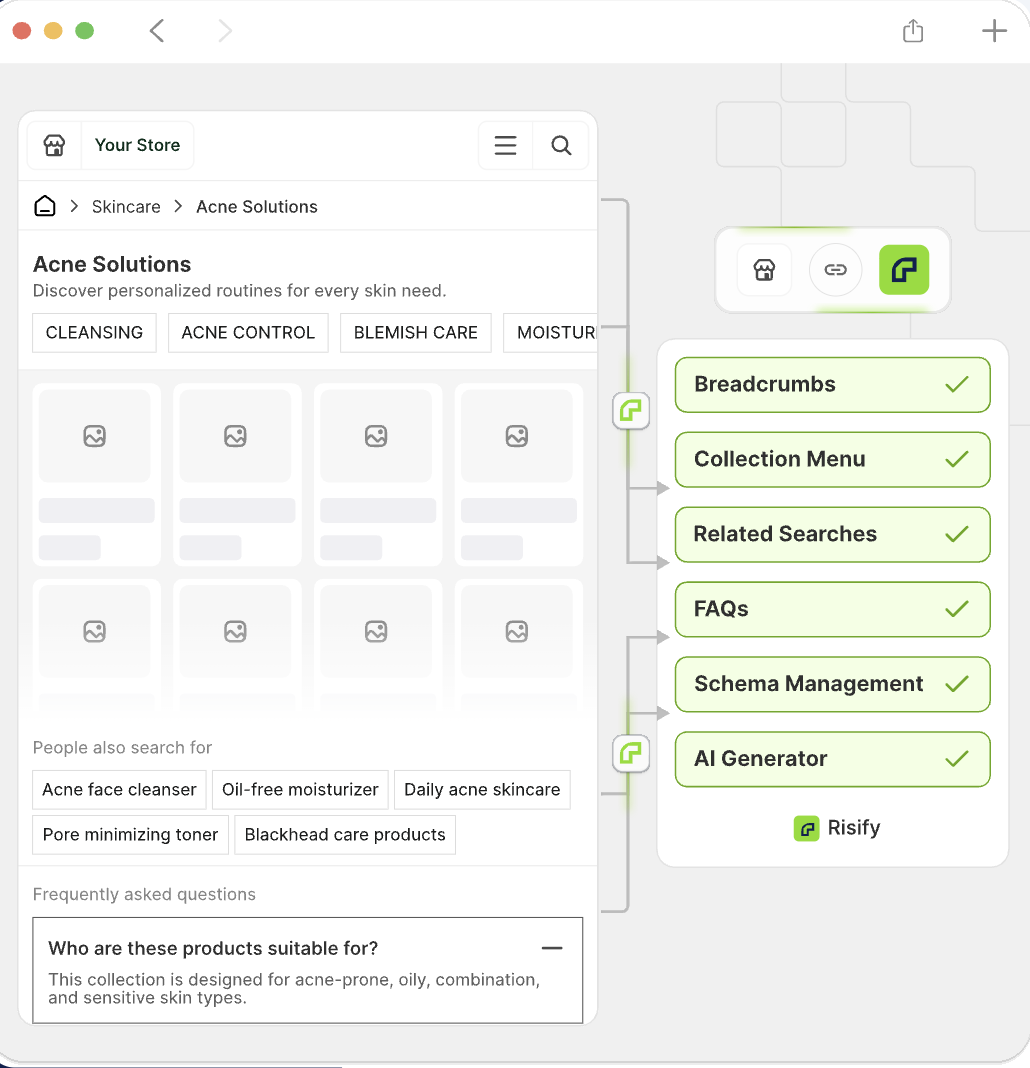
All of this is accessible through a single Claude conversation. You describe what your store needs; Risify handles the implementation. No code, no developer, no fragmented tooling across different schema types.
Conclusion
The shift toward AI-driven product discovery is already underway. Shoppers are using ChatGPT, Gemini, and Perplexity to research and find products.
These AI platforms are making product recommendations based on how clearly your store communicates its content. Structured data is that communication layer.
It’s the difference between an AI tool accurately representing your products and misreading them, between appearing in a recommendation and being absent from it entirely.
Get all technical foundations set up for better AI search visibility
Risify improves product discovery with clear navigation, centralized FAQs, and smart suggestions, making your store easier for AI tools like ChatGPT and Gemini to understand.

- Navigation and internal linking
- Reusable FAQs and structured content
- Valid schema markup for AI and search visibility
- AI-powered FAQ and metadata generation
- Store audits to see exactly what to fix