




A shopper looking for running shoes in 2026 might find your Shopify store three different ways.
- They might click a blue link on Google
- They might read a single answer card that quotes your sizing FAQ
- Or they might ask ChatGPT for a recommendation and see your product named in the response
Three surfaces, three acronyms, and a lot of confusion about whether they require three separate strategies.
Let’s work on all to understand the real impact.
Key Takeaways:
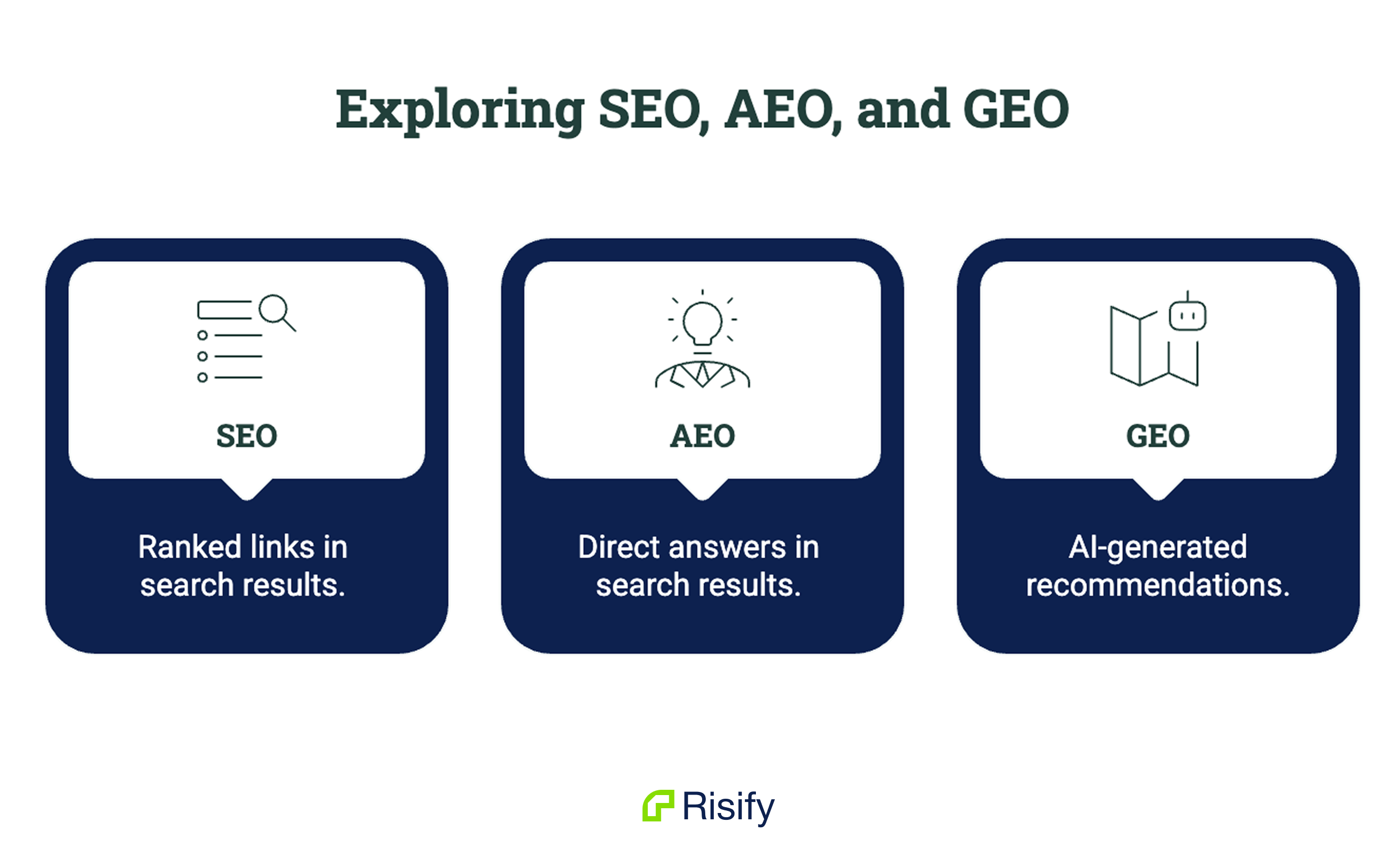
- SEO, AEO, and GEO describe three different ways a Shopify store can become visible to a shopper: ranked links, direct answers, and AI-generated recommendations.
- The acronyms describe outcomes more than separate disciplines. The underlying inputs overlap significantly.
- SEO has not disappeared. It has narrowed in scope as AI-generated answers now sit above many traditional results.
- AEO is about being the answer. GEO is about being one of the trusted sources an AI uses to build its answer.
- For most Shopify merchants, the practical work is not “do three things at once” but “build a strong foundation that serves all three.”
Exploring SEO for Shopify Stores
Search engine optimization (SEO) is the oldest of the three terms and the one most merchants already recognize.
At its core, SEO is the practice of making a store easier for traditional search engines like Google to understand, rank, and serve to the right shoppers.
The Shopper Journey SEO Was Built For
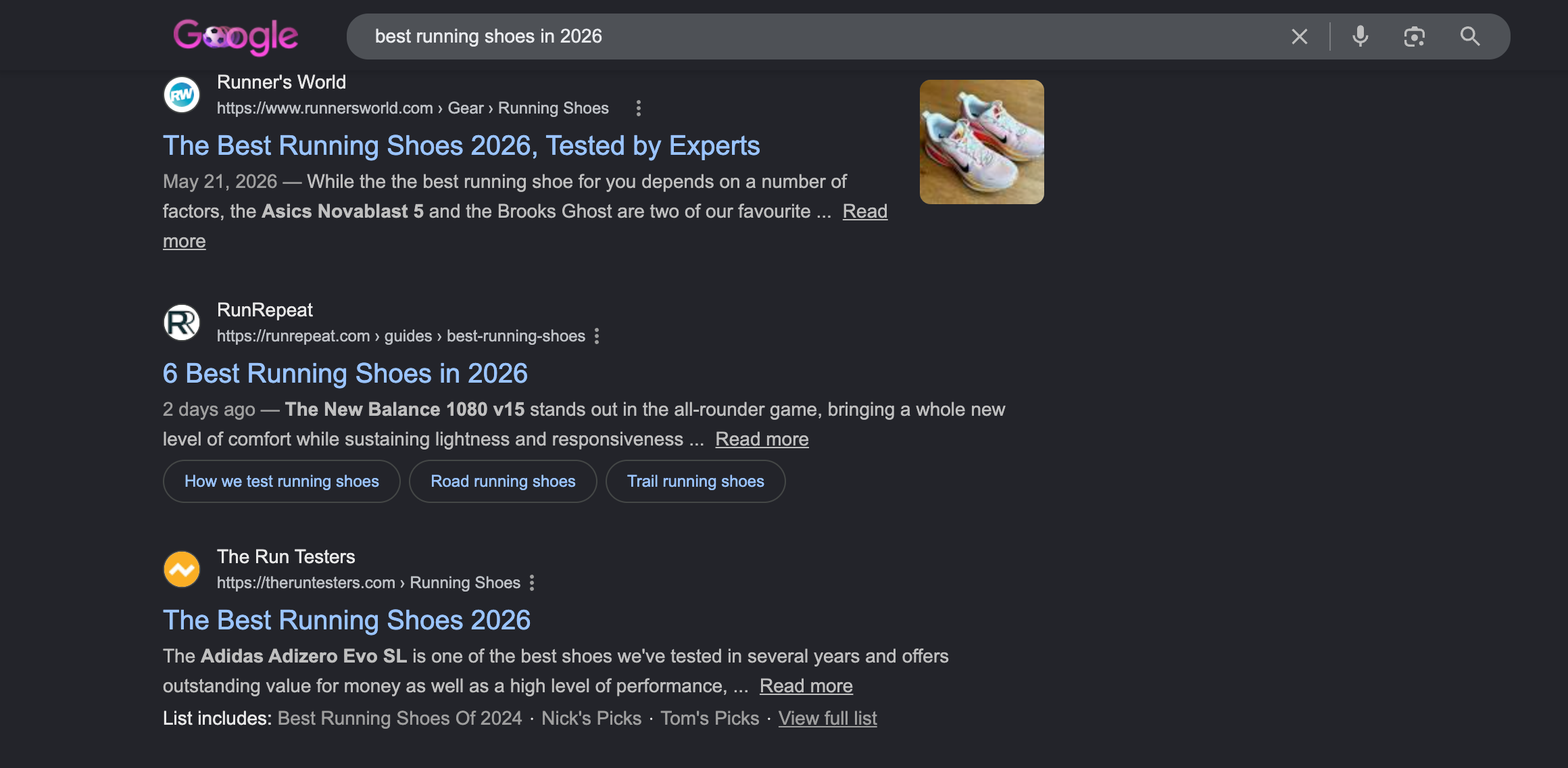
The classic flow looked like this.
A shopper types a query into Google. Google returns a page of blue links. The shopper picks one, clicks through, and arrives on a store.
SEO is the practice of being one of the links the shopper picks. That means being relevant to the query, being authoritative enough that Google trusts the page, and being structured clearly enough that Google can read the page in the first place.
For Shopify stores, SEO has always been a mix of work on product pages, collection pages, the blog, and the site’s underlying structure.
A clean site structure and navigation hierarchy, accurate page titles, fast loading, and content that matches what shoppers actually search for are still the building blocks.
What SEO Still Wins for Shopify Stores
SEO has not disappeared. It has narrowed. AI-generated answers now appear above traditional results on a growing share of queries, and on some queries fewer shoppers scroll down to click a blue link.
Shopping queries triggering AI Overviews grew 5.6 times between November 2024 and March 2026, according to SE Ranking’s analysis.
Ahrefs research from early 2026 estimated those overviews reduce clicks to organic results by roughly 58% on the queries where they appear.
The practical takeaway is that ranking in the blue links still matters, especially for high-intent queries where shoppers want to compare, browse, or buy directly.
The work is the same as before.
The reward has shrunk on some queries and stayed strong on others. Knowing where each falls is the new SEO skill, and most stores benefit from a structured audit of their visibility before changing anything.
What AEO Means for Your Shopify Store
Answer engine optimization (AEO) is the practice of structuring a store’s content so that an AI-powered surface can pull out a direct answer and serve it to the shopper.
How AEO Changes the Shopper Journey
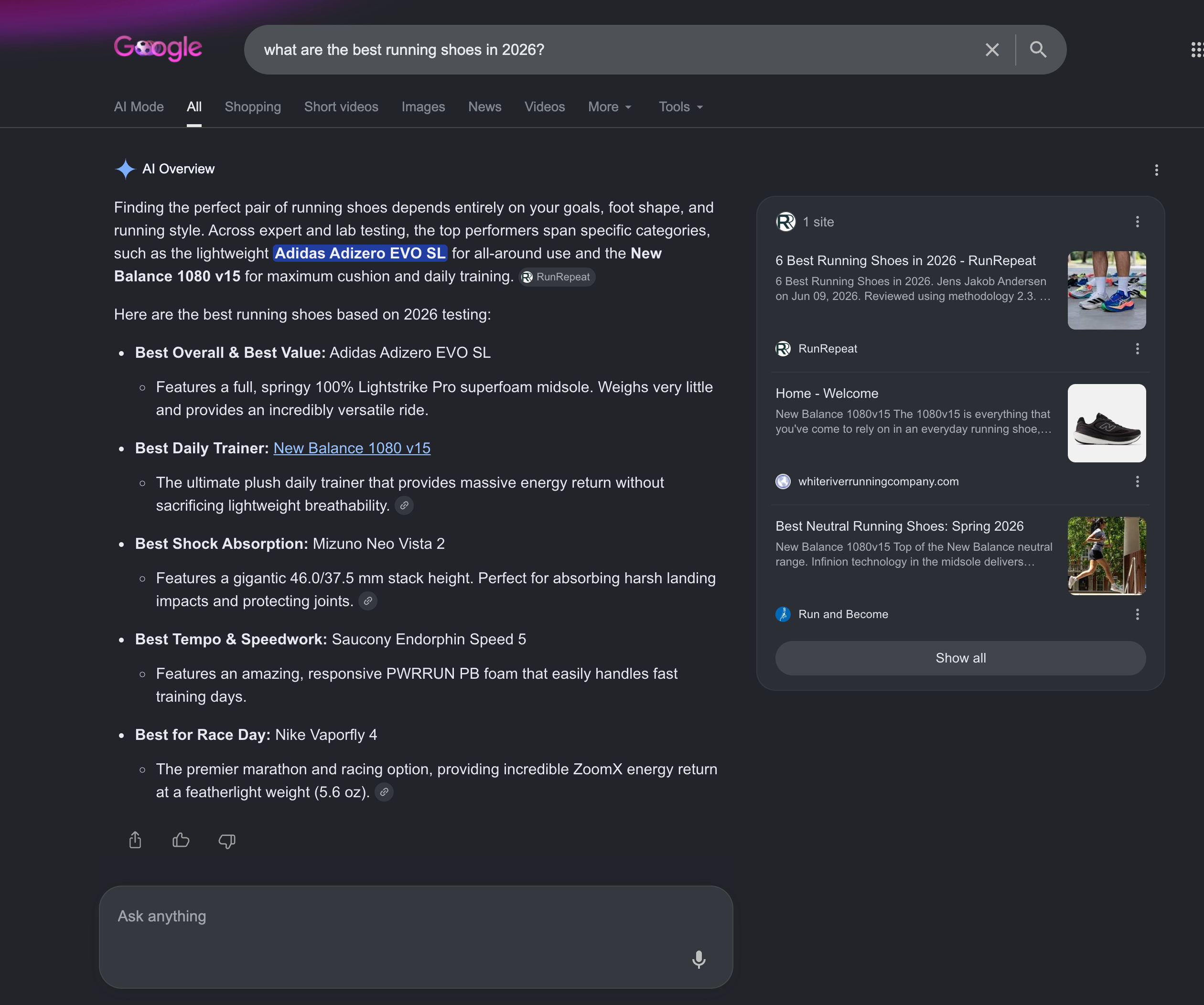
Imagine a shopper asking “what are the best running shoes in 2026?” instead of typing a keyword and browsing results.
The shopper does not want ten links. They want one clear answer.
The surfaces where this plays out are familiar. Google’s featured snippets at the top of the results page. The People Also Ask boxes that expand into answers.
Voice assistants like Siri or Alexa reading aloud. Google AI Overviews summarizing a response in a single card. All of these are answer engines, and AEO is the work of being the source they pick.
Which Questions Answer Engines Pull From Your Store
The questions answer engines extract best are the questions shoppers actually ask before they buy.
Sizing and fit. Return policies. Shipping times. Compatibility between products. Comparisons within a category. Care instructions.
The brand stories a store tells matter less to an answer engine than the practical questions a buyer has on the way to the cart.
For Shopify merchants, this is why centralizing FAQs and managing them consistently across your Shopify store has become a real lever.
Scattered, repeated, or missing FAQs leave an answer engine nothing clean to extract, and the store gets passed over even when it has the best answer to give.
Stores that organize their FAQs and structure them in a way answer engines can read tend to show up more often in these moments.
What Is GEO and How AI Tools Recommend Stores
Generative engine optimization is the newest of the three terms, and the one most often confused with AEO.
The simplest distinction is this. AEO is about being the answer. GEO is about being one of the trusted sources an AI pulls from when it builds an answer.
How GEO Plays Out in a Real Shopping Query
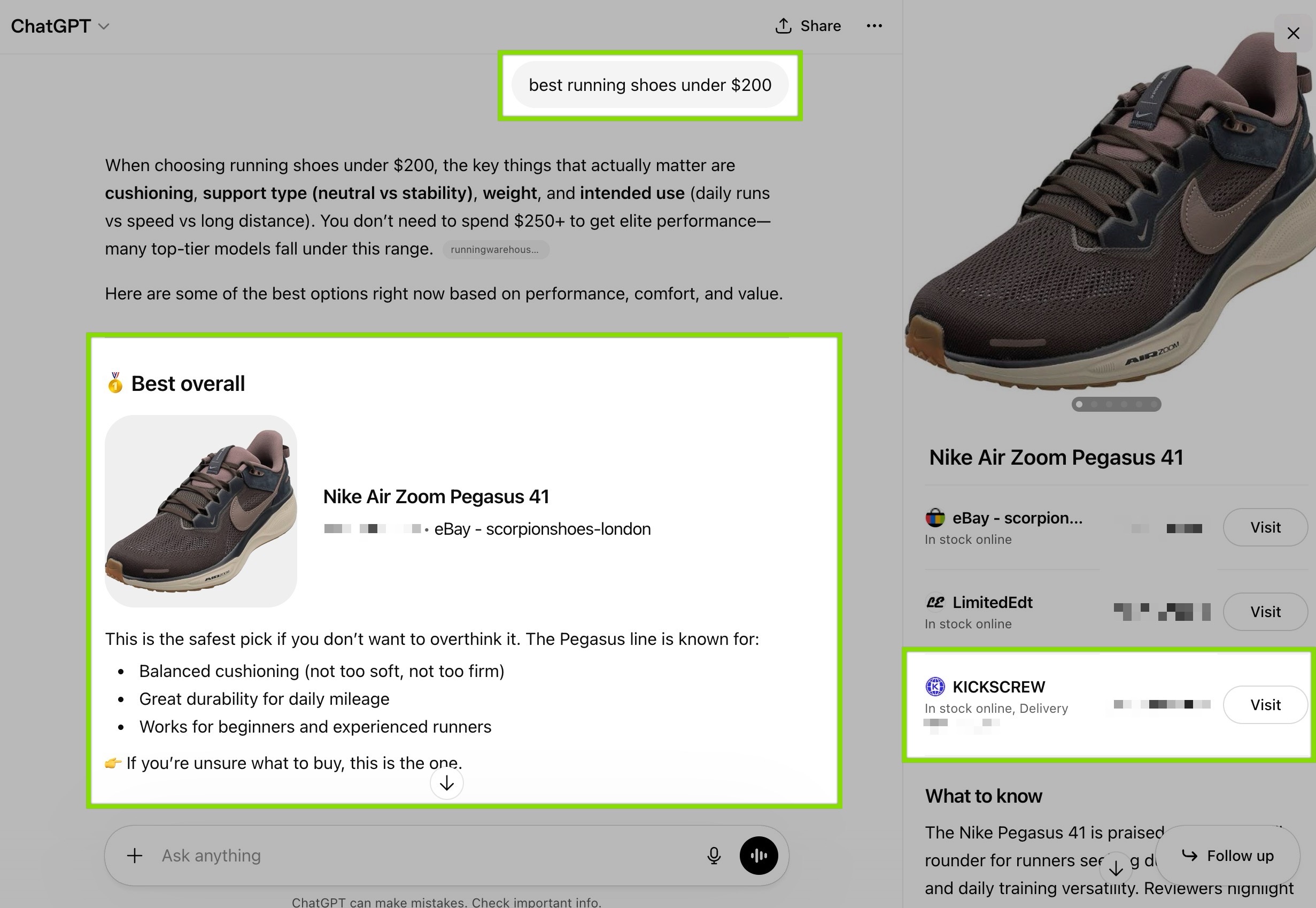
A shopper opens an AI tool like ChatGPT and asks something like “best running shoes under $200.”
The AI tool does not return a list of links. It returns a recommendation, often with two or three specific brands or products called out by name, sometimes with a short explanation of why each one was chosen.
That recommendation was not pulled from a single page.
It was synthesized from many sources, including the AI’s training data, live web searches it ran in the background, structured product information it pulled in, and third-party reviews it weighted as credible.
GEO is the work of being one of the sources the AI trusts enough to pull from.
Being Recommended vs Being the Answer
The mechanical difference between AEO and GEO matters more than it sounds.
In AEO, there is one slot. One featured snippet. One answer card at the top of a result. Multiple pages can rank for a query, but only one becomes the answer that gets read aloud or shown front and center.
The dynamics look closer to ranking first than ranking anywhere on the page.
In GEO, there is no single slot. The AI is reading widely and building a single response from many inputs. A store does not have to beat every competitor to be included.
It has to be credible enough, recognizable enough, and clear enough that the AI trusts the information when it draws its conclusion.
What It Means for Your Shopify store
The implications are different from SEO in a way worth understanding clearly. SEO rewards a store for being the best individual result for a query.
GEO rewards a store for being a known entity that an AI recognizes across many sources. A store can be cited in an AI answer without ranking on the first page of Google.
A store can rank well on Google without being cited at all. The two systems read different signals. You can refer to these sources to understand how AI visibility works:
Where the Three Actually Overlap
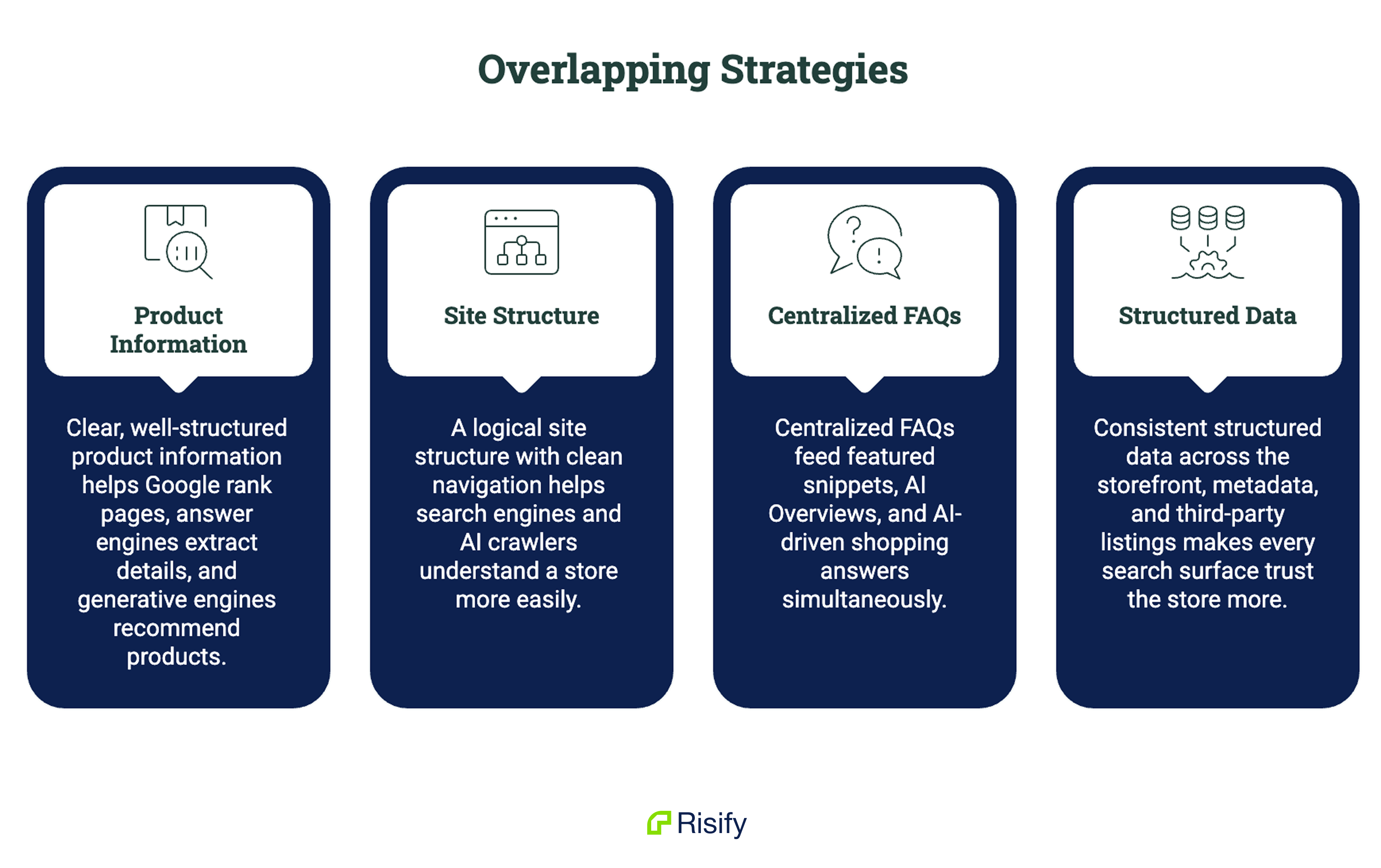
This is the section worth slowing down on.
A Shopify store that wants to be visible across all three surfaces does not need three separate strategies. The same underlying inputs feed all of them.
Clear, well-organized product information helps Google rank a product page. It also helps an answer engine extract the right detail.
It also helps a generative engine confidently recommend the product. The work is the same, even when the outcome shows up in three different places.
A logical site structure with clean navigation helps search engines understand a store. The same structure helps AI crawlers do the same.
Centralized FAQs feed featured snippets, AI Overviews, and AI-driven shopping answers simultaneously.
Consistent structured data across the storefront, the metadata, and any third-party listings makes every search surface, traditional or AI, trust the store more.
Conclusion
The vocabulary will keep changing.
Two years ago almost nobody said GEO. Two years from now there will likely be a fourth acronym competing for attention. The foundation underneath them moves much more slowly.
If you take one thing from this comparison, make it this: you do not need three strategies, but you do need to know which surface you are currently losing on.
A store with strong rankings and weak FAQ coverage has an AEO gap. A store that ranks well but never gets named in AI recommendations has a GEO gap. The fix is different in each case, even though the building blocks are shared.
Start by checking where you actually appear today. The gap between what you find and what you expected is your roadmap. Then, fix your store’s structure for improved AI visibility.