


Ask an AI tool where to buy a gooseneck kettle and you’ll get a short list of stores, often with links underneath. Those links are the sources the answer was built from: review sites, buying guides, marketplaces and other stores’ pages.
When your store isn’t in the answer, the sources tell you why. They’re also the part you can act on. You can’t edit what ChatGPT says, but you can improve the pages it should be reading and get onto the sites it keeps citing.
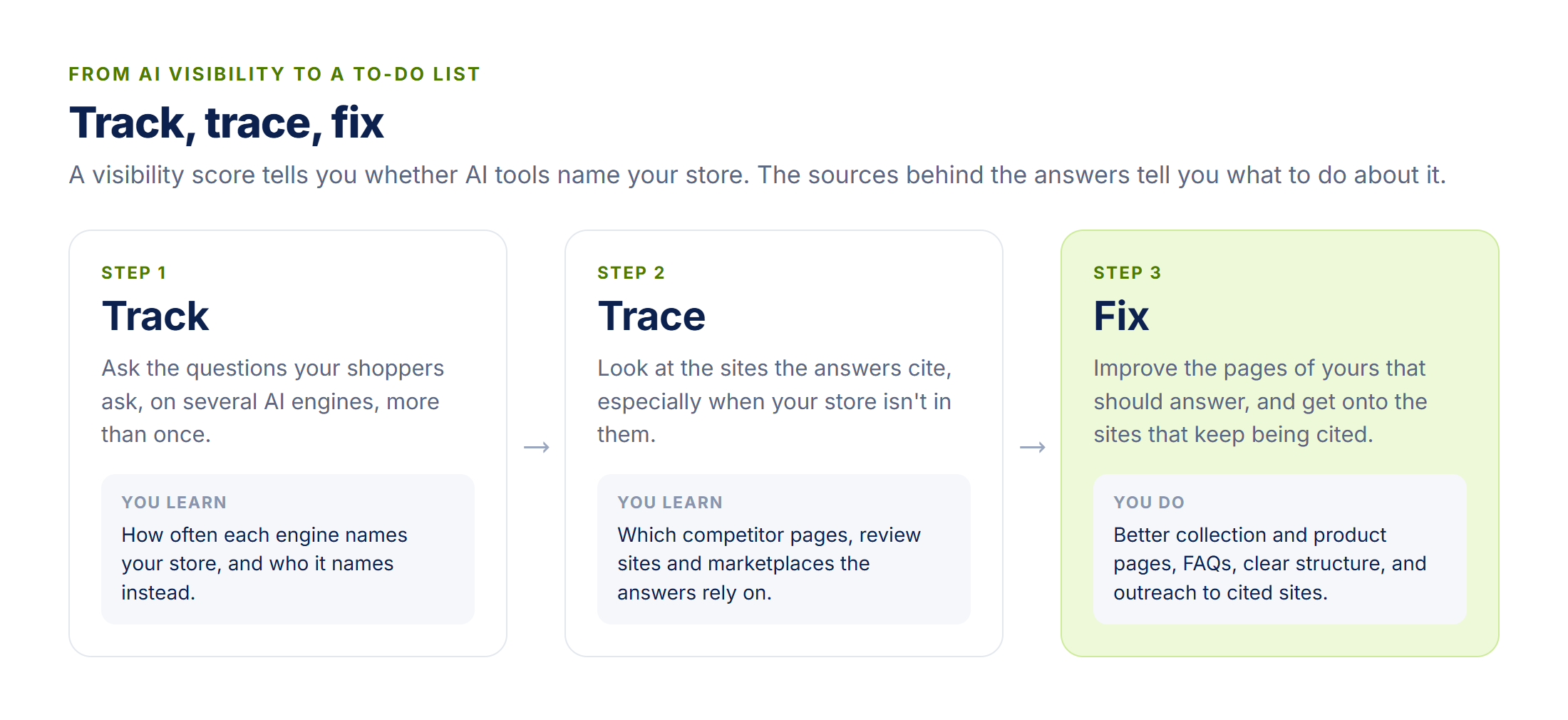
The short answer:
- Track the questions your shoppers ask, on several AI engines, more than once.
- Trace the sites those answers cite, especially in the answers that don’t name your store. These are the sites “cited without you”.
- Fix the pages of yours that should answer the same questions, and work on getting listed on the third-party sites that keep coming up.
Mentioned is not the same as cited
Two different things can happen when an AI tool answers a shopping question:
- Your store is mentioned. The answer names it, with or without a link.
- Your store is cited. The answer links to a page on your site as one of its sources.
A mention gets your name in front of the shopper. A citation means the AI tool used your page as evidence, which also gives the shopper a direct way to reach you. Track both, separately.
Answers also change. The same question can get a different answer from each engine, and from the same engine on a different day. In the example below, Claude names the store in every answer to “best gooseneck kettle”, and ChatGPT doesn’t name it once.
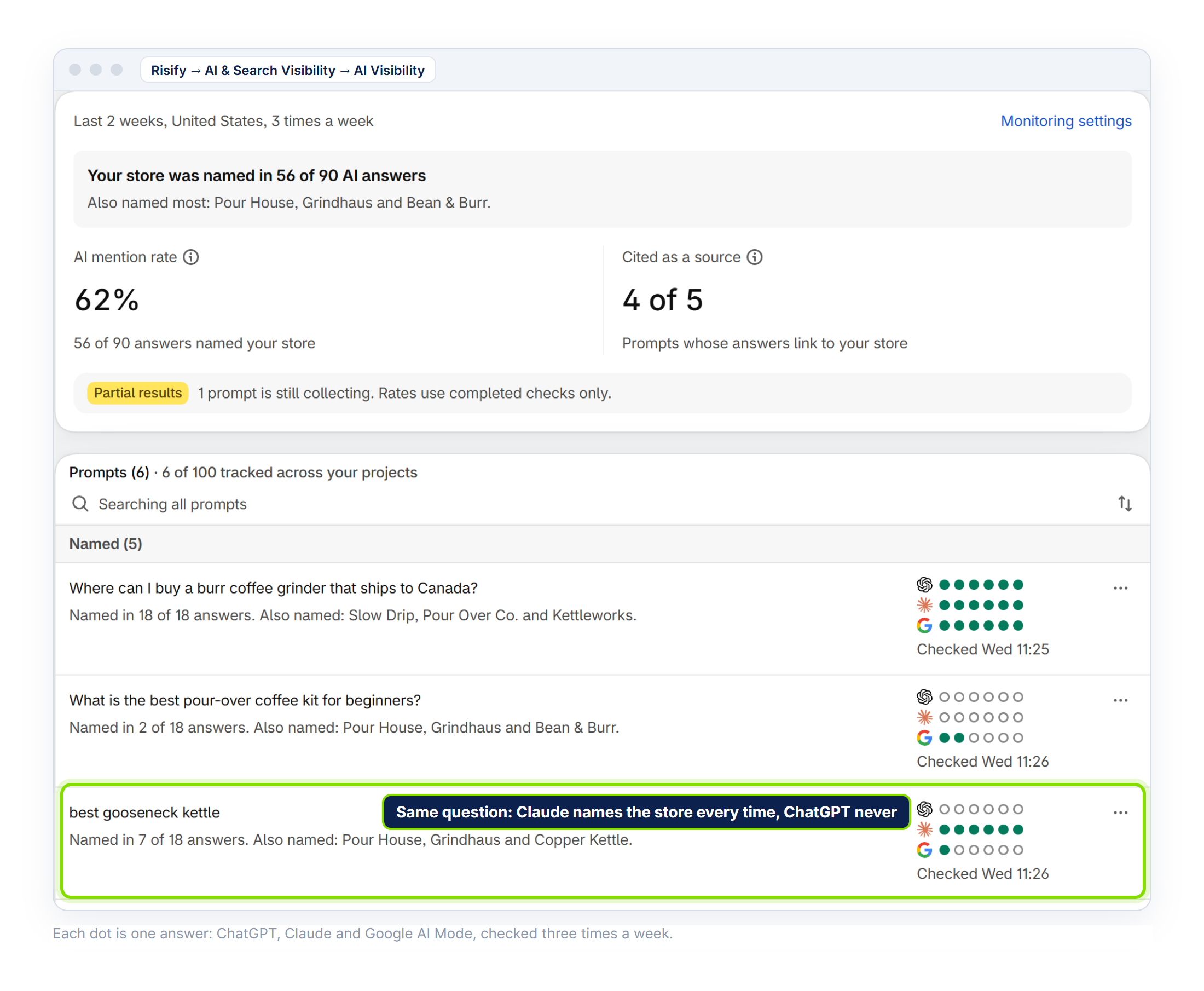
One check in one tool would have told you either “AI recommends us” or “AI ignores us”. Both are wrong. That’s why the method below repeats each question.
Step 1: Track the questions your shoppers ask
Pick five to ten questions a shopper might type into an AI tool before buying from a store like yours:
- Product type: “best gooseneck kettle”
- Use case or skill level: “What is the best pour-over coffee kit for beginners?”
- Delivery or location: “Where can I buy a burr coffee grinder that ships to Canada?”
- Local need: “espresso machine repair in Portland”
Leave your brand name out. A question that names your store will almost always get an answer about your store, which tells you nothing about discovery. Track those brand questions separately, to see how AI tools describe you.
Ask each question in ChatGPT, Claude and Google AI Mode, and repeat it over several days. For every answer, write down which stores are named and which URLs are cited.
Step 2: Trace the sites cited without you
Two views turn those answers into something you can act on.
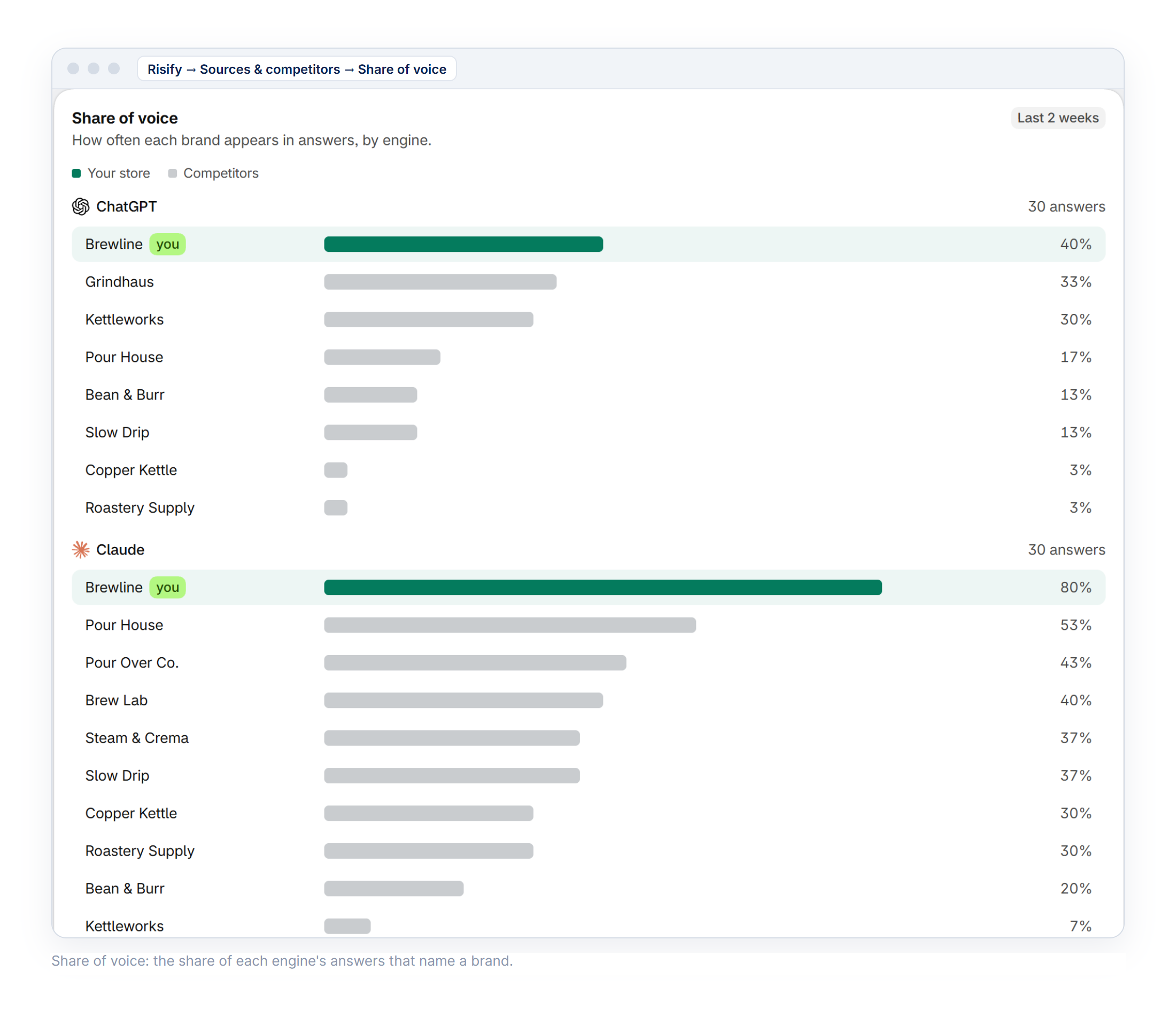
Share of voice: who gets named instead of you. For each engine, count the share of answers that name each brand. Your store may lead in one engine and trail in another.
Cited without you: the sites to get onto. List every site the answers cite, and for each one count the answers where it was cited but your store was neither named nor cited. Sort by that number.
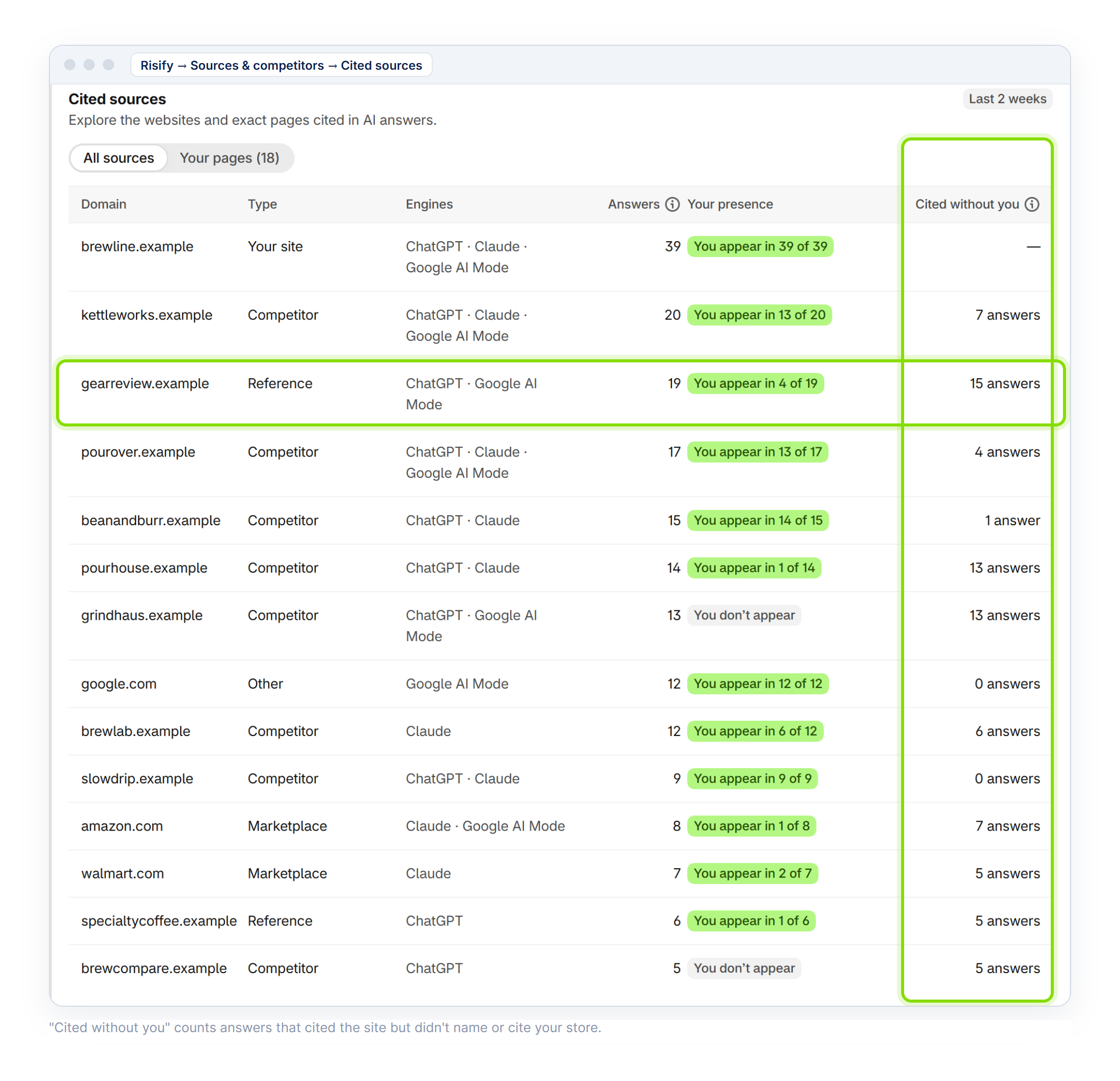
In the example, the review site gearreview.example was cited in 19 answers, and the store appears in only 4 of them. That single row is worth more than the overall score: it names a specific site where buyers, and AI tools, are reading about kettles without reading about this store.
Step 3: Fix what the sources point to
What you do depends on the kind of site that keeps being cited without you.
| Cited site | What it usually is | What to do |
|---|---|---|
| Review and reference sites | Buying guides, “best of” roundups, industry associations | Get your products reviewed or listed. Offer samples, product data or expert input. |
| Competitor stores | A category page, guide or FAQ that answers the question well | Compare their cited page with your equivalent. Does yours answer the same question: specs, comparisons, shipping, who it’s for? |
| Marketplaces | Product listings on Amazon, Walmart and similar sites | Keep product names, specs and prices consistent with your own site. List there if it fits your business. |
| Forums and communities | Reddit threads, hobby forums | Take part openly, as the store, where you have something useful to add. |
| Your own pages | The pages AI tools already cite | Strengthen them. For questions where you’re never cited, find the page that should answer and make it answer clearly. |
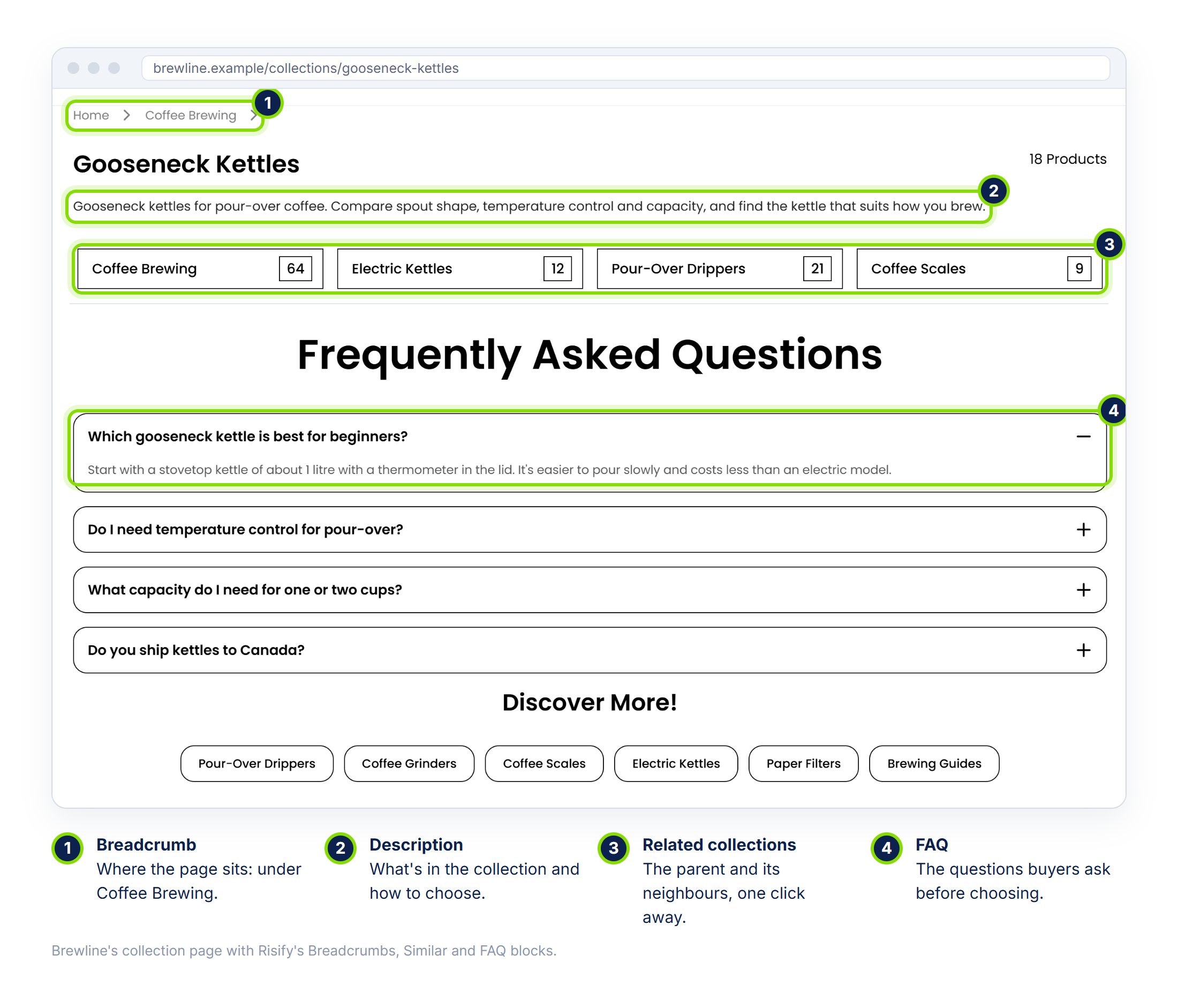
For a Shopify store, the page that should answer a “best kettle” or “beginner kit” question is usually a collection page: a clear description of what’s in it, answers to the questions buyers ask, and links to the parent and related collections. See How to Create Subcollections in Shopify and How to Fix Breadcrumbs in Shopify for the structure side, and Managing FAQs in Shopify for collection FAQs.
Re-check, and read the results honestly
AI answers move, so judge changes over weeks, not after one check. Keep the same questions, engines and market, and compare mention rate and citations per engine before and after.
Read the results for what they are. More citations after you improve a page is a good sign, but AI tools change their own sources too, so one edit can’t be proven to be the cause. A missing mention on a cited site doesn’t prove your brand is absent from that site either; it means the answers didn’t connect the two.
How Risify does this
Risify runs the whole loop inside Shopify.
- Track. In AI & Search Visibility → AI Visibility, add the questions your shoppers ask, or pick from suggestions based on your catalog. Risify checks each one three times a week on ChatGPT, Claude and Google AI Mode, and shows your mention rate, how often you’re cited as a source, and who else is named. Brand questions are tracked but kept out of your mention rate.
- Trace. Sources & competitors shows share of voice by engine, every cited site with its type, the Cited without you count, which of your own pages get cited, and how each engine describes your brand when asked about it directly.
- Fix. The pages you need to improve are managed in the same app: FAQs on products and collections, collection content, breadcrumbs and links between collections, and structured data.