




A Shopify AI optimization app makes your store easier for AI tools to read, understand and recommend. The best one for you is the app that changes the parts of your store AI tools rely on: structured data, on-page answers, catalog structure and content. Apps differ a lot in how much of that they cover.
This guide compares seven apps by what they change in a store. Risify is our own app. We built it so a merchant or a small team can make a store AI-ready without hiring an agency or an SEO specialist, and we explain below why we think it covers the most ground. We also say where another app is the better pick.
Key takeaways
- AEO and GEO both mean making your store easy for AI tools to use as a source. The work is the same for both.
- AI optimization apps change four things: technical files, product text, structured data, and store structure with on-page answers.
- Most apps cover the first two or three. Few work on store structure and on-page FAQs.
- The foundation for AI search is also the foundation for Google, so one set of work pays off twice.
- No app can guarantee that an AI tool will recommend your store.
What is a Shopify AI optimization app?
A Shopify AI optimization app improves the information AI tools read about your store, so tools such as ChatGPT, Claude and Google AI Mode can match your products to shopper questions. It does this by changing your store, not by reporting on it.
That is the difference from an AI visibility tracker. A tracker measures whether you are mentioned. An optimization app works on the reasons you are or are not. We compare trackers in Best Shopify AI Visibility Apps.
Is AEO different from GEO?
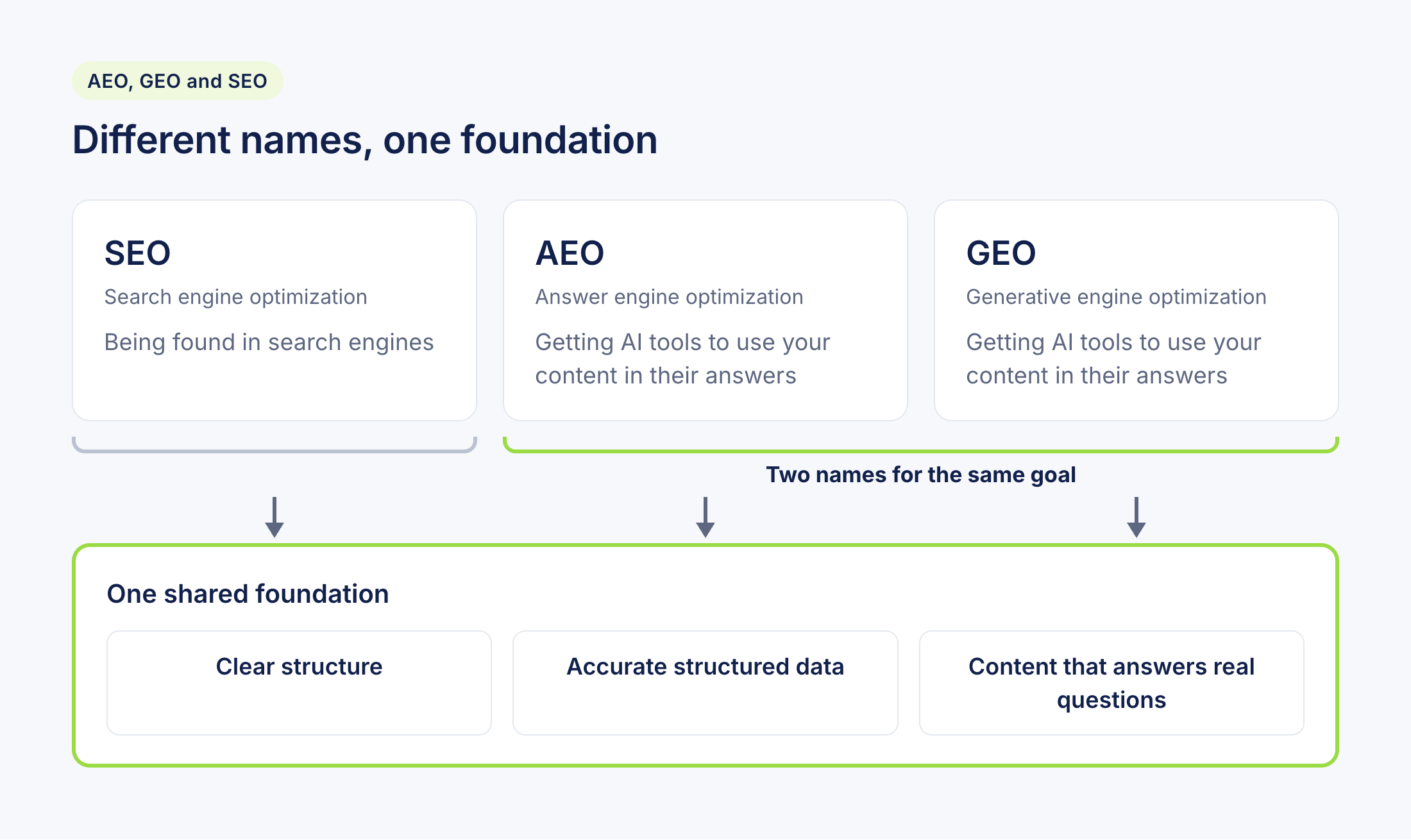
In practice, no. AEO (answer engine optimization) and GEO (generative engine optimization) are two names for the same goal: getting AI tools to use your content when they answer a question. SEO is the older, wider practice of being found in search engines.
All three share one foundation: clear structure, accurate structured data and content that answers real questions. Our AEO vs GEO vs SEO explainer covers the terms in detail. When an app’s listing says AEO or GEO, read past the label to see what the app changes.
What can an AI optimization app change in a store?
There are four layers. They build on each other, and the later ones take more work.
- Technical files. Files such as llms.txt and settings such as robots.txt. Shopify now provides llms.txt for stores automatically, so an app adds little here.
- Product text. Titles, descriptions, alt text and meta tags, often rewritten by AI in bulk.
- Structured data. Schema markup that states facts about products, pages and the business in a format machines read directly.
- Store structure and on-page answers. Fixed breadcrumbs, links between collections, and FAQs on product and collection pages. This layer tells AI tools how your catalog fits together and gives them ready answers to shopper questions.
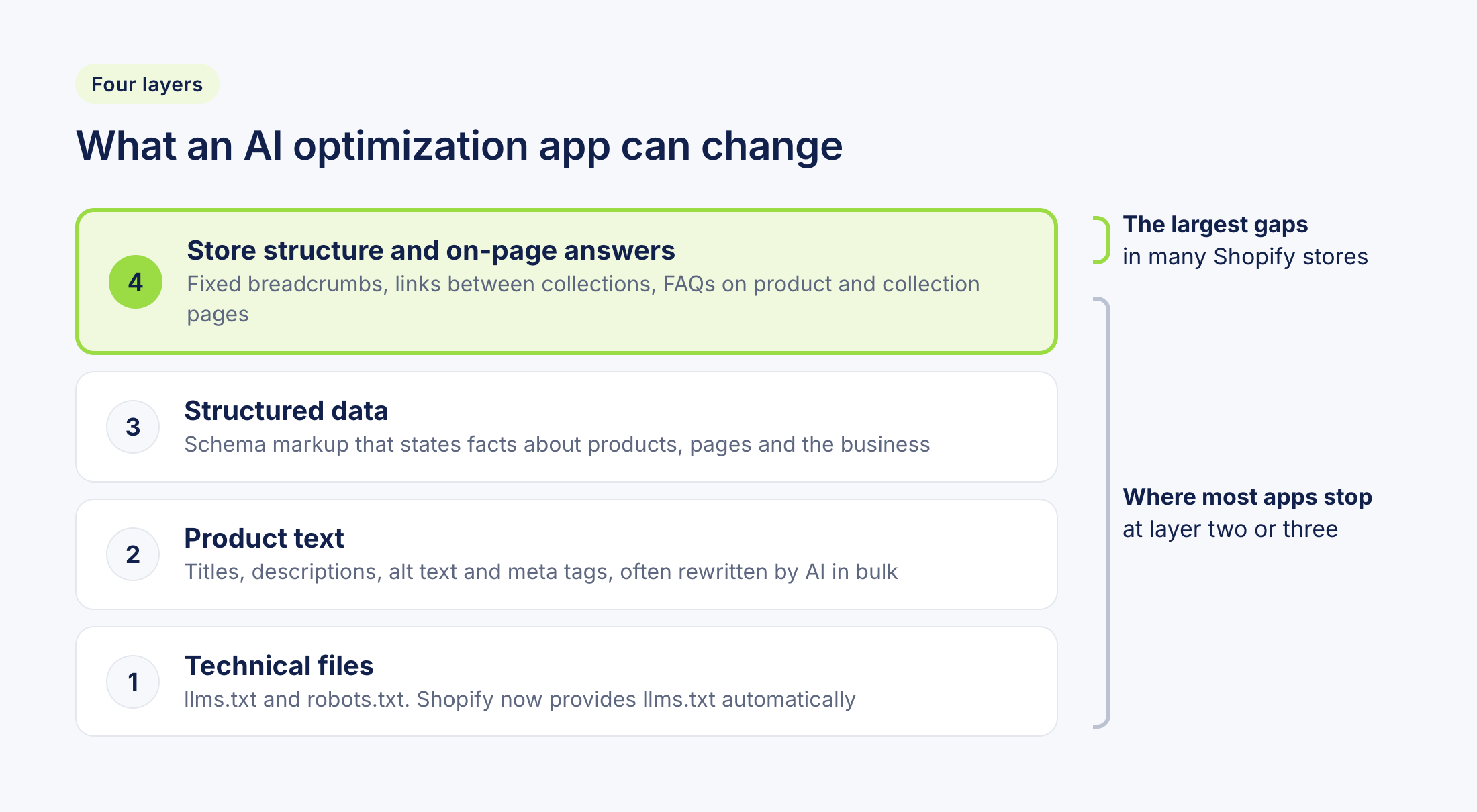
Most apps stop at layer two or three. Layer four is where many Shopify stores have the largest gaps, because Shopify has no collection hierarchy and no FAQ feature for storefront pages.
How we compared the apps
We compared the apps on what they change, plus two things that decide whether the work gets done:
- Structured data: which schema the app adds.
- On-page FAQs: whether you can add visible FAQs to products and collections.
- Catalog structure: breadcrumb paths, collection menus, related links.
- AI content: what the app writes for you.
- Measurement: whether it tracks AI mentions, so you can see what worked.
- Help: whether experts are included, or the work is done for you.
We did not compare on ratings, review counts or install counts, and we did not test the apps hands-on. Details come from each app’s Shopify App Store listing or its developer’s website.
Shopify AI optimization apps compared
| App | Structured data | On-page FAQs | Catalog structure | AI content | Tracks AI mentions | Paid plans from |
|---|---|---|---|---|---|---|
| Risify | Seven schema types | Yes, for products and collections | Fixed breadcrumbs, collection menus, related searches | Yes, follows brand instructions | Yes: ChatGPT, Claude, Google AI Mode | $145/month |
| Smart SEO | JSON-LD | Not described | Not described | Meta tags, alt text, descriptions | A tracker appears in screenshots; not described | $14.99/month |
| TinySEO | JSON-LD | Not described | Not described | Titles, descriptions, blog posts | Not described | $14/month |
| StoreSEO | JSON-LD, FAQ schema | FAQ generation with FAQ schema | Breadcrumbs listed as a feature tag | Meta tags, product content, blog posts | Not described | $19.99/month |
| FoundGPT | Product schema | Not described | Not described | Descriptions, tags, articles | Yes | $19/month |
| GPTLab | JSON-LD | Not described | Not described | Not described | AI traffic reports | Free |
| Octolift | Not the focus | Not described | Not described | Product listing rewrites | Yes: ChatGPT, Gemini | $29/month |
Last checked: 18 and 19 November 2026.
1. Risify: the whole foundation, with a team behind it
Risify is a Shopify app that optimizes a store’s AI and search visibility by fixing its structure, content and signals, and tracks the result. It is made by Solverhood, the team behind Analyzify.
What it makes possible. Getting a store ready for AI search used to mean hiring an agency or a specialist, briefing a developer for schema and breadcrumbs, and waiting. Risify puts that work in the hands of the merchant or a small team, inside the Shopify admin, with no code. If you would rather not do it yourself, the Risify team does it for you on the Plus plan.
What it changes, across all four layers:
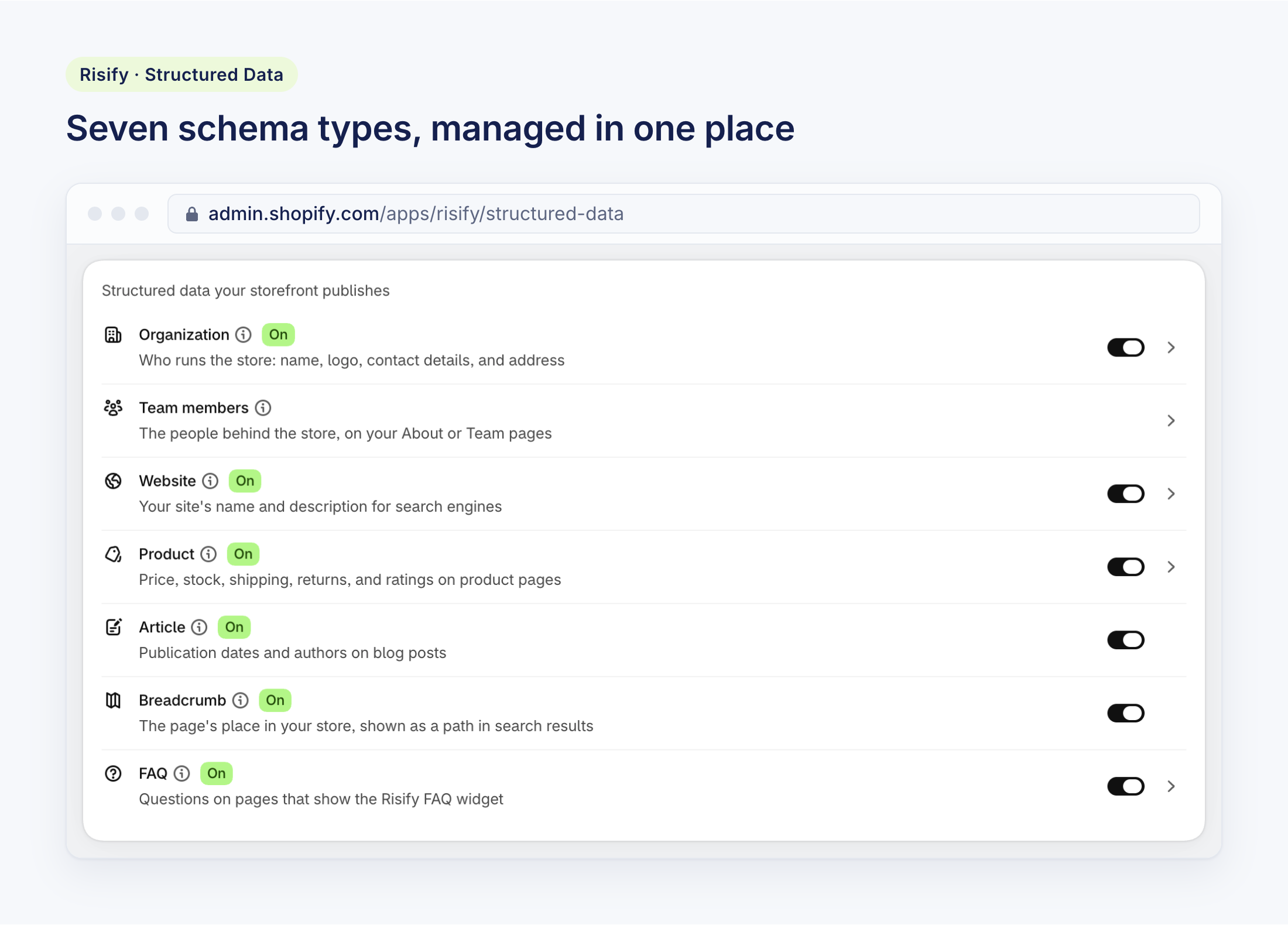
Structured Data: seven schema types, including Product, Breadcrumb, FAQ, Article and Organization, with errors flagged in the audit.
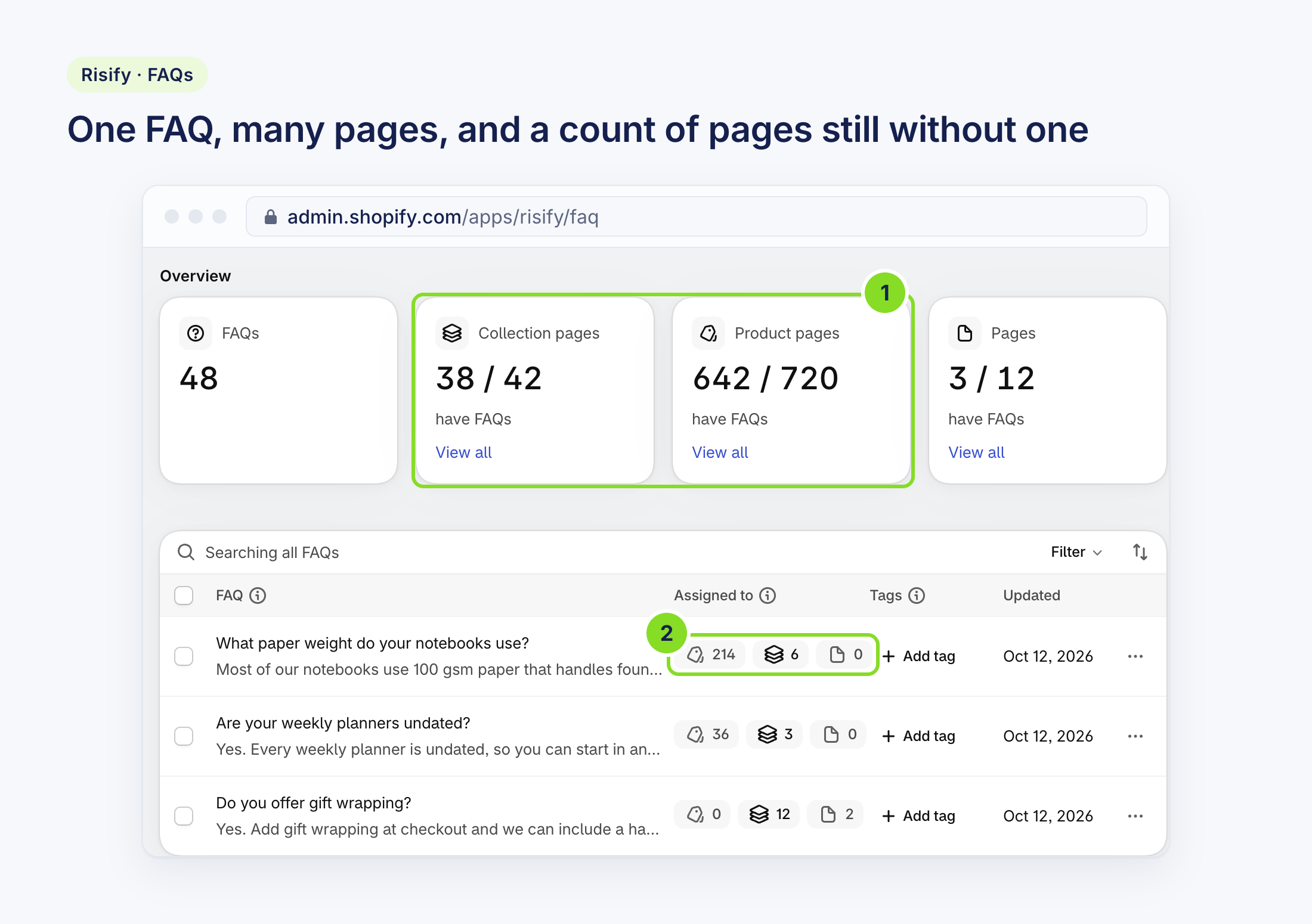
FAQs: write an FAQ once, assign it to many products and collections, and show it on the page with FAQ schema.
Navigation: fixed breadcrumb paths, collection menus and related searches, which give AI tools and search engines a map of your catalog.
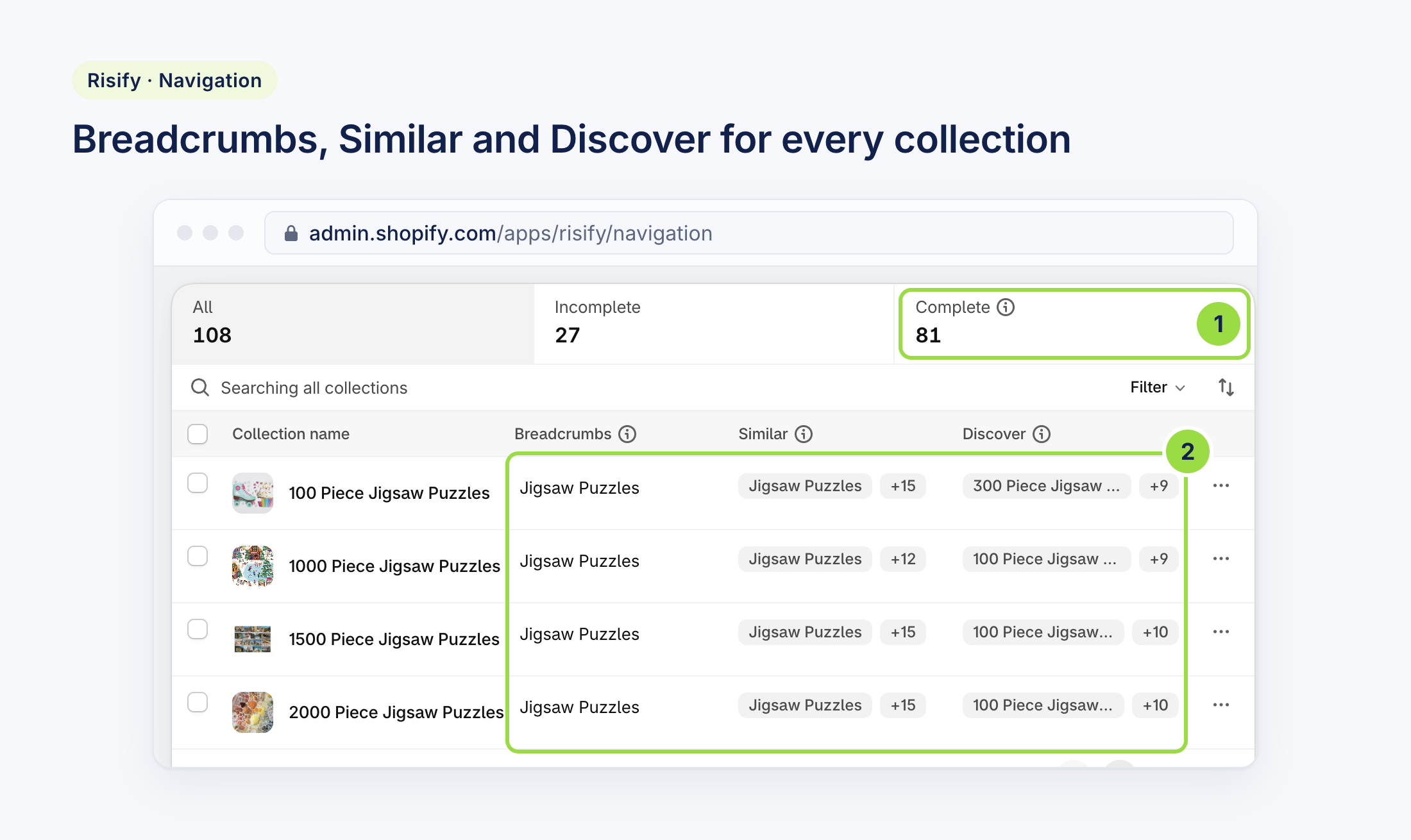
Meta Tags and Page Optimization: bulk editing and page-level improvements.
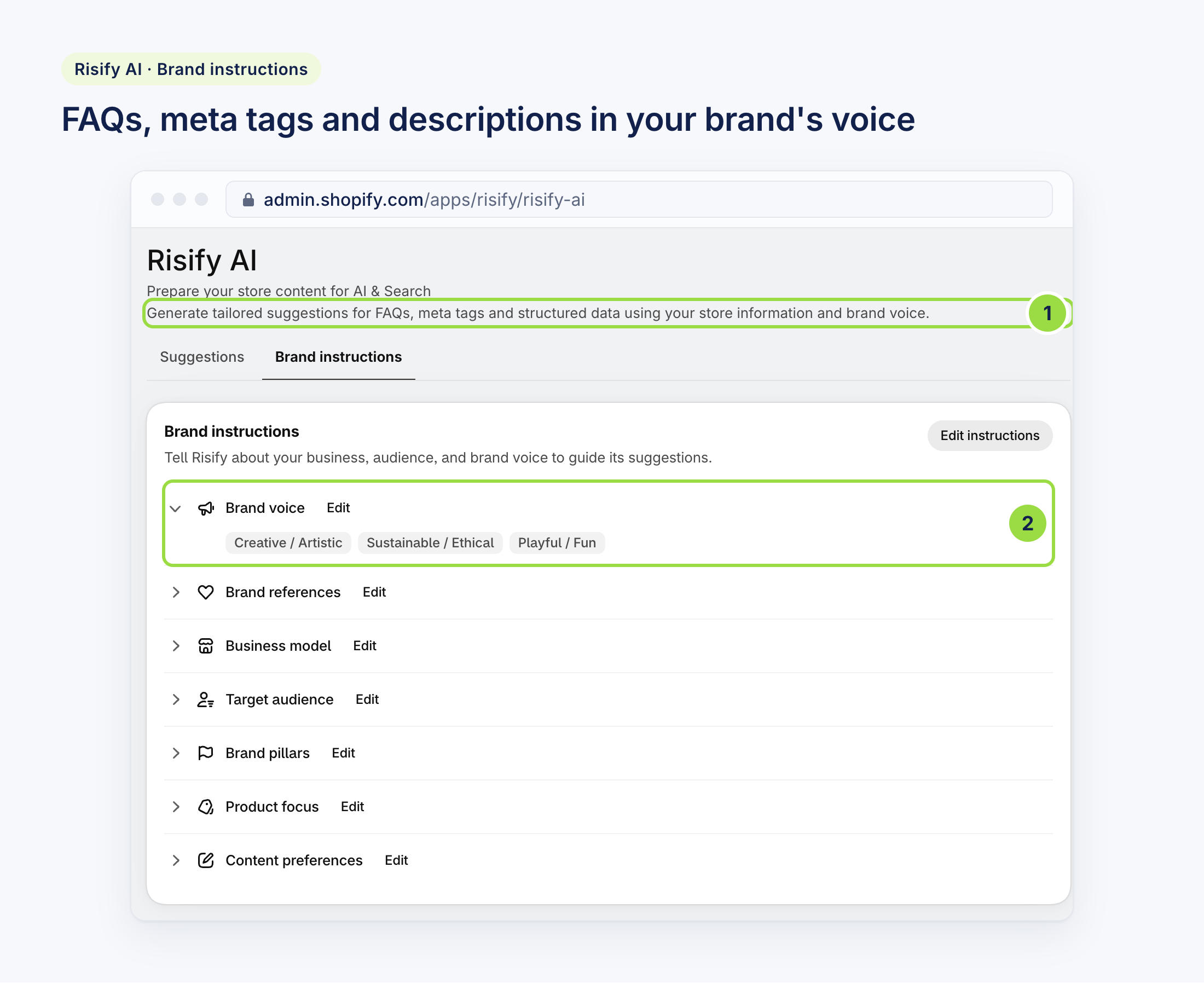
Risify AI: FAQs, meta tags and descriptions written to your brand instructions, so the content sounds like your store.
It shows you what worked. AI Visibility runs shopper-style prompts on ChatGPT, Claude and Google AI Mode and shows how often your store is mentioned, how often your pages are cited, and which competitors and sources appear. An AI & Search Audit with more than 100 checkpoints, keyword rankings and Search Console data sit in the same app.
You get help. Every plan includes expert support and a one-on-one onboarding call. Solverhood has built for Shopify merchants since 2017.
Proof. Bad.no, a Norwegian retailer with more than 30,000 products, grew organic sessions by 132% over 8 quarters with Risify’s structure-first approach. Read the Bad.no case study.
Pricing: Risify Standard is $145 a month. Risify Plus is $745 a month and includes done-for-you setup and FAQ coverage. There is no free plan and no free trial.
Where another app fits better: if you only want product text rewritten or images compressed on a small budget, one of the apps below will cost less.
2. Smart SEO
Smart SEO is made by Sherpas Design. Its listing describes AI-written meta tags, alt text and product descriptions, image and page speed optimization, JSON-LD structured data, broken link detection and indexing controls. It also lists llms.txt and agents.md catalogs for AI search.
Best for: stores that want low-cost technical SEO and AI basics they run themselves. Plans are free, $14.99, $24.99 and $49.99 a month.
What it does not describe: on-page FAQs, collection menus or related searches.
3. TinySEO
TinySEO, formerly TinyIMG, is listed as Tiny SEO Speed Image Optimizer. Its listing describes image compression, lazy loading, script minification, JSON-LD schema, llms.txt, broken link fixes, AI product titles and descriptions, and an AI blog builder.
Best for: stores where page speed and images are the main problem. Plans are free, $14, $23 and $49 a month.
What it does not describe: on-page FAQs, collection structure or AI mention tracking.
4. StoreSEO
StoreSEO is made by Storeware. Its listing describes bulk product SEO with AI, image optimization, JSON-LD and FAQ schema, an llms.txt generator and AI blog posts.
Best for: small catalogs that want a self-serve tool with a free plan. Its plans are limited by product count: 25 products free, then 100, 250 and 10,000 on paid plans.
What it does not describe: collection menus, related searches or AI mention tracking.
5. FoundGPT
FoundGPT is made by Sageskills Technology. Its listing says it checks what AI tools say about your store, then rewrites thin descriptions, meta tags, alt text, tags and categories in bulk, and publishes articles for prompts you are missing from.
Best for: small stores that want product-level fixes with AI tracking at a low price. Plans are free, $19, $39 and $79 a month.
What it does not describe: on-page FAQs for collections, collection menus or related searches.
6. GPTLab
GPTLab is made by Commerce Plus. Its listing describes llms.txt, JSON-LD, IndexNow and robots.txt for AI search visibility. It is free.
Best for: a free first step on the technical layer. It does not work on content or structure.
7. Octolift
Octolift is made by Craftshift. According to its developer, it scores each product against the record in Shopify’s product catalog and drafts improved listing content for your approval.
Best for: stores that want to improve the product data Shopify sends to AI platforms, product by product. This is a different channel from the open web, where Risify works, so the two can sit side by side.
Why AI optimization and SEO are the same work
You do not need one project for Google and another for AI tools. Both read your pages, your structured data and your internal links. Microsoft’s Fabrice Canel confirmed in 2025 that schema markup helps Microsoft’s language models understand content.
This is why we compare on the foundation. An app that only adds a file or rewrites product text helps a little in one place. An app that fixes structure, schema and on-page answers improves how every system reads your store. Our guide on how to fix Shopify SEO and AI visibility gaps walks through that foundation.
How to choose
- You want the whole foundation fixed, by you or for you, and to see the result. Choose Risify.
- Your catalog is large, or your collections and breadcrumbs are a mess. Choose Risify. The other apps on this list do not describe catalog structure tools.
- You want cheap, self-serve technical basics. Look at Smart SEO or GPTLab.
- Speed and images are your main issue. Look at TinySEO.
- You have a small catalog and want product text rewritten with some AI tracking. Look at FoundGPT.
- You want to improve your Shopify product catalog data. Look at Octolift.
If you are unsure where your gaps are, start with the Shopify schema markup guide and check a few of your own pages.
Conclusion
AI optimization apps are easy to compare once you look at what they change. Files and product text are the easy layers, and most apps cover them. Structured data, catalog structure and on-page answers take more work and matter more, for AI tools and for Google.
Risify covers all four layers, measures the result and comes with a team, so you can make your store AI-ready without outside help. You can find Risify on the Shopify App Store.