




Most Shopify merchants focus heavily on product descriptions, keywords, and backlinks when thinking about SEO.
Those things still matter, but they are only part of how search engines and AI systems understand your store.
Google, Bing, ChatGPT, Gemini, and AI shopping assistants increasingly rely on structured information to interpret products, navigation, FAQs, and brand details correctly.
A product page may look perfectly clear to a human visitor while still lacking the structured information search engines need to fully understand it.
For example, a shopper may immediately understand that a TV product page includes information like screen size, refresh rate, operating system, and warranty.
But unless those details are structured properly, search engines and AI tools may struggle to interpret them consistently.
Key Takeaways:
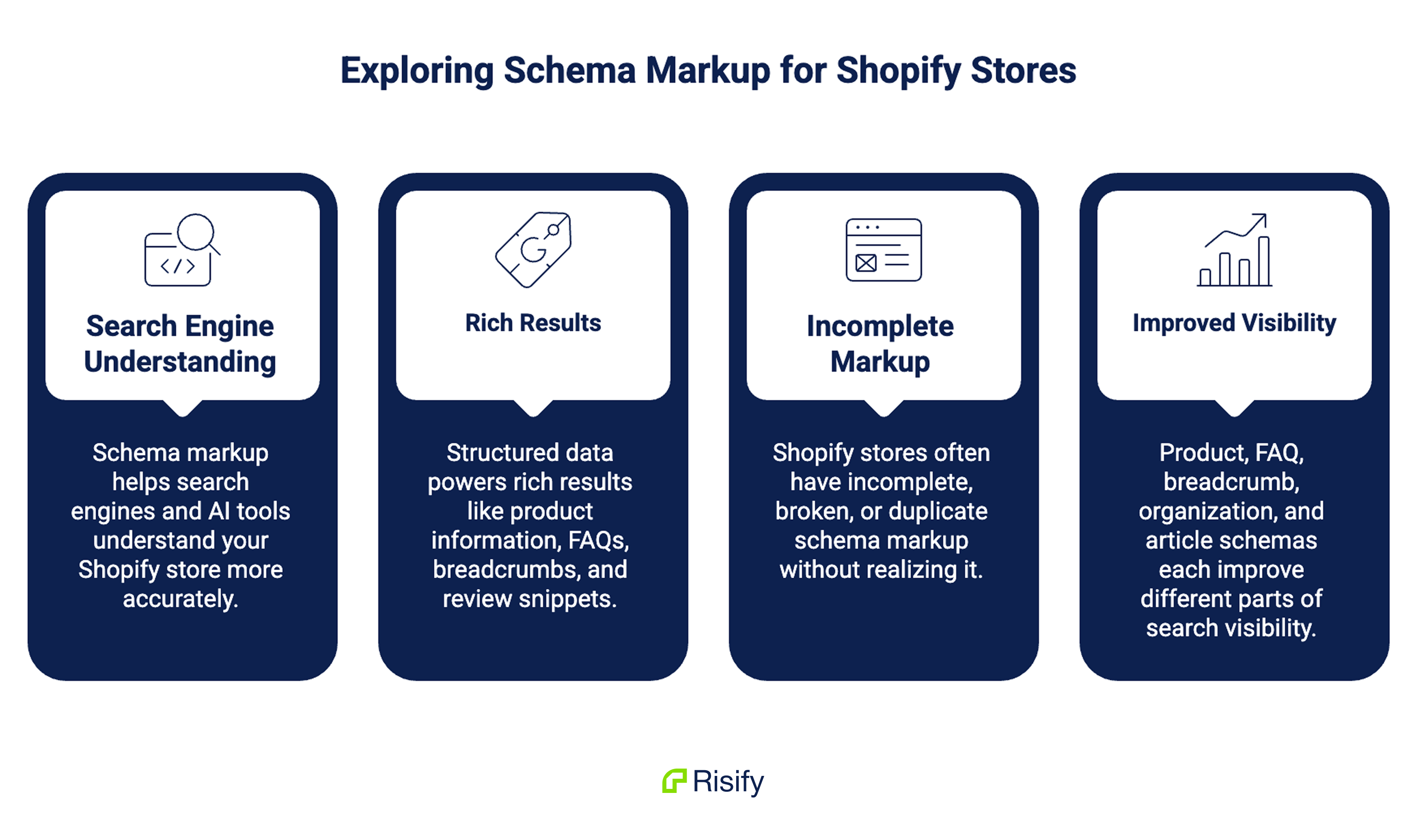
- Schema markup helps search engines and AI tools understand your Shopify store more accurately
- Structured data powers rich results like product information, FAQs, breadcrumbs, and review snippets
- Shopify stores often have incomplete, broken, or duplicate schema markup without realizing it
- Product, FAQ, breadcrumb, organization, and article schemas each improve different parts of search visibility
Understanding Schema Markup in Shopify
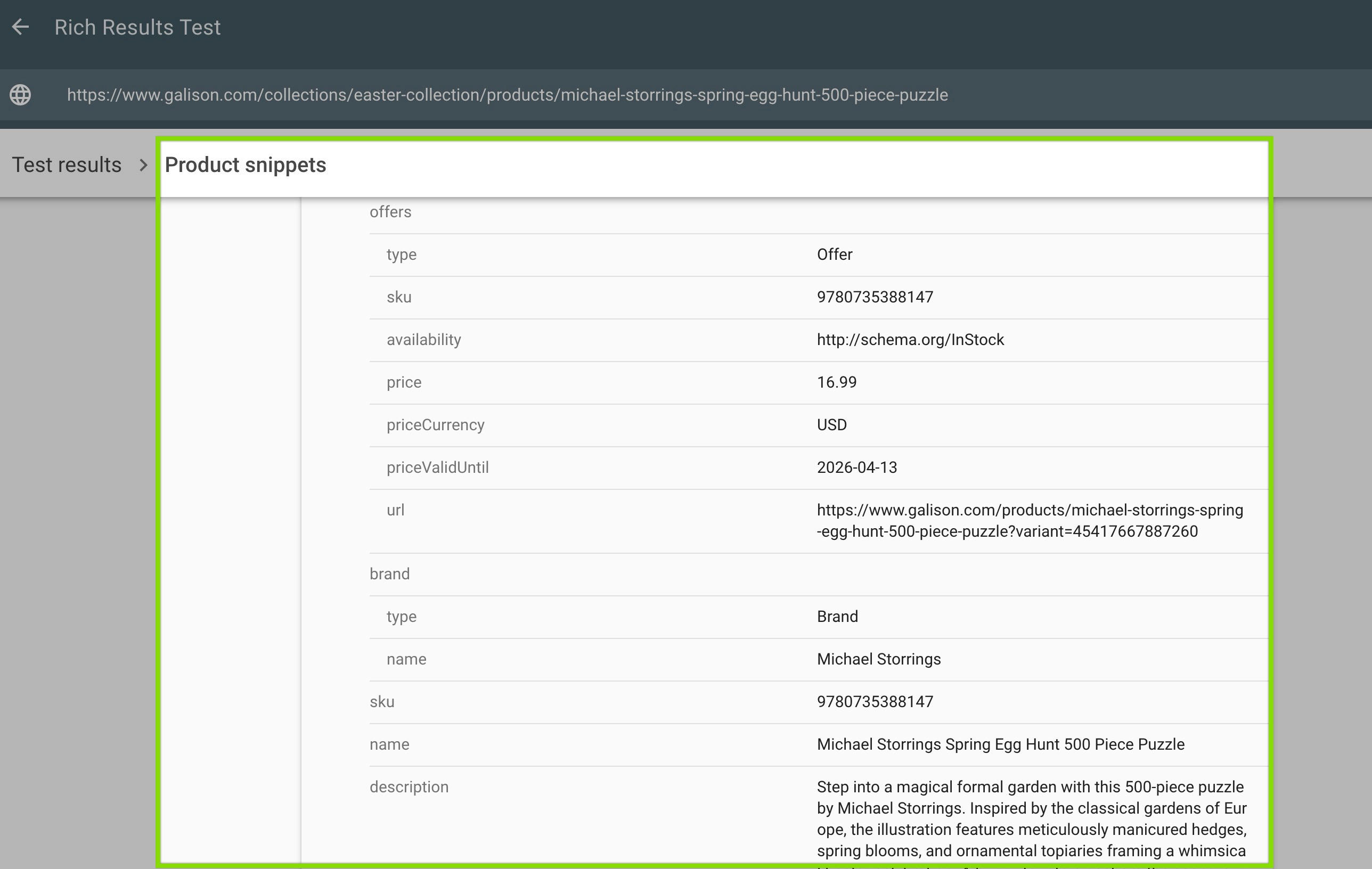
Schema markup is structured data added to your website that helps machines understand the meaning of your content.
Most modern schema implementations use JSON-LD, the format recommended by Google for structured data.
Instead of simply reading visible page content, search engines can use schema markup to interpret the role and meaning of different elements on the page.
A product page may visually display a title, price, images, and stock status, but schema markup explicitly tells search engines that this page represents a product, what the official price is, whether the item is available, which brand it belongs to, and how reviews should be interpreted.
Without schema markup, Google may only see unstructured page content. With Product Schema, the same page can explicitly communicate:
- product name
- price
- availability
- review rating
- GTIN
- brand
This structured format helps search engines process product information with far greater accuracy.
That additional layer of context helps search engines process pages more reliably and display richer search experiences.
It also matters increasingly for AI tools.
AI shopping assistants and large language models rely heavily on structured information because they need clarity when summarizing products, comparing options, or generating recommendations.
A detailed product description may still leave blank spots for AI systems if important product attributes are not properly structured.
Why Schema Markup Matters for AI Searches
For years, schema markup was mostly discussed in relation to Google rich results. While rich snippets still matter, structured data now plays a much larger role in how modern search ecosystems operate.
AI-powered search systems rely heavily on organized and validated information.
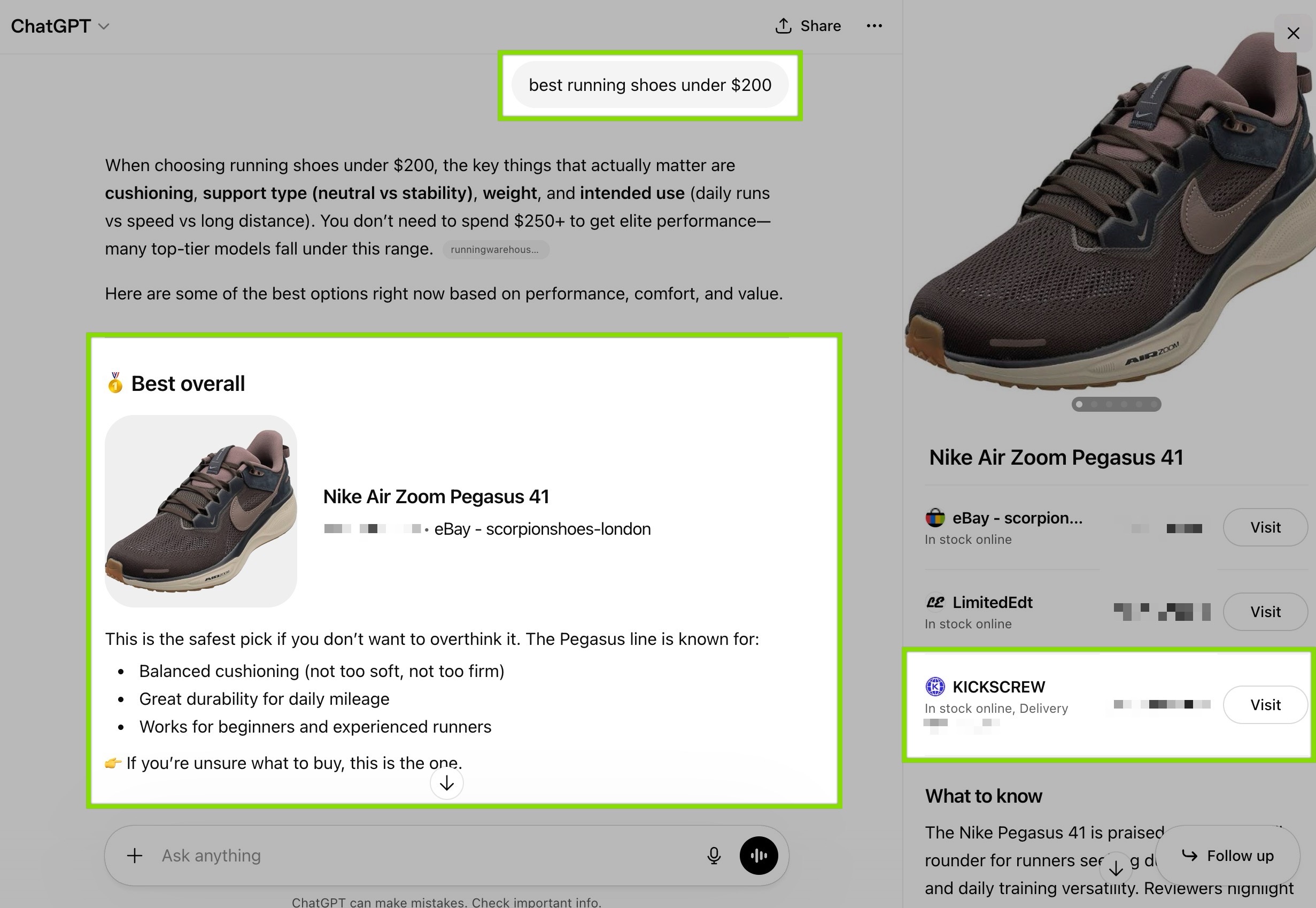
For example, if someone asks an AI tool like ChatGPT to recommend:
“best running shoes under $200”
the system needs structured product information to confidently identify:
- pricing
- product category
- material attributes
- availability
- reviews
- brand relevance
Stores with clearer structured data are easier for these systems to interpret and recommend.
Learn more: How Structured Data Impacts AI Visibility
AI Tools Need Structured Product Context
A human visitor can usually infer meaning from page layouts, product descriptions, and navigation menus. AI systems cannot always do that reliably.
They depend on clear structure to interpret what products are, how they relate to collections, which information is trustworthy, and what content should be surfaced in recommendations or search responses.
This is one reason structured FAQ content, breadcrumb hierarchy, product attributes, and organization details have become increasingly valuable.
Schema markup helps transform your storefront from a visually readable website into a structure that AI tools can understand with less effort.
Structured Data Supports Long-Term AI Visibility
As AI-assisted search experiences continue evolving, stores with clearer structured information will likely have an advantage in discoverability.
You should approach schema markup from this broader perspective.
The goal is not only to support traditional SEO visibility, but also to create cleaner structured information for AI-driven search and discovery systems.
Most Important Schema Types for Shopify Stores
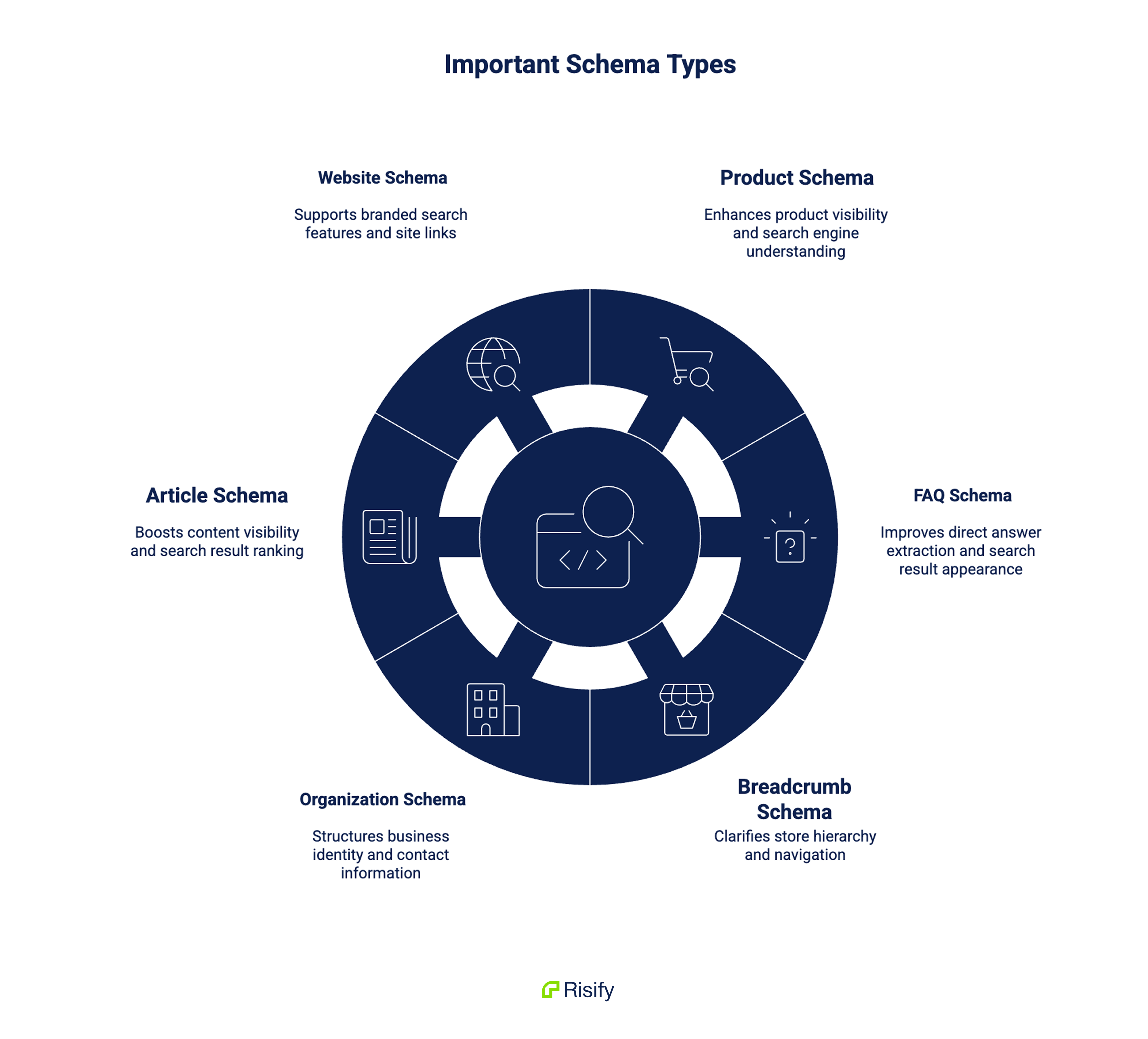
Different schema types help search engines and AI tools understand different parts of your store.
A complete schema setup usually combines multiple schema types together rather than relying only on Product Schema.
Product Schema
Product Schema is one of the most important structured data types for e-commerce stores.
It gives search engines detailed information about products, including pricing, availability, inventory status, variants, reviews, and identifiers such as GTINs.
This structured information powers many of the enhanced product listings that appear in Google Search and Google Shopping.
It also helps AI systems interpret products more accurately when generating shopping recommendations or summaries.
FAQ Schema Turns Questions Into Structured Search Content
FAQ Schema (FAQPage schema) structures question-and-answer content into a format that makes it easier for search engines and AI systems to extract answers directly from your pages.
Many Shopify stores display FAQ content visually without actually implementing FAQ structured data.
For example, a product page may include questions like:
- “Is this product waterproof?”
- “Does this work internationally?”
- “What is the return policy?”
If these are added only as visible text, search engines and AI tools may not treat them as structured FAQ content. FAQPage Schema helps those questions & answers appear in search results.
As AI systems increasingly rely on concise answer extraction, structured FAQ content becomes even more valuable for visibility.
Learn more: Add FAQ Schema to Your Shopify Store Without Coding
Breadcrumb Schema Improves Navigation Understanding
Breadcrumb Schema (BreadcrumbList) focuses on store hierarchy and navigation clarity.
Instead of showing only a URL, search engines can better understand relationships like:
Home > Running Shoes > Trail Running Shoes > Product
This creates stronger contextual understanding for both users and search engines and AI tools.
Breadcrumbs also create cleaner search result paths that help users understand where a page sits within your catalog before clicking.
Learn more: How to Fix Breadcrumbs in Shopify
Organization Schema Strengthens Brand Identity
Organization Schema provides structured business identity information such as your store name, logo, contact details, and social profiles.
This helps search engines connect your Shopify store with your broader brand presence across the web while improving trust and entity understanding.
Article and Website Schema Support Content Visibility
Article Schema helps search engines understand blog metadata such as publication dates, authorship, and featured images. This can improve how articles appear in search results and strengthen content visibility.
Website Schema, meanwhile, helps define site-level information and can support enhanced branded search features like sitelinks and search box functionality.
Together, these schema types create a much more complete understanding of your Shopify store for both search engines and AI systems.
Common Schema Problems in Shopify
Many Shopify stores unknowingly have schema problems that limit search visibility and reduce the reliability of structured data.
Incomplete Product Schema
Some Shopify themes include partial Product Schema by default, but important fields such as GTINs, availability status, or review information may still be missing.
From a search engine and AI tool perspective, incomplete structured data weakens clarity and validation quality.
Duplicate Schema
Duplicate schema often happens when merchants install multiple SEO or schema-related apps while their theme already outputs structured data.
For example, one app may generate Product Schema while a Shopify theme outputs another version of the same markup. Search engines may then encounter conflicting information about pricing, availability, or reviews.
Instead of helping SEO, overlapping markup can create conflicting information that confuses search engines and weakens schema reliability.
FAQ Content Lacking Actual FAQPage Schema
Many Shopify stores add FAQ text directly into product descriptions or custom content sections, but no actual FAQ structured data gets generated behind the scenes.
Search engines may see the visible content, but they do not interpret it as structured FAQ information capable of generating enhanced search visibility.
Validation Errors
Broken or invalid schema is also extremely common.
Missing required properties, invalid formatting, empty fields, and outdated schema structures can all prevent search engines from validating your markup properly.
Learn more: Fixing Shopify SEO and AI Visibility Gaps
Why Manual Schema Implementation Becomes Difficult
Manual schema implementation may seem manageable initially, especially for smaller stores. But as Shopify catalogs grow, maintaining structured data consistently becomes much more difficult.
Schema Expands Across Your Entire Store
Schema is not limited to product pages. It extends across collections, blogs, FAQs, breadcrumbs, organizational data, and multilingual storefronts.
Managing all of these elements manually through theme edits quickly becomes difficult to scale.
Google’s Structured Data Requirements Continue Changing
The challenge becomes even larger because Google regularly updates its structured data requirements.
Schema implementations that worked properly a year ago may eventually become outdated or fail validation checks as specifications evolve.
Multiple Apps Can Complicate Structured Data
Many merchants also struggle with app conflicts and theme limitations. One app may generate Product Schema while another outputs FAQPage Schema, creating fragmented implementations across the storefront.
Over time, debugging those systems manually becomes increasingly technical and time-consuming.
For growing Shopify stores, centralized schema management becomes much more sustainable than maintaining scattered structured data logic across multiple apps and theme files.
Easy Schema Management for Shopify
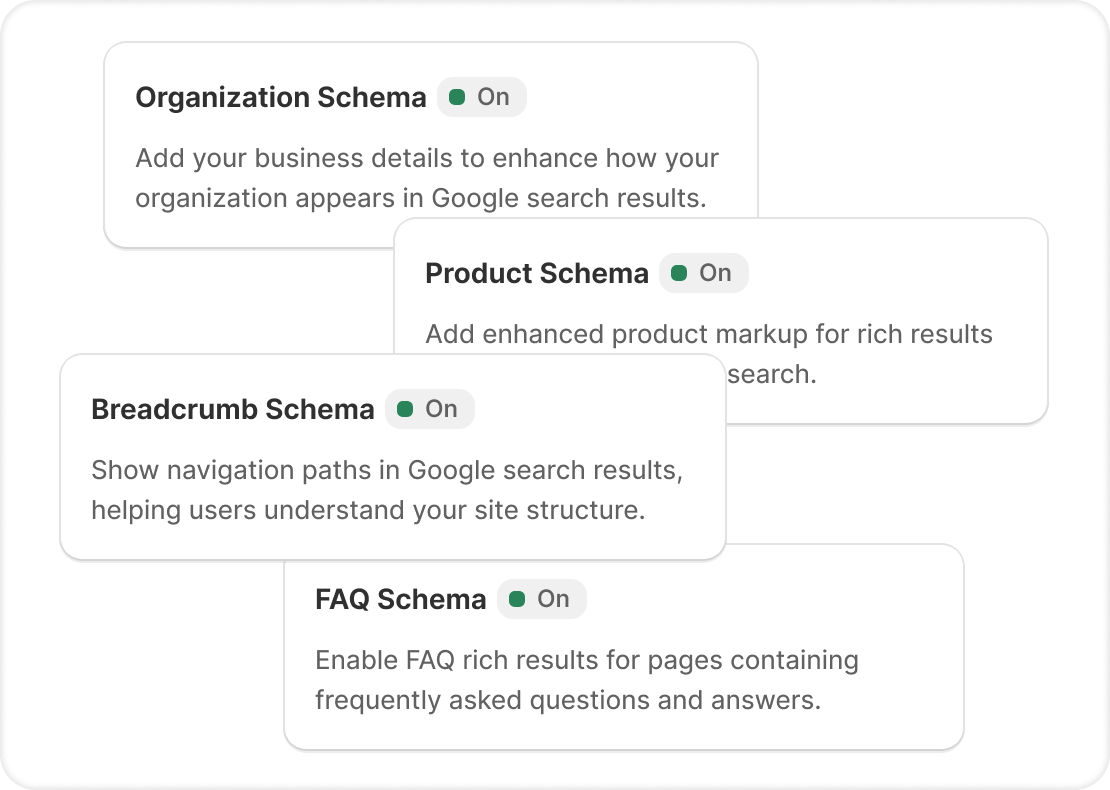
Strong schema management is not simply about adding markup once and forgetting about it.
It requires maintaining accurate, validated, and scalable structured data across your store as products, themes, and content evolve.
Risify helps you implement all the important schema types with one-click activation.
Centralized Management Improves Consistency
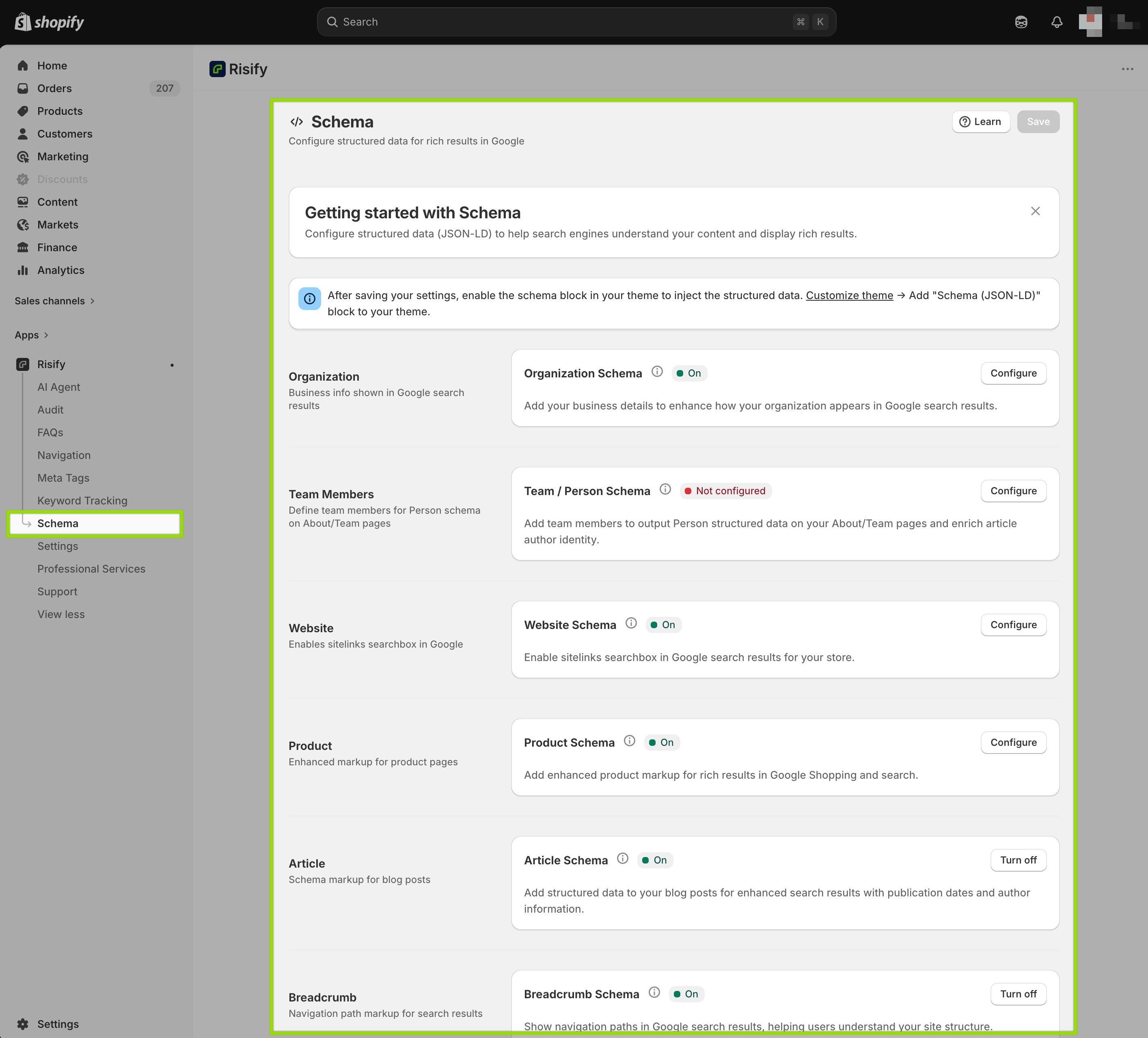
A well-managed schema setup should provide centralized control, store-wide consistency, validation monitoring, and flexibility across different page types.
It should also make it easier to identify conflicts and maintain structured data quality over time.
Shopify Stores Need Scalable Structured Data
Risify schema management comes with centralized configuration and one-click activation.
Instead of manually editing theme code, merchants can configure multiple schema types from a single dashboard and activate them through Shopify app blocks.
The system supports all important schema types while automatically pulling information from existing Shopify product data where possible.
Validation and Troubleshooting Matter Long-Term
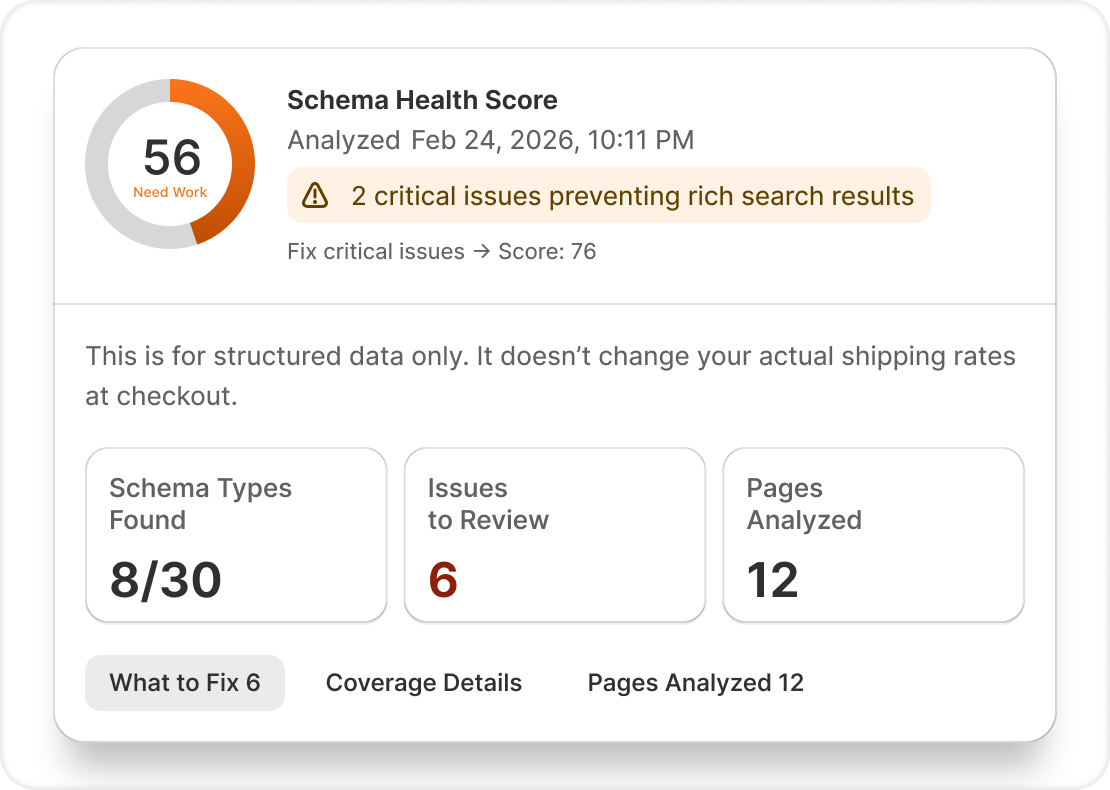
Risify also includes built-in troubleshooting, schema conflict detection, validation monitoring, and multilingual schema support.
Because schema generation is connected directly to Shopify fields, stores can often improve structured data coverage without rebuilding product information manually.
That reduces technical overhead while helping maintain consistency across the storefront.
Learn how to implement schema markup for your store with Risify.
How to Verify Your Shopify Schema
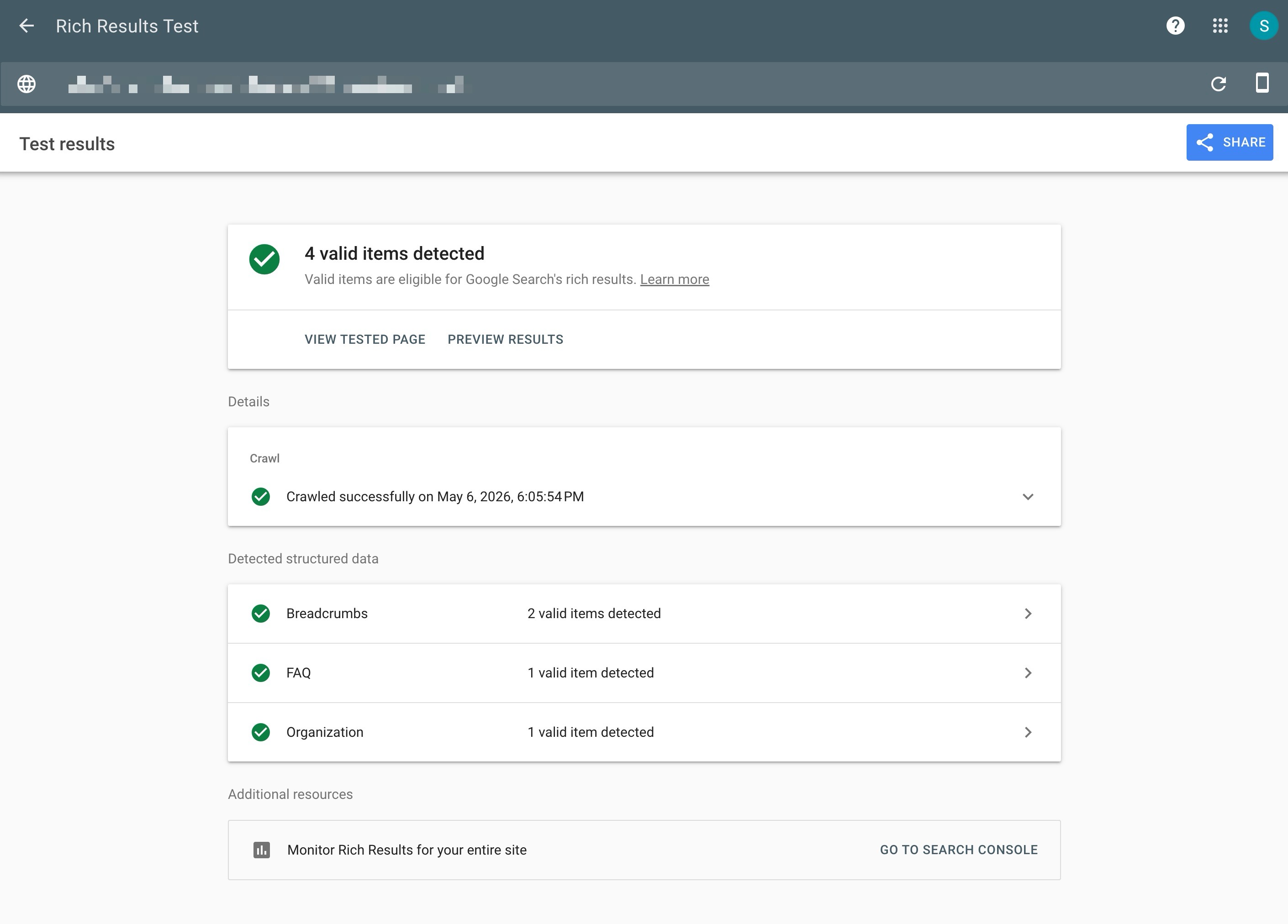
Verification is an important part of schema implementation because even small formatting problems can prevent search engines from validating structured data correctly.
One of the most useful tools for testing schema is Google’s Rich Results Test.
This tool shows which schema types Google detects on a page, whether the markup is valid, and whether errors or warnings exist that could affect rich results eligibility.
You can also check your store’s schema by using Risify’s free schema checker for more details and recommendations.
Google Search Console is also valuable for long-term monitoring. The Enhancements section helps merchants identify validation problems across the site, monitor affected pages, and track schema-related performance over time.
Schema validation should be treated as an ongoing process rather than a one-time setup. As products, themes, apps, and content evolve, structured data should remain consistent and properly validated.
Final Thoughts
Schema markup is no longer just an optional technical SEO enhancement for Shopify stores. It has become foundational infrastructure for search engines, AI visibility, and product discovery.
As search increasingly shifts toward AI-assisted experiences, stores with clearer and better-structured information will likely gain a stronger advantage.
Search engines and AI systems both rely on context, structure, and validation to interpret websites accurately. The stores that organize their content in machine-readable ways make that process significantly easier.
For Shopify merchants, schema markup is ultimately about clarity. Not only for Google, but for the growing ecosystem of AI systems that now influence how products are discovered, compared, and recommended online.